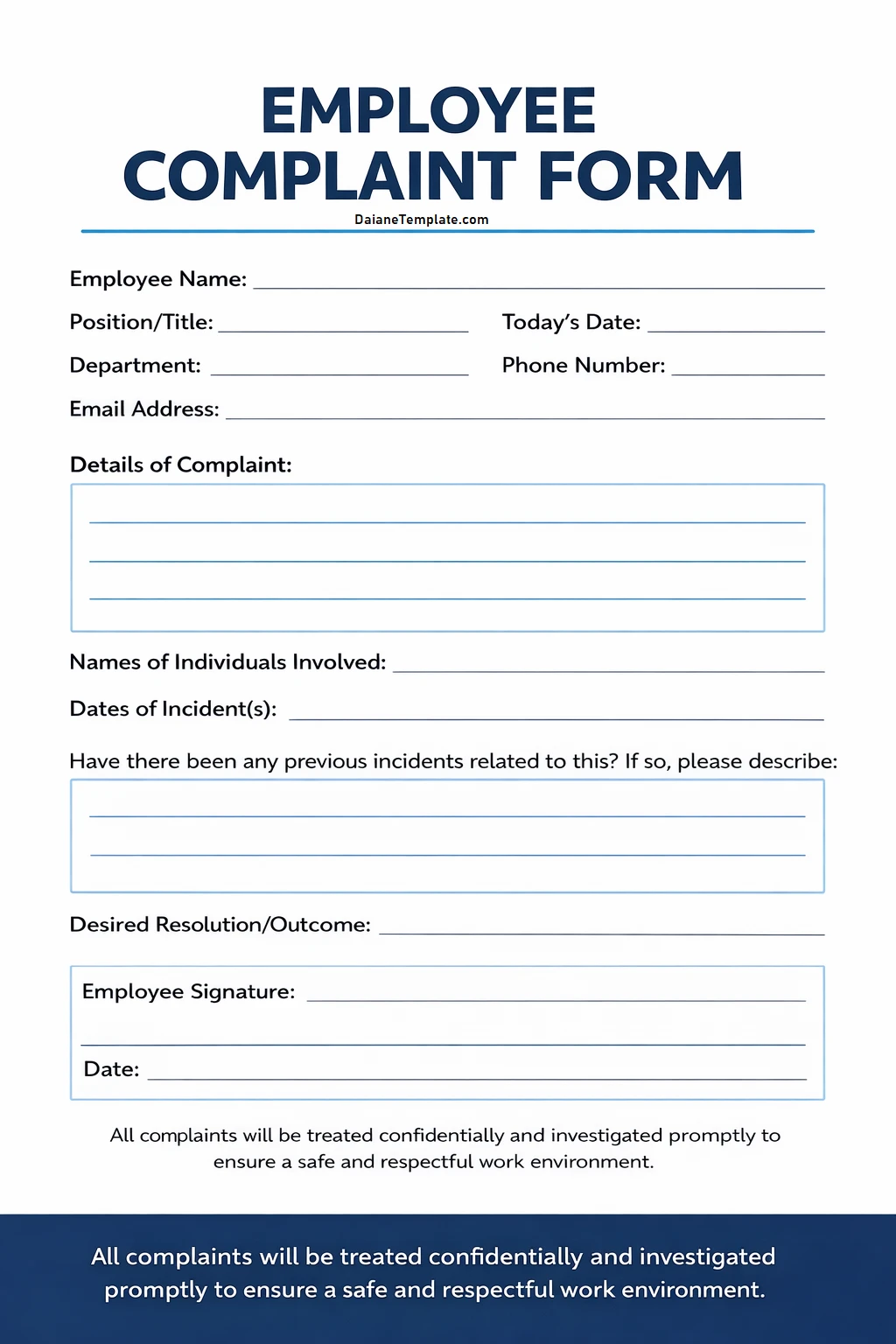
Creating a safe and respectful work environment is crucial for the well-being of employees and the success of a company. In order to address workplace issues such as harassment, discrimination, policy violations, or interpersonal conflicts, organizations need a formal, structured, and documented way for employees to report their concerns. This is where an employee complaint form comes into play.
By providing employees with a designated tool to raise their grievances, companies can ensure that these concerns are officially logged, investigated fairly, and resolved on time.
In this article, we will delve into the key elements of an employee complaint form, why it is essential for fostering a positive work environment, and how businesses can implement this tool effectively.
What is an Employee Complaint Form?
An employee complaint form is a formal document that enables employees to report any workplace issues they may be experiencing. This could include instances of harassment, discrimination, policy violations, or conflicts with colleagues or superiors.
By filling out this form, employees provide a written account of the problem, allowing the company to investigate the matter thoroughly and take appropriate action to resolve it.
Why the Employee Complaint Form is Essential?
There are several reasons why implementing an employee complaint form is crucial for the success of a business and the well-being of its employees:
- Promotes a Safe Work Environment. By providing employees with a formal way to report issues, companies demonstrate that they take workplace concerns seriously and are committed to creating a safe and respectful environment for all.
- Protects Both Employees and the Company. Having a documented record of employee complaints helps protect both the individuals involved and the organization itself. It ensures transparency and accountability in addressing workplace issues.
- Fosters a Positive Work Culture. When employees feel heard and supported, they are more likely to be engaged and productive. An effective complaint process can enhance employee morale and contribute to a positive work culture.
- Prevents Legal Risks. By addressing complaints promptly and fairly, companies can mitigate the risk of potential legal action. Resolving issues internally through a structured process can help avoid costly lawsuits.
Key Elements of an Employee Complaint Form
When designing an employee complaint form, several key elements should be included to ensure its effectiveness:
- Clear Instructions. The form should provide clear instructions on how to fill it out and where to submit it.
- Confidentiality Assurance. Employees should be assured that their complaints will be handled confidentially to protect their privacy.
- Date and Time Stamp. Including a date and time stamp on the form helps track the timeline of the complaint.
- Space for Details. The form should have ample space for employees to provide detailed information about the issue they are reporting.
- Signatures. Both the employee filing the complaint and the person receiving it should sign the form to acknowledge receipt.
How to Implement an Employee Complaint Form
Implementing an employee complaint form requires careful planning and communication. Here are some steps that companies can take to effectively introduce this tool in the workplace:
1. Create a Clear Policy
Before rolling out the employee complaint form, establish a clear policy outlining the process for reporting workplace issues. Communicate this policy to all employees to ensure they understand how to use the form.
2. Train Managers and HR Staff
Provide training to managers and HR staff on how to handle employee complaints sensitively and impartially. Ensure they are familiar with the procedures for investigating and resolving issues.
3. Communicate the Importance of the Form
Emphasize the significance of the employee complaint form in promoting a positive work environment. Encourage employees to use the form to raise any concerns they may have without fear of retaliation.
4. Establish a Transparent Process
Ensure that the process for handling complaints is transparent and fair. Communicate the steps involved in investigating complaints and provide regular updates to employees on the progress of their cases.
5. Review and Improve the Process
Regularly review the effectiveness of the employee complaint form and make improvements based on feedback from employees. Continuously strive to enhance the process to better meet the needs of the workforce.
6. Provide Support to Employees
Offer support services to employees who file complaints, such as counseling or mediation. Ensure that employees feel supported throughout the resolution process.
7. Monitor and Report on Complaints
Keep track of all employee complaints, including the nature of the issues raised and the outcomes of the investigations. Use this data to identify trends and address underlying problems within the organization.
Tips for Successful Implementation
Implementing an employee complaint form successfully requires a proactive approach and a commitment to fostering a supportive work environment. Here are some tips to ensure the effectiveness of the form:
- Encourage Open Communication. Create a culture where employees feel comfortable raising concerns and offering feedback.
- Act Promptly. Address complaints in a timely manner to prevent escalation and demonstrate a commitment to resolving issues swiftly.
- Provide Training. Offer training to employees on how to use the complaint form effectively and educate them on their rights in the workplace.
- Seek Employee Input. Involve employees in the design and review of the complaint process to ensure it meets their needs and expectations.
- Celebrate Successes. Recognize and celebrate successful resolution of complaints to reinforce the importance of the process and encourage continued use.
- Regularly Review and Update. Continuously review the complaint process and make updates as needed to adapt to changing circumstances and feedback.
- Seek External Support. Consider consulting with legal experts or HR professionals to ensure compliance with regulations and best practices.
By implementing an employee complaint form and following these best practices, companies can create a workplace where employees feel valued, respected, and supported. This not only enhances employee satisfaction and engagement but also contributes to the overall success and reputation of the organization.
Employee Complaint Form Template – DOWNLOAD
