A successful film production requires careful planning, clear communication, and efficient use of time. From coordinating actors and crew members to arranging locations and equipment, every production detail needs to be organized. A shooting schedule helps bring all these moving parts together by showing what will be filmed, when it will happen, and who needs to be involved.
A well-prepared shooting schedule is an essential planning document for filmmakers, production managers, assistant directors, and independent video creators. It helps organize scenes by filming day, coordinate cast and crew availability, manage locations, and reduce unnecessary delays. Without a clear schedule, even a small production can face missed call times, scheduling conflicts, and unexpected expenses.
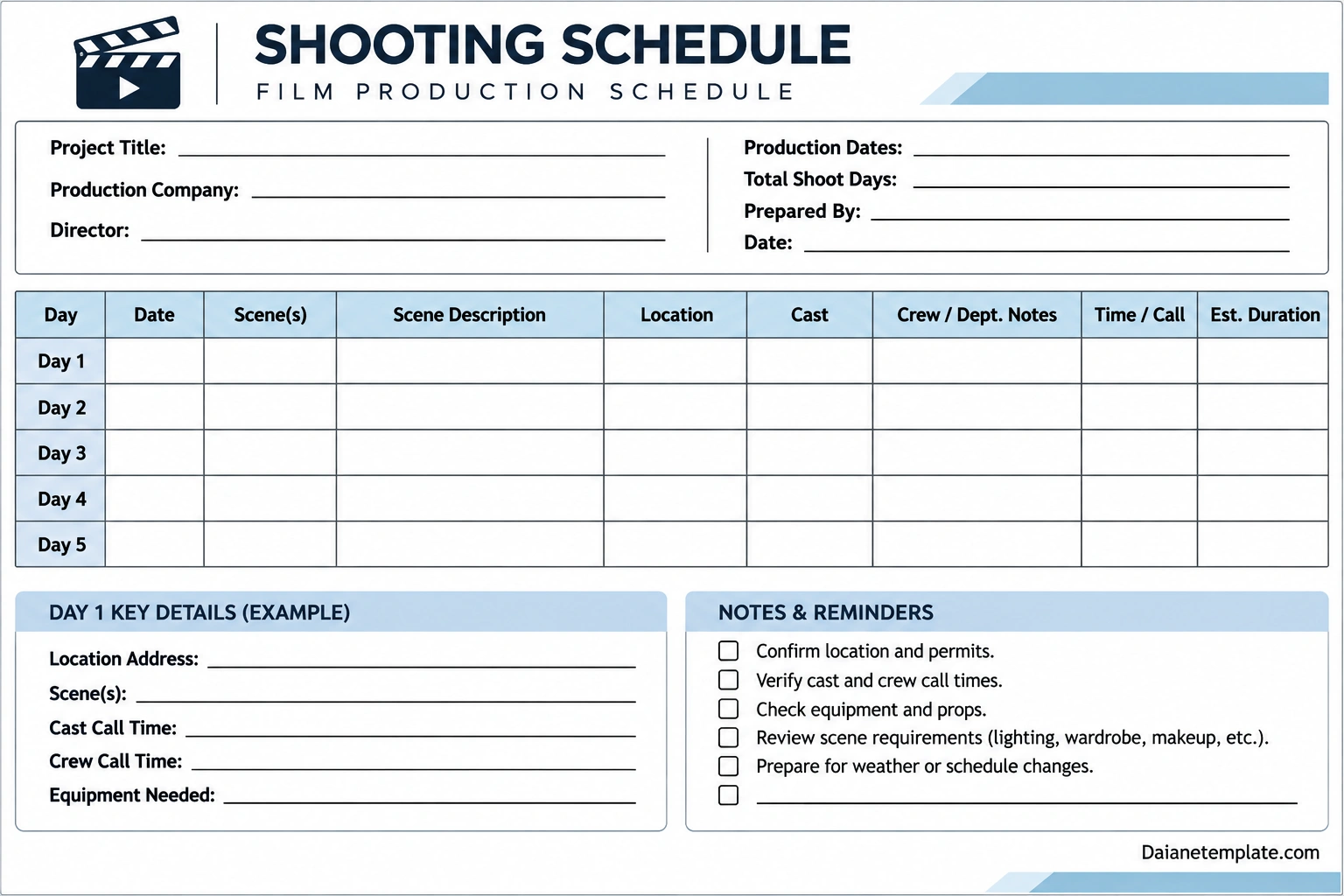
Whether you are producing a feature film, short film, television project, commercial, or online video, a structured production schedule can make the entire process easier to manage. This guide explains what a shooting schedule includes, how to create one, and which practical details can help keep your production organized.
What Is a Shooting Schedule?
A shooting schedule is a production planning document that outlines when and where each scene or shot will be filmed. It organizes the filming process into specific days and time periods while identifying the cast, crew, locations, and resources required for each scheduled scene.
In film production, scenes are not always filmed in the same order in which they appear in the final movie. Instead, the production team groups scenes according to practical considerations such as location availability, actor schedules, lighting requirements, equipment needs, and production costs.
For example, several scenes that take place in the same house may be filmed on one day, even if they appear at different points in the story. This approach can reduce travel time, simplify setup, and make better use of the production budget.
A shooting schedule commonly includes:
- Production dates: The planned filming dates for each production day.
- Scene numbers: References that identify the scenes being filmed.
- Scene descriptions: Short explanations of the action or content being recorded.
- Locations: The studios, buildings, outdoor areas, or sets required.
- Cast members: The actors needed for each scene.
- Crew requirements: Departments and personnel needed for filming.
- Call times: The required arrival times for cast and crew.
- Estimated duration: The expected time needed to complete each scene or setup.
Why Is a Shooting Schedule Important?
A shooting schedule does more than list filming dates. It gives the production team a shared plan and helps everyone understand their responsibilities. When the schedule is realistic and regularly updated, it can improve coordination and reduce avoidable production problems.
1. Keeps Film Production Organized
Film productions involve many people working across different departments. A clear schedule helps the director, assistant director, cinematographer, production manager, and other team members understand the daily filming plan.
2. Helps Control Production Costs
Unplanned delays can increase expenses through additional equipment rentals, location fees, overtime, transportation, and crew costs. Grouping scenes efficiently and planning realistic filming days can help control these expenses.
3. Coordinates Cast and Crew Availability
Actors and crew members may have different availability requirements. A production schedule identifies who is needed for each scene and helps the team avoid unnecessary waiting or scheduling conflicts.
4. Improves Location Management
Some filming locations have limited access hours, permit conditions, or specific operating restrictions. Scheduling scenes according to location availability helps the production team make better use of each filming opportunity.
5. Reduces Production Delays
When scenes, equipment, cast members, and locations are planned in advance, the team can prepare before filming begins. This reduces confusion and helps the production move smoothly from one setup to the next.
What Should a Shooting Schedule Include?
The details in a shooting schedule depend on the size and complexity of the production. A small independent film may need a simple spreadsheet, while a larger production may require a detailed schedule with department-specific information.
1. Project and Production Information
Start with basic project details so team members can identify the correct schedule. Include information such as:
- Film or project title.
- Production company.
- Director and production manager.
- Scheduled production dates.
- Total number of filming days.
- Schedule preparation date and version.
2. Shooting Day and Date
Each production day should have a clear date and day number. This makes it easier to track the filming sequence and communicate changes to the team.
3. Scene Number and Description
Use the scene numbers from the screenplay or production breakdown. Add a short description so the crew can quickly understand what will be filmed.
For example, a scene description might read: “Main character enters the office and speaks with the manager.” Keep descriptions brief but specific enough to avoid confusion.
4. Filming Location
List the exact location for each scene. Include the address or relevant access information when necessary. If several scenes take place at the same location, consider grouping them together to reduce setup and transportation time.
5. Cast and Crew Requirements
Identify the actors required for each scene and any departments that need to be prepared. Depending on the production, this may include camera, lighting, sound, makeup, wardrobe, art, and production design teams.
6. Call Times and Estimated Duration
Call times tell cast and crew when they must report to the production location or designated meeting point. Estimated durations help the production team plan the day and identify possible scheduling conflicts.
Allow enough time for preparation, equipment setup, rehearsals, scene changes, meals, and unexpected interruptions.
7. Notes and Special Requirements
Include additional information that may affect filming. Examples include special props, wardrobe changes, weather considerations, location restrictions, safety arrangements, and equipment requirements.
How to Create a Shooting Schedule Step by Step
Creating a reliable filming schedule starts with understanding the script and identifying everything required for each scene. The following steps provide a practical process for organizing a production schedule.
Step 1: Finalize the Script
Begin with the latest approved screenplay or shooting script. Confirm that scene numbers, locations, characters, and major story elements are accurate before building the schedule.
Significant script changes after scheduling can affect locations, cast requirements, production days, and estimated costs.
Step 2: Break Down the Script
Review the script scene by scene and identify the resources required for each one. This process is commonly called a script breakdown.
Record details such as:
- Scene number and page count.
- Interior or exterior setting.
- Day or night requirements.
- Actors appearing in the scene.
- Props, wardrobe, and set requirements.
- Special equipment or visual effects.
- Location and production considerations.
Step 3: Check Cast and Location Availability
Confirm when actors, locations, and essential crew members are available. Pay attention to contractual working hours, location access restrictions, travel requirements, and any other scheduling limitations.
Resolve major conflicts before assigning scenes to specific production days.
Step 4: Group Scenes Efficiently
Scenes are often grouped according to location, cast availability, production requirements, and setup needs rather than screenplay order.
For example, filming all scenes in a restaurant during the same production day may reduce location costs and avoid repeated equipment setup. However, continuity, lighting, and performance requirements should also be considered.
Step 5: Estimate Filming Time
Estimate how long each scene or setup will take. Consider scene complexity, dialogue, camera movement, lighting changes, special effects, and the number of required takes.
A short scene may take longer to film than expected if it involves complicated camera setups or technical requirements. Use realistic estimates rather than filling the schedule with too many scenes.
Step 6: Assign Scenes to Production Days
Organize the scenes into a practical day-by-day filming plan. Balance the workload so that each day has enough time for preparation, filming, breaks, and wrap-up activities.
Make sure actors and crew members have enough time to travel between locations and prepare for their scheduled scenes.
Step 7: Add Call Times and Production Notes
Once the filming days are organized, add cast and crew call times, location details, equipment requirements, and other important instructions.
Clearly identify any scenes that require special preparation, such as night filming, weather-dependent shots, stunts, or complex set changes.
Step 8: Review and Distribute the Schedule
Check the complete schedule for conflicts, missing information, unrealistic filming times, and unavailable resources. Ask relevant department heads to review the plan before distributing it.
Share the approved schedule through a consistent communication channel so everyone receives the same version.
Example of a Simple Shooting Schedule
A simple shooting schedule can help small production teams organize filming without using complicated production software. The following example shows how a short film might divide scenes across several production days.
Sample Film Production Schedule
Project: The Last Weekend
Production Period: June 10–12
Director: Alex Morgan
Production Format: Short Film
- Day 1 – June 10: Film interior scenes in the main character’s apartment. Scenes 1, 3, and 7. Cast: Main Character and Friend. Estimated filming period: 8:00 AM–5:00 PM.
- Day 2 – June 11: Film office and meeting room scenes. Scenes 2, 5, and 8. Cast: Main Character, Manager, and Coworker. Estimated filming period: 9:00 AM–6:00 PM.
- Day 3 – June 12: Film outdoor park scenes and final sequence. Scenes 4, 6, and 9. Cast: Main Character and Friend. Estimated filming period: 6:30 AM–3:30 PM.
This example is a simplified overview. A professional daily shooting schedule should also include scene page counts, individual cast call times, crew requirements, meal breaks, location addresses, and other production instructions.
Shooting Schedule vs. Production Schedule
The terms shooting schedule and production schedule are related, but they do not always describe exactly the same document.
Shooting Schedule
A shooting schedule focuses on the filming process. It identifies which scenes will be recorded on each day, along with the required cast, locations, call times, and production resources.
Production Schedule
A production schedule can cover a wider range of activities across the entire project. Depending on the production, it may include pre-production planning, casting, rehearsals, filming, editing, visual effects, post-production, and delivery deadlines.
In simple terms, the shooting schedule is generally a detailed part of the broader production timeline.
Tips for Managing a Shooting Schedule Effectively
A good schedule should be practical, easy to understand, and flexible enough to handle unexpected changes. Use these tips to improve coordination throughout the production process.
- Keep the schedule realistic: Avoid assigning more scenes than the team can reasonably film in one day.
- Group nearby locations: Reduce travel time by organizing scenes according to location when practical.
- Confirm cast availability: Check actor schedules before finalizing daily assignments.
- Allow setup time: Include time for lighting, sound, camera preparation, rehearsals, and scene changes.
- Plan for weather: Prepare alternatives for outdoor filming when weather conditions may affect production.
- Communicate changes promptly: Distribute updated schedules whenever important details change.
- Track overtime: Monitor working hours and applicable production requirements.
- Use one master schedule: Maintain a consistent source of information to prevent conflicting versions.
- Review progress daily: Compare completed scenes with the original plan and adjust upcoming days when necessary.
Common Shooting Schedule Mistakes to Avoid
Even a detailed production plan can fail if important requirements are overlooked. Avoid these common mistakes when preparing a filming schedule.
- Ignoring script changes: An outdated script can lead to incorrect scene assignments and missing resources.
- Underestimating scene duration: Complicated setups may require more time than expected.
- Overlooking travel time: Moving cast, crew, and equipment between locations can create delays.
- Failing to confirm availability: Unavailable actors or locations can disrupt an entire production day.
- Leaving out call times: Missing arrival information can create confusion among departments.
- Not preparing backup plans: Weather, equipment problems, and location issues can affect filming.
- Distributing outdated versions: Different schedule versions can cause team members to follow conflicting instructions.
Frequently Asked Questions About Shooting Schedules
What is the purpose of a shooting schedule?
The purpose of a shooting schedule is to organize filming activities by day, location, scene, cast, and production requirements. It helps coordinate the team, manage resources, reduce delays, and keep production on track.
Who is responsible for creating a shooting schedule?
The first assistant director commonly coordinates the detailed shooting schedule in collaboration with the director, producer, production manager, and relevant department heads. The exact responsibilities depend on the production’s size and structure.
What is included in a daily shooting schedule?
A daily shooting schedule typically includes the production date, location, scenes, cast members, call times, crew requirements, estimated durations, meal breaks, and special production notes.
How many scenes should be filmed in one day?
There is no fixed number of scenes that applies to every production. The number depends on scene complexity, page count, location changes, actor availability, technical requirements, and the available filming hours.
What is the difference between a shooting schedule and a call sheet?
A shooting schedule outlines the planned filming days and scenes across a production period. A call sheet provides specific daily instructions, including call times, location information, cast and crew details, weather information, and important production notes.
Can a shooting schedule be changed after filming begins?
Yes. Production schedules often change because of weather, cast availability, location issues, script revisions, or unexpected delays. Changes should be reviewed and communicated clearly to everyone affected.
What software can be used to create a shooting schedule?
Filmmakers can use spreadsheets, production planning applications, or dedicated film scheduling software. The best option depends on the project’s complexity, team size, and collaboration needs.
How far in advance should a shooting schedule be prepared?
A preliminary schedule is usually developed during pre-production after the script breakdown begins. The detailed schedule should be reviewed and confirmed before filming starts, allowing enough time to coordinate cast, crew, locations, and equipment.
Why should scenes be filmed out of story order?
Filming scenes out of story order can save time and money. Grouping scenes by location, actor availability, set requirements, or lighting conditions can reduce repeated setup and transportation costs.
Final Thoughts
A shooting schedule is an essential tool for organizing film production. It helps filmmakers coordinate scenes, cast members, crew departments, locations, and equipment while creating a realistic plan for each filming day.
By breaking down the script, checking availability, grouping scenes efficiently, and estimating filming time, production teams can create a schedule that supports smoother operations and better resource management.
Whether you are planning a short film, feature film, commercial, or video project, a clear shooting schedule can make the production process more organized and predictable. Use a structured template, communicate updates consistently, and allow enough flexibility to handle unexpected changes.
Download: Shooting Schedule Template
