A party planner checklist helps you organize every detail of an event, from choosing a date and setting a budget to coordinating food, decorations, entertainment, and cleanup. Whether you are planning a birthday party, family gathering, graduation celebration, holiday event, or office party, a structured checklist makes the process easier to manage.
Planning a party involves many small tasks, and it is easy to overlook something when everything is handled from memory. A party planner checklist breaks the process into manageable steps, gives each task a clear place, and helps you track progress as the event approaches. With a practical timeline and organized task list, you can reduce last-minute stress and spend more time enjoying the occasion.
This guide explains how to use a party planning checklist, what tasks to include, and how to customize a printable template for different types of celebrations.
What Is a Party Planner Checklist?
A party planner checklist is a planning document that lists the tasks required to prepare for, manage, and wrap up an event. It may include event details, deadlines, guest information, vendor arrangements, shopping lists, and day-of responsibilities.
The checklist works as a central reference for the entire planning process. Instead of keeping separate notes for invitations, food, decorations, and venue arrangements, you can organize the most important tasks in one place.
A printable party planning checklist is particularly useful for people who prefer writing notes by hand or checking off tasks as they are completed. Digital checklists and spreadsheets can also work well, especially when several people are sharing responsibilities.
Why Use a Party Planning Checklist?
A well-organized checklist can make party planning more efficient and predictable. It helps you understand what needs to be done, when each task should be completed, and which details require attention first.
- Improves organization: Keeps planning tasks, event details, and important reminders in one place.
- Reduces stress: Replaces last-minute guessing with a clear plan and manageable deadlines.
- Supports budget control: Helps track estimated costs, purchases, vendor fees, and remaining funds.
- Prevents forgotten tasks: Reminds you to confirm invitations, supplies, deliveries, and venue arrangements.
- Improves time management: Makes it easier to prioritize tasks according to their deadlines.
- Encourages teamwork: Helps family members, friends, coworkers, or event helpers understand their responsibilities.
- Creates a smoother event: Gives you a plan for setup, activities, troubleshooting, and cleanup.
The goal is not to make planning complicated. A useful checklist should simplify decisions and help you focus on the details that matter most to your event.
Printable Party Planner Checklist Template
A printable party planner checklist template gives you a ready-made structure for planning an event from beginning to end. It provides dedicated sections for the guest list, budget, venue, food, decorations, entertainment, event-day tasks, and post-event follow-up.
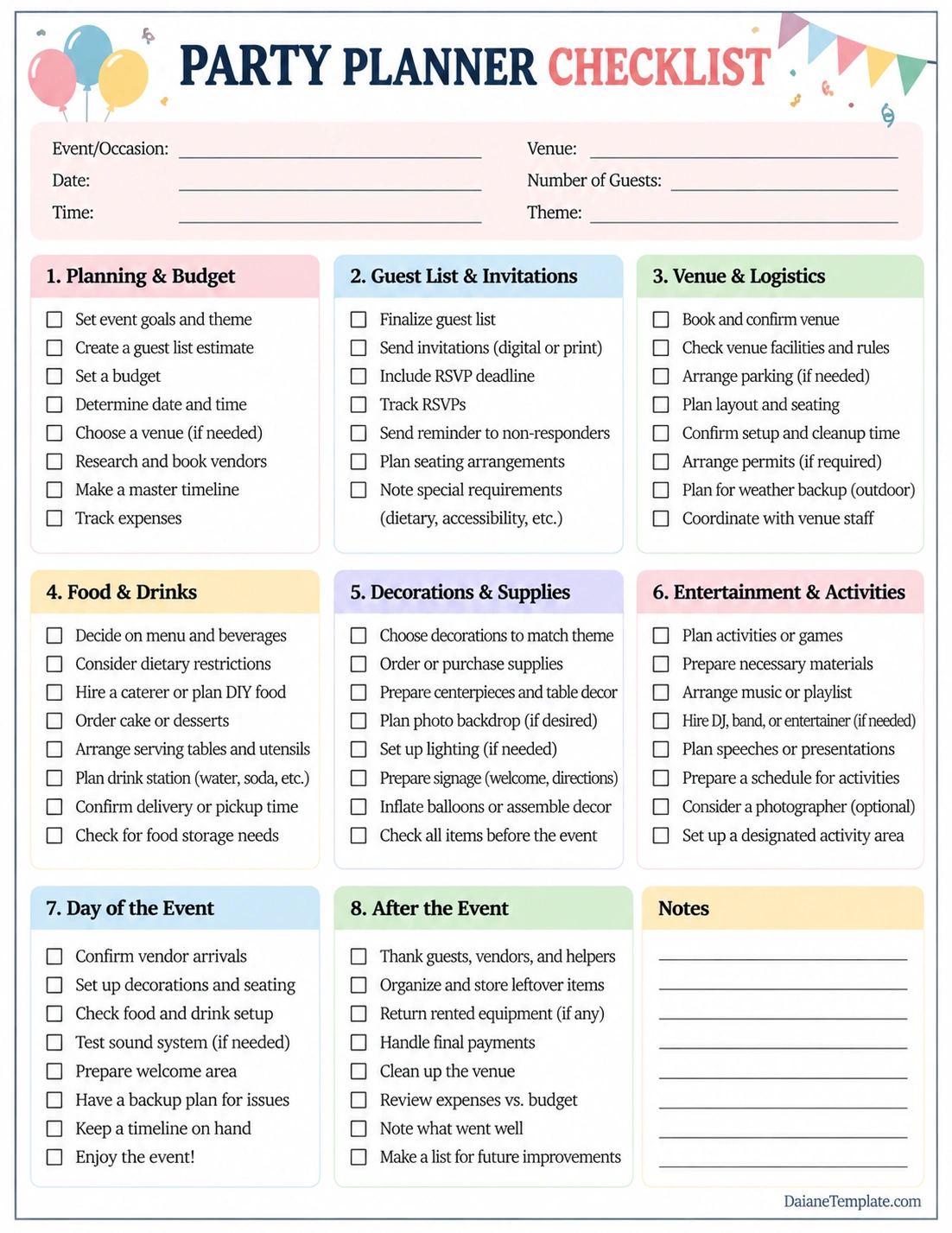
The template includes fields for the event name, date, time, venue, guest count, and theme. Its checklist sections cover planning and budgeting, invitations, logistics, food and drinks, decorations, entertainment, event-day preparation, and tasks to complete afterward.
You can customize the worksheet for a small home gathering or a larger celebration. Add extra notes for vendor contacts, payment deadlines, dietary requirements, equipment rentals, or special activities. For complex events, use the printable checklist alongside a detailed schedule and budget spreadsheet.
What Should a Party Planner Checklist Include?
Every celebration is different, but most events require attention to several core planning areas. Including these categories can help you prepare a more complete event checklist.
Event Details and Goals
Start with the basic information: the occasion, date, start and end times, location, estimated guest count, and theme. Decide what kind of experience you want to create and identify any special requirements before making bookings.
Budget and Expenses
Set a realistic budget before committing to major purchases. Include venue rental, food, drinks, decorations, entertainment, invitations, rentals, transportation, and any service fees.
Track estimated costs alongside actual expenses. It is also useful to reserve a portion of the budget for unexpected needs, such as additional supplies or last-minute changes.
Guest List and Invitations
Prepare a guest list and decide how invitations will be sent. Include an RSVP deadline so you can estimate attendance and plan food, seating, and supplies more accurately.
Record special requirements, such as accessibility needs or dietary restrictions, when guests voluntarily provide them. Follow up with people who have not responded before finalizing arrangements.
Venue and Logistics
Choose a venue that suits the event size, budget, location, and activities. Confirm booking details, access times, seating arrangements, parking, restroom facilities, and any venue rules.
For outdoor parties, prepare a backup plan for rain, heat, or other weather changes. Check whether you need permits, additional equipment, or special arrangements for setup and cleanup.
Food and Drinks
Decide whether food will be catered, purchased, or prepared at home. Plan quantities based on the guest count, event duration, and type of gathering. Arrange serving utensils, plates, cups, napkins, water, and appropriate food storage.
Confirm delivery or pickup times in advance. If guests have dietary restrictions, communicate these clearly to the caterer or prepare suitable alternatives.
Decorations and Supplies
Choose decorations that match the event theme and venue. Common items include balloons, banners, table coverings, centerpieces, lighting, signs, and photo backdrops.
Make a shopping or rental list and note when each item needs to be purchased, delivered, or assembled. Check supplies before the event so missing items can be replaced in time.
Entertainment and Activities
Plan music, games, speeches, performances, or other activities that suit the occasion and audience. If you hire a DJ, entertainer, or photographer, confirm the schedule, arrival time, equipment requirements, and payment terms.
Prepare a simple event timeline so activities fit comfortably within the available time. Leave room for conversation, transitions, and unexpected delays.
Party Planning Timeline: When to Complete Each Task
Starting early gives you more choices and makes it easier to handle unexpected changes. The following timeline is a flexible guide rather than a strict rule. Adjust it according to the size and complexity of your event.
Four to Eight Weeks Before the Party
- Choose the date, time, theme, and general format.
- Set the budget and estimate the guest count.
- Book the venue and essential vendors if needed.
- Prepare the guest list and send invitations when appropriate.
- Research catering, entertainment, rentals, and decoration options.
Two to Three Weeks Before the Party
- Track RSVPs and follow up with guests who have not responded.
- Confirm the menu and account for dietary requirements.
- Order decorations, party supplies, and any custom items.
- Plan seating, activities, music, and the event schedule.
- Review the budget and confirm major arrangements.
One Week Before the Party
- Confirm bookings, delivery times, and vendor arrival details.
- Finalize the guest count and food quantities.
- Purchase nonperishable supplies and prepare decorations.
- Check equipment, lighting, music, and activity materials.
- Assign tasks to helpers and share the schedule.
One Day Before the Party
- Prepare food that can safely be made in advance.
- Organize supplies and group items by where they will be used.
- Set up decorations or furniture if the venue allows it.
- Charge devices and test necessary equipment.
- Review the checklist and confirm any remaining arrangements.
On the Day of the Party
- Check the venue and complete the setup.
- Confirm food, drinks, and vendor deliveries.
- Arrange seating, decorations, and activity areas.
- Keep the event timeline and contact details accessible.
- Welcome guests, handle issues calmly, and enjoy the celebration.
After the Party
- Clean the venue and return rented equipment.
- Pack leftover supplies and store reusable decorations.
- Complete outstanding payments and review expenses.
- Thank guests, vendors, and helpers where appropriate.
- Record lessons learned for future events.
Tips for Using a Party Planner Checklist Effectively
A checklist works best when it reflects your actual event rather than a generic list of tasks. These tips can help you make it more useful.
- Prioritize deadlines: Complete venue bookings, vendor arrangements, and other time-sensitive tasks first.
- Assign responsibility: Write down who is handling each task if several people are involved.
- Keep budget records: Record deposits, balances, and payment due dates to avoid surprises.
- Use realistic deadlines: Allow enough time for delivery, preparation, and corrections.
- Confirm important details: Recheck bookings, guest numbers, delivery times, and venue rules before the event.
- Prepare a backup plan: Consider alternatives for weather, cancellations, equipment issues, or unexpected guest changes.
- Keep essential contacts handy: Store vendor numbers and venue contact details in an accessible place.
- Update the checklist: Mark completed tasks and add new ones as plans change.
Common Party Planning Mistakes to Avoid
Even a simple celebration can become stressful if important details are overlooked. Avoid these common planning mistakes.
- Underestimating the budget: Include delivery fees, taxes, rentals, and other costs beyond the advertised price.
- Waiting too long to book: Popular venues and vendors may have limited availability.
- Forgetting RSVP deadlines: Late responses can affect seating, food quantities, and costs.
- Planning too many activities: An overloaded schedule can leave guests with little time to relax and socialize.
- Ignoring setup and cleanup: Confirm when you can access the venue and when everything must be removed.
- Failing to delegate: One person handling every task may become overwhelmed on the event day.
- Leaving no contingency time: Deliveries, setup, and activities may take longer than expected.
Frequently Asked Questions About Party Planner Checklists
What is the purpose of a party planner checklist?
A party planner checklist organizes the tasks needed before, during, and after an event. It helps you track progress, manage deadlines, control spending, and reduce the risk of forgetting important details.
When should I start planning a party?
For a small gathering, a few weeks may be enough. Larger parties or events requiring a venue, catering, or specialized vendors may need several months of preparation. Start early when the date, guest count, or location is difficult to change.
What should be on a party planning checklist?
Include event details, budget, guest list, invitations, venue, food and drinks, decorations, entertainment, supplies, event-day tasks, and cleanup. Add any special requirements related to the occasion.
Can I use the same party planner checklist for different events?
Yes. A general checklist can be adapted for birthdays, graduations, holiday gatherings, family celebrations, and office parties. Remove irrelevant tasks and add details specific to the event.
How do I plan a party on a small budget?
Set a spending limit before making purchases, prioritize essential items, compare vendor prices, and consider simple decorations or homemade food where practical. Track actual expenses and leave room for unexpected costs.
Should I assign tasks to other people?
Delegating suitable tasks can make planning more manageable. Assign clear responsibilities for setup, food, guest assistance, activities, or cleanup, and confirm that each person understands the timing.
What should I do if plans change at the last minute?
Update the checklist, identify which changes affect other tasks, and contact the relevant vendors or helpers. Keep essential details and backup options accessible so you can make decisions without losing track of the overall plan.
Conclusion
A party planner checklist makes organizing a celebration more manageable by breaking the work into clear tasks and realistic deadlines. From setting the budget and inviting guests to preparing food, arranging entertainment, and completing cleanup, a structured checklist helps you stay organized throughout the process.
Use a printable party planner checklist template as your central planning guide. Customize it for the occasion, track progress regularly, and delegate tasks when appropriate. With thoughtful preparation and a flexible plan, you can reduce stress, manage your time more effectively, and focus on creating a memorable event for your guests.
Download: Party Planner Checklist Template
