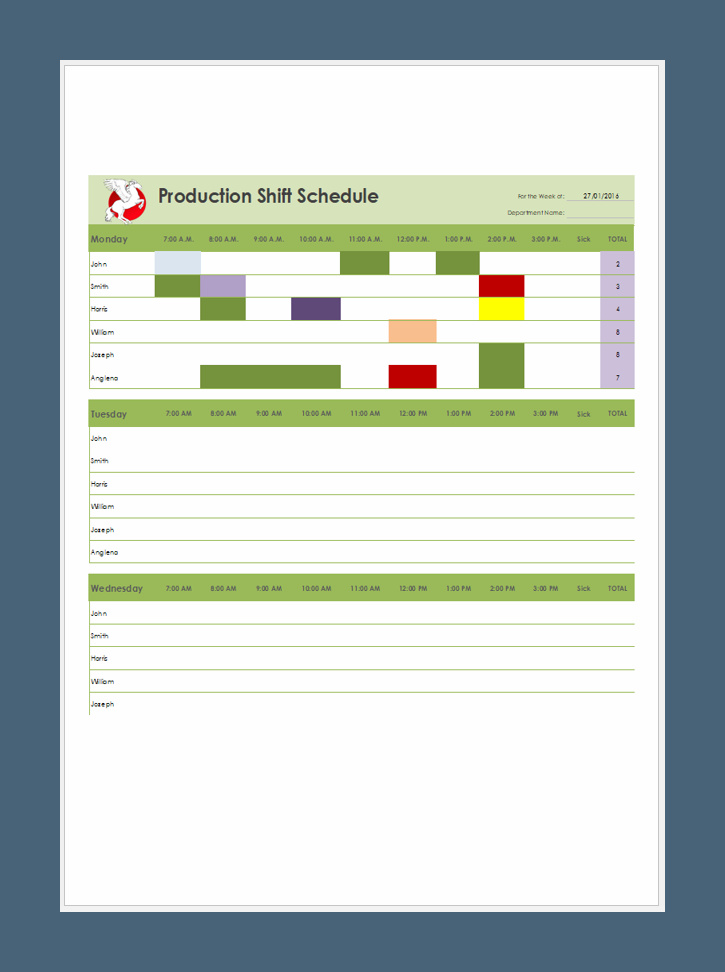
Managing a production shift schedule can be a complex task, especially when trying to balance the needs of your employees with the demands of your production process. A well-organized and efficient production shift schedule is crucial for maximizing productivity and minimizing downtime. In this article, we will discuss the key elements of a production shift schedule, why it is important, and provide tips for successful implementation.
What is a Production Shift Schedule?
A production shift schedule is a timetable that outlines when employees are expected to work, including the start and end times of their shifts, as well as any breaks or meal periods. It ensures enough workers are on duty at all times to meet production goals and maintain a smooth workflow.
Why is a Production Shift Schedule Important?
An effective production shift schedule is essential for keeping your operation running smoothly. By carefully planning and organizing your employees’ work hours, you can avoid understaffing or overstaffing, reduce labor costs, and prevent fatigue and burnout among your workers. A well-designed shift schedule can also improve employee satisfaction and morale, leading to higher retention rates and increased productivity.
Key Elements of a Production Shift Schedule
When creating a production shift schedule, there are several key elements to consider:
- Shift Length: Determine the optimal length of each shift based on the nature of your production process and the needs of your employees.
- Shift Rotation: Consider implementing a rotating shift schedule to distribute the workload evenly among your employees and prevent fatigue.
- Breaks and Meal Periods: Schedule regular breaks and meal periods to ensure that your workers have time to rest and recharge.
- Overtime Policy: Establish clear guidelines for overtime hours and compensation to avoid conflicts and ensure compliance with labor laws.
- Communication: Keep your employees informed about their schedules and any changes to avoid confusion and ensure smooth operations.
- Flexibility: Build flexibility into your schedule to accommodate unexpected changes or emergencies without disrupting production.
- Feedback Mechanism: Implement a feedback mechanism to gather input from your employees on the effectiveness of the schedule and make adjustments as needed.
Examples
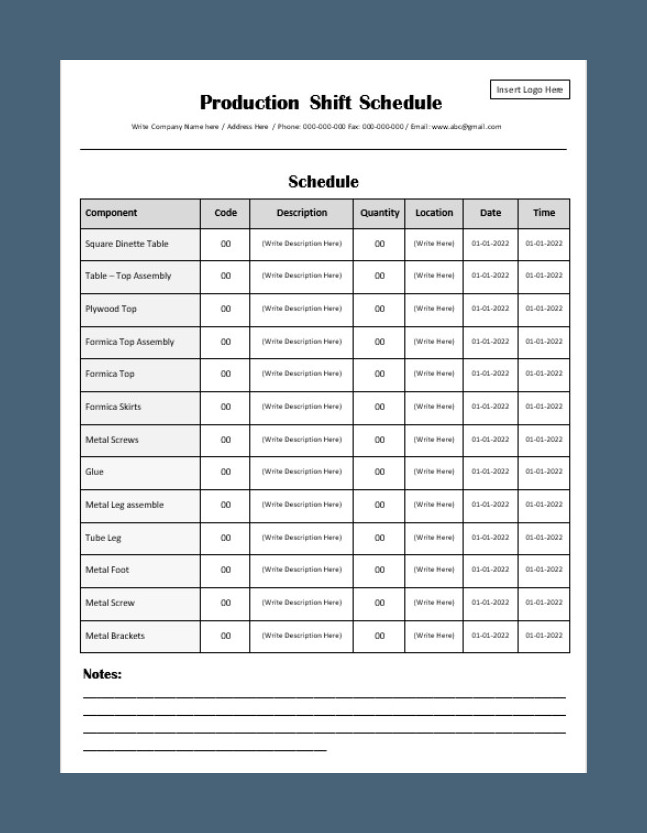
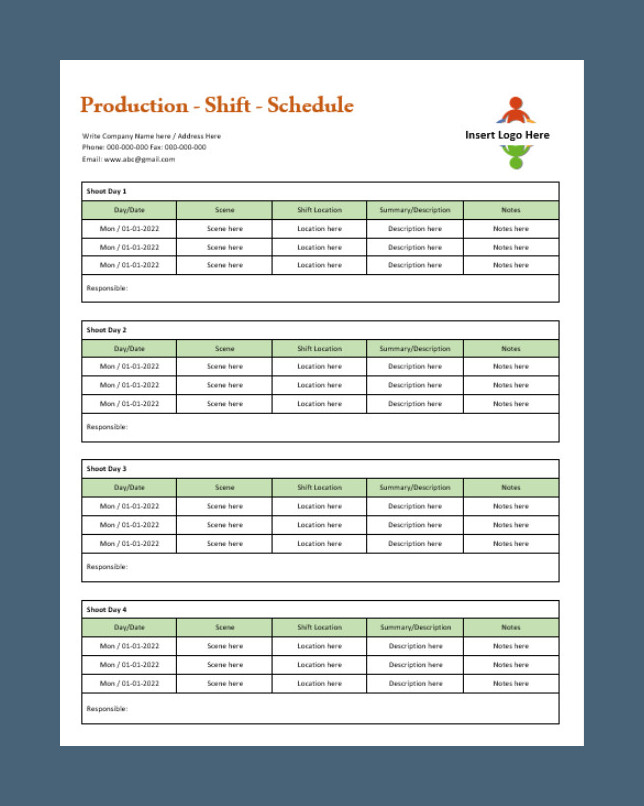
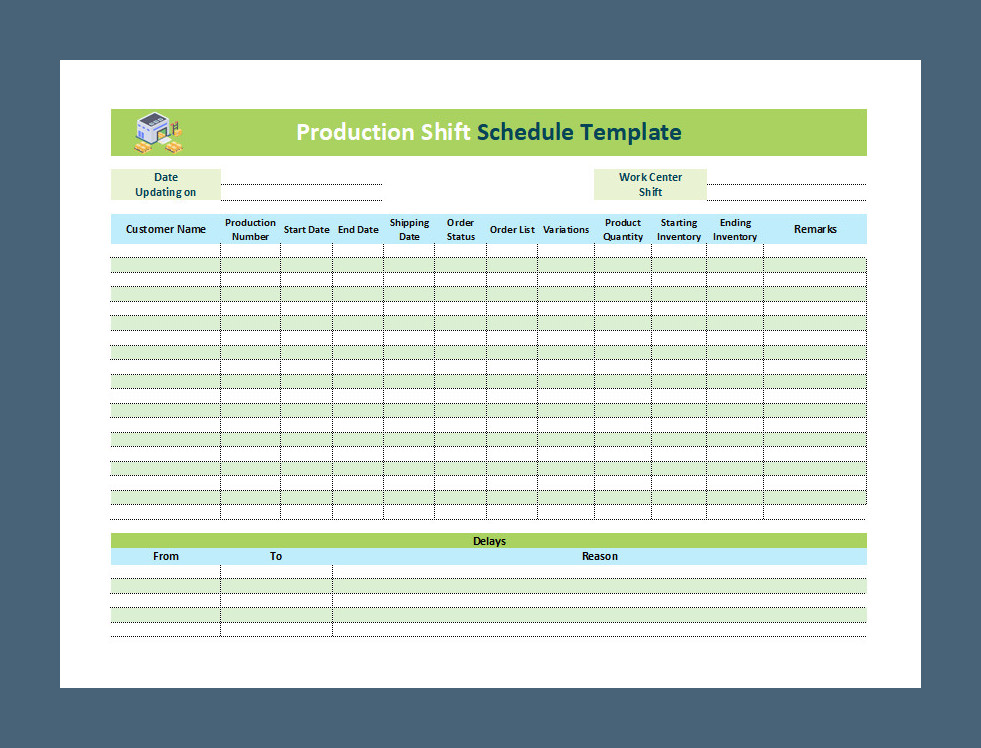
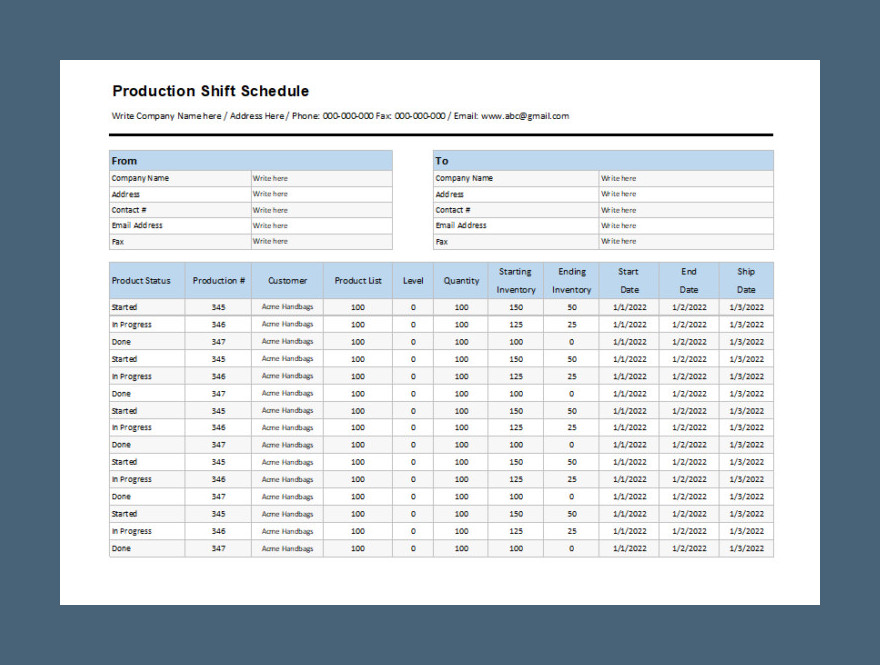
How to Create an Effective Production Shift Schedule
Follow these steps to create an effective production shift schedule:
1. Analyze Your Production Needs
Start by analyzing your production process and identifying peak production times, as well as any bottlenecks or inefficiencies that need to be addressed.
2. Consider Employee Availability
Talk to your employees to understand their availability, preferences, and any constraints that may impact their work schedules.
3. Create a Balanced Schedule
Design a schedule that balances the needs of your production process with the preferences and availability of your employees to ensure optimal productivity.
4. Implement a Trial Period
Implement the new schedule on a trial basis to evaluate its effectiveness and make any necessary adjustments before fully implementing it.
5. Monitor and Adjust as Needed
Continuously monitor the performance of your production shift schedule and be prepared to make adjustments as needed to optimize efficiency and productivity.
6. Seek Feedback
Solicit feedback from your employees on the schedule to identify any issues or areas for improvement and make changes accordingly.
7. Use Scheduling Software
Consider using scheduling software to automate the process and streamline communication with your employees, making it easier to manage and adjust the schedule as needed.
Tips for Successful Implementation
Here are some tips for successfully implementing and managing your production shift schedule:
- Communicate Clearly: Keep your employees informed about their schedules and any changes to avoid confusion and ensure smooth operations.
- Be Flexible: Build flexibility into your schedule to accommodate unexpected changes or emergencies without disrupting production.
- Monitor Performance: Regularly evaluate the performance of your schedule and make adjustments as needed to optimize efficiency.
- Seek Feedback: Solicit feedback from your employees on the schedule to identify any issues or areas for improvement.
- Provide Training: Ensure that your employees are properly trained on the schedule and understand their roles and responsibilities.
- Reward Good Performance: Recognize and reward employees who consistently perform well under the schedule to boost morale and motivation.
- Stay Compliant: Ensure that your schedule complies with labor laws and regulations to avoid legal issues and penalties.
