A preschool daily schedule gives young children a predictable rhythm for learning, playing, eating, resting, and transitioning between activities. At the preschool age, knowing what comes next can help children feel more comfortable and confident throughout the day.
A well-planned schedule also helps teachers and caregivers create a balanced environment where children have opportunities to learn, explore, socialize, move, rest, and develop independence. Instead of filling every minute with activities, an effective preschool schedule provides structure while still allowing enough flexibility for children’s needs.
Whether you are a preschool teacher, daycare provider, homeschool parent, or caregiver, a simple daily schedule can make routines easier to manage and easier for children to understand.
What Is a Preschool Daily Schedule?
A preschool daily schedule is a visual or written plan that organizes the main activities of a preschooler’s day. It typically includes arrival, free play, learning activities, meals or snacks, outdoor play, group time, rest, and dismissal.
The exact schedule depends on the preschool program, children’s ages, staffing, available facilities, and local requirements. A classroom for younger preschoolers may need more frequent transitions and rest opportunities, while older preschool children may be ready for longer periods of structured learning.
A typical preschool schedule may include:
- Arrival and welcome time
- Free play or choice activities
- Morning meeting or circle time
- Early learning activities
- Snack time
- Outdoor play or gross motor activities
- Creative activities
- Lunch
- Rest or quiet time
- Story time
- Learning centers
- Afternoon snack
- Cleanup
- Departure
Why Is a Preschool Daily Schedule Important?
Young children often respond well to routines because predictable patterns make the day easier to understand. A consistent schedule can support both classroom management and children’s social-emotional development.
Creates Predictability
Children can become more comfortable when familiar activities happen in a recognizable order. Knowing what comes next can make transitions less surprising and easier to manage.
Provides a Sense of Security
A consistent routine can give children a feeling of stability. While the specific activities may change, a familiar daily rhythm helps children understand what to expect.
Supports Independence
When children become familiar with the sequence of the day, they can gradually begin anticipating routines and participating in them with less adult assistance.
Balances Learning and Play
A thoughtful preschool schedule creates room for both structured learning and child-directed play. Both can contribute to a well-rounded early learning environment.
Improves Transitions
Transitions can be challenging for young children. A predictable routine, visual reminders, and advance warnings can help children move from one activity to another more smoothly.
Helps Teachers Stay Organized
A written schedule provides teachers and caregivers with a practical framework for planning activities, preparing materials, managing transitions, and maintaining a balanced day.
Preschool Daily Schedule Template
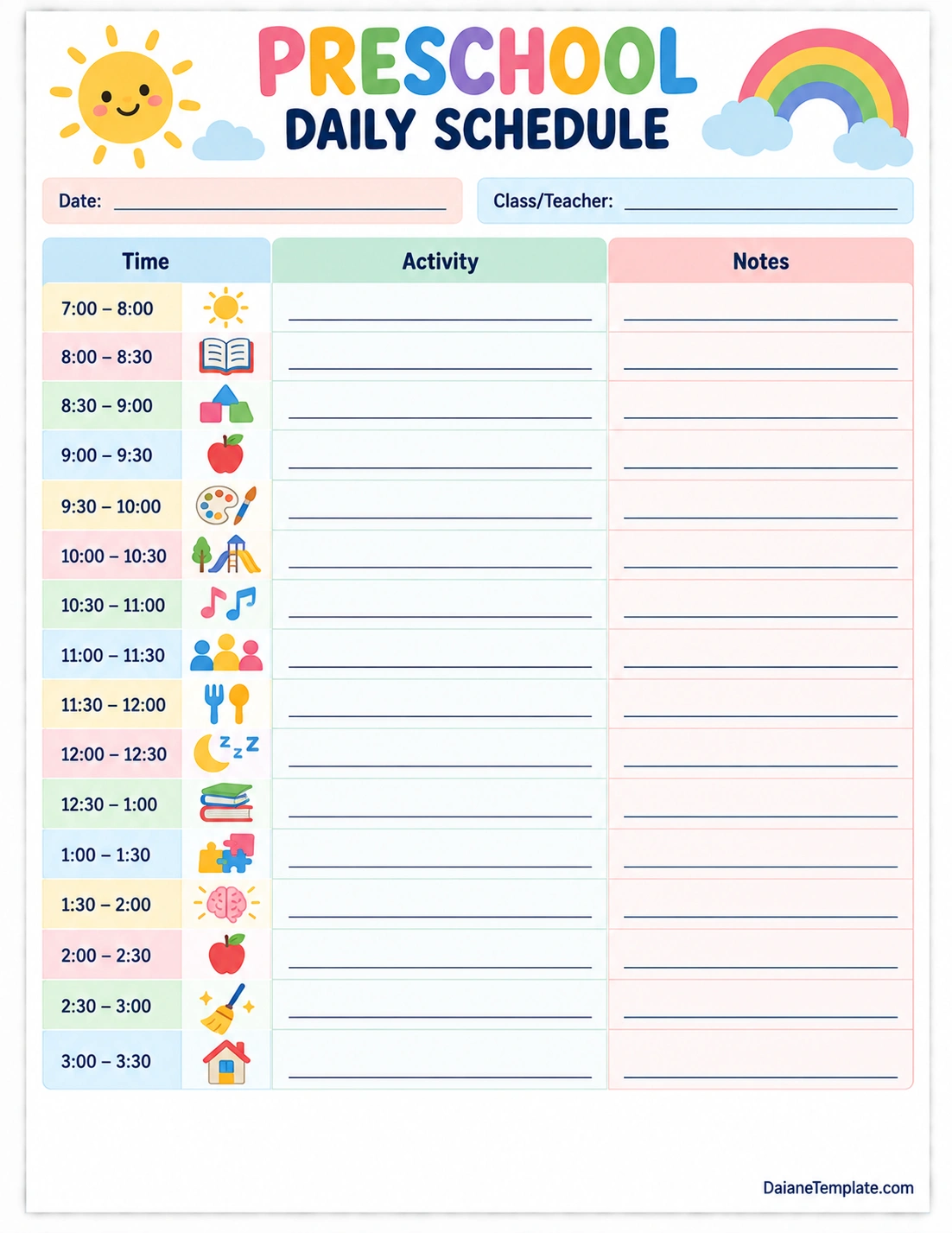
A preschool daily schedule template provides an easy way to organize classroom routines and activities. A printable schedule can also be displayed where children and adults can easily see it throughout the day.
What Should a Preschool Daily Schedule Include?
The best schedule includes the essential parts of the preschool day without making the routine unnecessarily complicated. Each program can adjust the activities according to its children’s needs.
Arrival and Welcome
The day can begin with a calm arrival routine. Children may put away their belongings, greet the teacher, and transition into a classroom activity.
A consistent arrival routine can help children understand how the school day begins and provide a familiar starting point.
Free Play and Choice Time
Free play gives children opportunities to choose activities and explore materials independently. Depending on the classroom, this may include blocks, puzzles, pretend play, books, art materials, or sensory activities.
Circle Time
Circle time may include greetings, songs, stories, calendar activities, classroom discussions, or an introduction to the day’s learning theme. Keep group activities developmentally appropriate and flexible.
Learning Activities
Preschool learning can include early literacy, early math, science exploration, language development, art, music, and hands-on activities. Short, engaging activities are often more appropriate than expecting young children to remain seated for long periods.
Snack and Meal Times
Meals and snacks are important parts of the daily routine. They can also provide opportunities to practice handwashing, communication, self-help skills, table manners, and social interaction.
Outdoor Play
Outdoor time gives children opportunities for movement, exploration, and gross motor play. Activities can include running, climbing, jumping, playground games, nature observation, or other age-appropriate activities.
Rest or Quiet Time
Preschool programs may include a rest period or quiet activity depending on children’s ages and individual needs. Some children may sleep while others may benefit from quiet books, puzzles, drawing, or another calm activity.
Cleanup and Departure
Cleanup can become part of the routine rather than being treated as a separate chore. Children can participate in age-appropriate cleanup tasks before preparing to leave.
Sample Preschool Daily Schedule
A sample schedule can provide a useful starting point, but times should be adjusted to suit the specific classroom and program.
- 8:00–8:30: Arrival and free play
- 8:30–9:00: Morning meeting and circle time
- 9:00–9:30: Learning centers
- 9:30–10:00: Snack and social time
- 10:00–10:45: Outdoor play
- 10:45–11:15: Art, music, or creative activity
- 11:15–11:45: Story and language activities
- 11:45–12:30: Lunch and cleanup
- 12:30–2:00: Rest or quiet time
- 2:00–2:30: Afternoon snack
- 2:30–3:00: Choice activities or learning centers
- 3:00–3:30: Cleanup, review, and departure
This is only an example. Preschool programs should adapt the timing and activities according to children’s developmental needs, staffing, program requirements, and individual circumstances.
How to Create a Preschool Daily Schedule
1. Identify the Main Parts of the Day
Start by listing the activities that need to happen every day. Include arrival, meals, learning activities, outdoor time, rest, cleanup, and departure.
2. Consider Children’s Age and Development
Young children have different attention spans, energy levels, and rest needs. Avoid creating a schedule that expects children to participate in long periods of sitting or highly structured activities.
3. Alternate Activity Types
Balance quiet activities with active ones. For example, a story or table activity can be followed by outdoor play or a movement activity.
4. Allow Transition Time
Moving from one activity to another takes time. Include realistic transition periods rather than scheduling activities back-to-back with no room for children to gather materials, clean up, or move to another area.
5. Include Flexible Time
A preschool schedule should be a guide rather than a rigid timetable. Children may need extra time for an activity, a transition may take longer than expected, or an unexpected event may require a change.
6. Make the Schedule Easy to See
A visual daily schedule can help children understand the sequence of activities. Use simple words, pictures, symbols, or illustrations that young children can recognize.
Visual Preschool Daily Schedule Ideas
A visual preschool schedule can be especially helpful for children who are still developing their understanding of time. Instead of relying only on clock times, teachers can pair each activity with a simple visual cue.
For example, a classroom schedule might use visual symbols for:
- School arrival
- Books or circle time
- Snack
- Outdoor play
- Art
- Music
- Lunch
- Rest
- Cleanup
- Going home
The visuals do not need to be complicated. Simple and consistent symbols can help children recognize familiar routines.
How to Make Transitions Easier
Transitions are an important part of preschool classroom management. Moving from one activity to another can be difficult when children are deeply engaged in play.
Give Advance Warnings
Let children know when an activity will end. A short warning can give them time to finish what they are doing and prepare for the next routine.
Use Consistent Signals
A familiar song, bell, verbal cue, visual card, or other classroom signal can help children recognize that it is time to transition.
Keep Directions Simple
Give children short and clear instructions. If several steps are required, provide them one at a time when appropriate.
Make Children Part of the Routine
Encourage children to participate in putting away materials, lining up, washing hands, or preparing for the next activity. These small responsibilities can support independence.
Balancing Learning, Play, and Rest
A strong preschool routine does not need to turn every part of the day into a formal lesson. Young children learn through play, conversation, exploration, movement, creative activities, and everyday routines.
A balanced preschool schedule can include:
- Structured learning: Teacher-guided activities with clear objectives.
- Child-directed play: Time for children to make choices and explore.
- Physical activity: Opportunities to move and develop gross motor skills.
- Creative experiences: Art, music, dramatic play, and other forms of expression.
- Social interaction: Activities that encourage communication and cooperation.
- Quiet time: Calm activities or rest periods.
Preschool Daily Schedule for Different Settings
Half-Day Preschool
A half-day program needs to prioritize the most important routines and learning opportunities. A shorter schedule might include arrival, circle time, learning centers, snack, outdoor play, a creative activity, and departure.
Full-Day Preschool
A full-day program has more opportunities for meals, rest, outdoor activities, free play, and extended learning centers. The schedule should include enough variation to prevent the day from becoming overly repetitive.
Home Preschool Schedule
Parents who provide preschool learning at home can use a flexible daily routine rather than a classroom-style timetable. Reading, creative play, outdoor exploration, simple learning activities, meals, and quiet time can form the foundation of the day.
Tips for Using a Preschool Daily Schedule
- Keep it predictable: Try to maintain a familiar sequence of daily activities.
- Stay flexible: Adjust the routine when children’s needs or circumstances change.
- Use visual cues: Pair activities with simple pictures or symbols.
- Keep activities age-appropriate: Match the length and complexity of activities to the children’s developmental stage.
- Build in transition time: Allow enough time for cleanup and movement.
- Alternate energy levels: Balance active and quiet activities.
- Review the routine: Notice which parts of the day work well and which need adjustment.
- Communicate with families: Share important routine information when appropriate.
Common Preschool Schedule Mistakes
Making the Schedule Too Rigid
Young children do not always follow a timetable exactly. A schedule should provide structure without making teachers feel unable to adapt when circumstances change.
Scheduling Too Many Activities
Trying to fit too many activities into one day can create unnecessary transitions and reduce opportunities for meaningful play.
Ignoring Individual Needs
Children differ in energy, attention, communication, and rest needs. A useful routine should allow reasonable flexibility for individual differences.
Leaving Out Free Play
Free play is an important part of early childhood experiences. A schedule focused entirely on teacher-directed activities may leave too little room for exploration and child choice.
Forgetting Transition Time
Transitions require preparation, cleanup, movement, and instructions. Failing to account for this time can make the entire schedule feel rushed.
Benefits of a Printable Preschool Daily Schedule
A printable preschool daily schedule can be displayed in a classroom, kept in a teacher planning binder, or adapted for home use. It provides a simple visual reference for adults and can also help children become familiar with the daily routine.
- Creates a clear daily structure
- Helps teachers organize activities
- Makes transitions easier to plan
- Provides a visual routine for children
- Balances learning, play, meals, and rest
- Can be customized for different preschool programs
- Provides a reusable planning tool
Frequently Asked Questions About Preschool Daily Schedules
What is a preschool daily schedule?
A preschool daily schedule is a plan that organizes the main activities of a preschool day, including learning, play, meals, outdoor activities, rest, transitions, and departure.
Why is a daily schedule important for preschoolers?
A predictable routine can help children understand what to expect, support independence, make transitions easier, and create a sense of structure and security.
What should a preschool daily schedule include?
A preschool schedule may include arrival, free play, circle time, learning activities, snacks, outdoor play, creative activities, lunch, rest, cleanup, and departure.
How long should a preschool activity last?
The appropriate length depends on the children’s age, activity, developmental needs, and level of engagement. Short, varied activities are often easier for young children to manage than long periods of structured instruction.
Should a preschool schedule include nap time?
Some full-day preschool programs include a rest or nap period, while others provide quiet activities. The appropriate approach depends on the children’s ages, individual needs, and program policies.
Should preschool schedules be flexible?
Yes. A schedule should provide predictable structure while allowing teachers to respond to children’s needs, unexpected events, activity engagement, and other circumstances.
What is a visual preschool daily schedule?
A visual preschool daily schedule uses pictures, symbols, colors, or other visual cues to show the sequence of daily activities. It can make the routine easier for young children to understand.
Can parents use a preschool daily schedule at home?
Yes. Parents can adapt a preschool routine for home by including regular times for meals, play, reading, creative activities, outdoor time, quiet activities, and other age-appropriate routines.
How can a preschool schedule reduce stress?
A predictable sequence can make transitions and expectations easier to understand. When children know what generally happens next, they may feel more prepared for changes between activities.
Conclusion
A preschool daily schedule provides a simple framework for creating a predictable, balanced, and supportive day. By combining learning, play, movement, social interaction, meals, rest, and creative activities, teachers and caregivers can create a routine that supports children’s development while keeping the day organized.
The most effective schedule is not necessarily the most detailed or rigid. It should be predictable enough to provide structure while remaining flexible enough to respond to children’s needs. Visual cues, transition time, child-directed play, and age-appropriate activities can make the routine even more effective.
Whether used in a classroom, daycare, homeschool setting, or home, a printable preschool daily schedule template can provide a practical starting point for planning a calm, organized, and engaging preschool day.
Download: Preschool Daily Schedule Template
