A purchasing contract is a written agreement between a buyer and seller that establishes the terms of a purchase transaction. It can define the products or services being purchased, price, quantity, quality requirements, delivery arrangements, payment terms, warranties, responsibilities, and other conditions agreed upon by both parties.
A clear purchasing contract helps create a shared understanding of the transaction before the buyer and seller move forward. Putting key terms in writing helps reduce misunderstandings, set expectations, and create a record to reference if a disagreement occurs.
Purchasing contracts can be used for many types of transactions, from business procurement and equipment purchases to supplies, inventory, materials, products, and other commercial purchases. The appropriate terms depend on the nature of the transaction and the relationship between the parties.
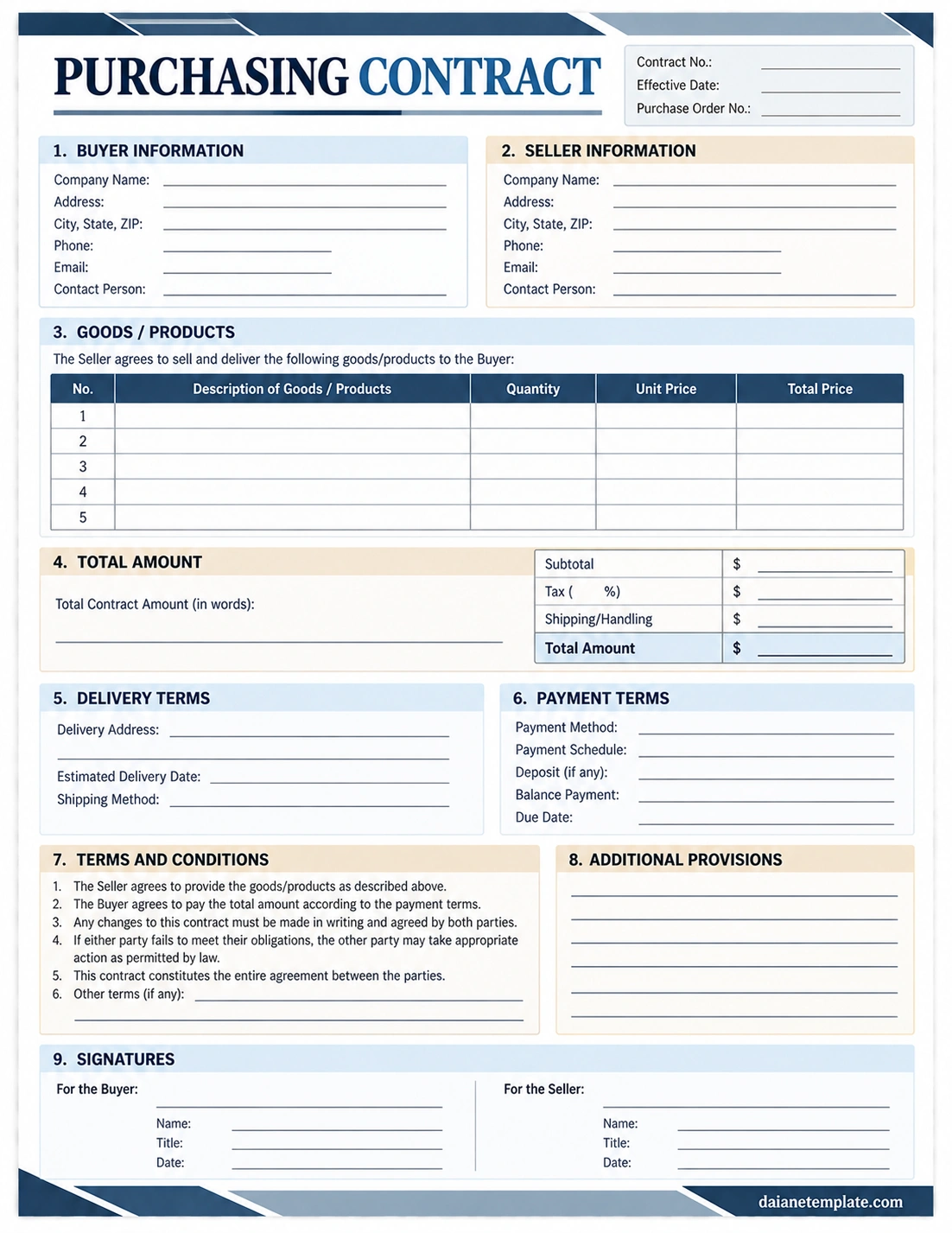
What Is a Purchasing Contract?
A purchasing contract is a formal agreement that records the terms under which a buyer purchases goods or services from a seller. It explains what is being purchased, how much it costs, when it should be delivered, and what each party is expected to do.
For business transactions, a purchasing contract may provide more detail than a simple purchase order. Depending on the arrangement, it can establish product specifications, quality standards, delivery requirements, payment schedules, inspection procedures, warranties, remedies, and other contractual terms.
The document can be used as a reference throughout the transaction. Both parties can review the agreed terms when preparing an order, delivering products, processing payment, or addressing a potential problem.
Why Is a Purchasing Contract Important?
A purchasing contract can provide structure and clarity for a transaction. This is particularly useful when the purchase involves significant value, recurring orders, custom products, long delivery periods, or detailed requirements.
Clarifies the Transaction
The contract identifies what the buyer is purchasing and what the seller agrees to provide. Clear descriptions can reduce uncertainty about the expected products or services.
Defines Pricing and Payment
The agreement can establish the purchase price, payment schedule, deposits, taxes, shipping costs, accepted payment methods, and other financial terms.
Establishes Delivery Expectations
A purchasing contract can identify delivery locations, expected dates, shipping methods, responsibility for transportation costs, and other logistics.
Documents Quality Requirements
For products with specific specifications, the contract can describe required materials, dimensions, quantities, performance standards, or other quality requirements.
Reduces Potential Disputes
When important terms are clearly documented, the parties have a common reference point if questions arise about price, delivery, product quality, payment, or other obligations.
Creates a Formal Record
A signed purchasing agreement provides documentation of the terms accepted by the parties. Depending on applicable law and the circumstances, the contract may also provide a basis for enforcing contractual rights and obligations.
What Should a Purchasing Contract Include?
The exact contents of a purchasing contract depend on the transaction. However, several sections are commonly useful for creating a clear agreement.
1. Buyer Information
Identify the person or organization purchasing the goods or services. Include the legal or business name, address, contact information, and the appropriate contact person.
2. Seller Information
Identify the seller or supplier and provide relevant contact details. For business purchases, it may also be useful to identify the seller’s business name and authorized representative.
3. Contract Information
Include a contract number, effective date, purchase order number, or other reference information when applicable. These identifiers can make the agreement easier to organize and locate.
4. Description of Goods or Services
Clearly describe the products or services covered by the purchasing agreement. Include specifications that are important to the transaction.
Depending on the purchase, details may include:
- Product name or description
- Model or product number
- Quantity
- Size or dimensions
- Materials
- Quality standards
- Performance specifications
- Packaging requirements
- Customization requirements
5. Purchase Price
State the agreed price for the products or services. If multiple items are included, an itemized pricing table can make the calculation easier to understand.
6. Taxes and Additional Costs
Explain how applicable taxes, shipping, handling, installation, customs charges, or other costs will be handled. Clearly identifying these costs can prevent unexpected charges.
7. Delivery Terms
Specify where and when the products should be delivered. Depending on the transaction, the contract may also address shipping arrangements, delivery responsibilities, inspection, and the handling of delays.
8. Payment Terms
Payment terms should explain when and how the buyer will pay. The agreement may specify a deposit, installment schedule, payment due date, invoice requirements, or other payment conditions.
9. Inspection and Acceptance
For certain purchases, the buyer may need an opportunity to inspect the goods after delivery. The contract can describe the inspection period and the process for reporting nonconforming or damaged products.
10. Warranties and Guarantees
If the seller provides a warranty or guarantee, the purchasing contract can identify the applicable terms. This may include the warranty period, covered defects, exclusions, and available remedies.
11. Responsibilities of the Parties
Clearly state the major responsibilities of the buyer and seller. This can include providing specifications, making payments, preparing products, delivering goods, inspecting shipments, and providing required documentation.
12. Changes and Amendments
Explain how changes to the purchasing contract should be approved and documented. Written amendments can help maintain a reliable record of modifications to the original agreement.
13. Dispute Resolution
The agreement can describe how the parties will address disputes. Depending on the transaction, this may involve negotiation, mediation, arbitration, court proceedings, or another agreed process, subject to applicable law.
14. Termination
If the agreement can be terminated before completion, explain the circumstances and procedures for termination. This section may address cancellation, material breach, notice requirements, or other applicable conditions.
15. Signatures
Include signature fields for authorized representatives of the buyer and seller. The document can also include printed names, titles, and signing dates.
How to Create a Purchasing Contract
Creating a purchasing contract starts with understanding the transaction and identifying the terms that need to be agreed upon before the purchase proceeds.
Define the Purchase
Begin by identifying exactly what the buyer intends to purchase. Describe the products or services clearly enough that both parties can understand what is included.
Confirm the Price
Establish the purchase price and identify any additional costs. If the transaction involves multiple products, consider using an itemized table showing quantities, unit prices, and totals.
Establish Delivery Requirements
Determine the delivery location, expected delivery date, shipping method, and responsibilities for transportation. If timing is important, clearly identify the relevant deadlines.
Set Payment Terms
Specify the payment method, invoice requirements, deposit, installment schedule, due dates, and other applicable payment conditions.
Define Product Standards
For purchases involving specific specifications, document the required quality, materials, dimensions, performance standards, packaging, or other characteristics.
Review Responsibilities
List the obligations of both parties. A clear division of responsibilities can reduce uncertainty during fulfillment.
Document the Agreement
Put the agreed terms into a written contract and review the document carefully. Both parties should have an opportunity to understand the terms before signing.
Purchasing Contract vs. Purchase Order
A purchasing contract and a purchase order can both be used in procurement, but they often serve different purposes.
A purchase order typically identifies a specific order placed by the buyer, including the products, quantities, prices, and requested delivery information. A purchasing contract can establish broader terms governing the relationship or transaction, including warranties, quality requirements, payment conditions, dispute procedures, and other obligations.
In some business transactions, a purchase order may be issued under the terms of an existing purchasing agreement. The exact relationship between the documents depends on how the transaction is structured.
Purchasing Contract vs. Sales Contract
A purchasing contract and sales contract can describe the same transaction from different perspectives. A purchasing agreement generally emphasizes the buyer’s procurement of goods or services, while a sales contract establishes the terms under which a seller agrees to sell and a buyer agrees to purchase.
The terminology can vary between industries and jurisdictions. What matters most is that the document clearly identifies the parties, transaction, obligations, and agreed terms.
Benefits of Using a Purchasing Contract Template
A purchasing contract template can provide a practical starting point for organizing a transaction. Instead of creating every section from scratch, the buyer or seller can begin with a structured document and customize it for the specific purchase.
A template can help organize:
- Buyer and seller information
- Product or service descriptions
- Quantities and prices
- Delivery requirements
- Payment terms
- Quality requirements
- Warranties
- Additional provisions
- Signatures
A template should still be reviewed and customized. Different purchases may require very different contractual terms, particularly when the transaction involves high-value goods, custom products, recurring orders, intellectual property, regulated products, international shipping, or significant performance obligations.
Tips for Writing a Clear Purchasing Contract
- Use specific descriptions: Clearly identify the products, quantities, specifications, and applicable standards.
- State prices clearly: Separate unit prices, subtotals, taxes, shipping, and other charges when appropriate.
- Use exact dates: Identify specific delivery and payment dates rather than vague deadlines.
- Define responsibilities: Explain what each party must do to complete the transaction.
- Document quality standards: Include important specifications and acceptance requirements.
- Address changes: Explain how amendments or purchase changes should be approved.
- Keep terminology consistent: Use the same terms for the buyer, seller, products, and other defined elements throughout the document.
- Review the complete agreement: Check that pricing, quantities, dates, payment terms, and other details are consistent.
- Keep signed copies: Both parties should retain an accessible copy of the executed agreement.
Common Purchasing Contract Mistakes
Vague Product Descriptions
A description such as “standard materials” may be insufficient when the buyer expects specific specifications. Important characteristics should be clearly documented.
Unclear Delivery Dates
When delivery timing matters, vague language can create confusion. Use clear dates or clearly defined delivery periods.
Missing Additional Costs
Shipping, taxes, installation, handling, or other charges can affect the total cost. The contract should explain which party is responsible for applicable costs.
Incomplete Payment Terms
Simply stating a purchase price may not be enough. The agreement should explain when payment is due and how it will be made.
Ignoring Product Acceptance
For important purchases, consider documenting how the buyer will inspect and accept the goods. This can be especially useful when quality or specifications are critical.
Not Addressing Changes
Purchase requirements can change. A contract should provide a clear method for documenting approved changes rather than relying on informal conversations.
Using a Template Without Customization
A generic contract may contain terms that do not fit the transaction. Review every section and remove, modify, or add provisions as appropriate.
When Should You Use a Purchasing Contract?
A written purchasing agreement can be particularly useful when a transaction involves substantial value, detailed specifications, recurring purchases, long-term supplier relationships, or significant delivery and payment obligations.
Potential uses include:
- Business equipment purchases
- Wholesale product purchases
- Raw material procurement
- Inventory purchases
- Office equipment and supplies
- Manufacturing materials
- Custom products
- Technology and equipment purchases
- Recurring supplier arrangements
- Commercial goods purchases
For simple, low-value transactions, a formal purchasing contract may not always be necessary. The appropriate documentation depends on the transaction, business practices, applicable law, and the level of risk involved.
Frequently Asked Questions About Purchasing Contracts
What is the purpose of a purchasing contract?
The purpose of a purchasing contract is to document the terms of a transaction between a buyer and seller. It can establish the products or services being purchased, price, quantity, delivery, payment, quality requirements, responsibilities, and other conditions.
Is a purchasing contract legally binding?
A purchasing contract can be legally binding when the applicable requirements for forming an enforceable contract are satisfied. However, enforceability depends on the wording of the agreement, the circumstances of the transaction, the parties involved, and applicable law.
What should a purchasing contract include?
A purchasing contract commonly includes buyer and seller information, product or service descriptions, quantities, pricing, delivery terms, payment terms, quality requirements, warranties, responsibilities, dispute provisions, termination terms, and signatures.
What is the difference between a purchasing contract and a purchase order?
A purchase order commonly identifies a specific order, while a purchasing contract can establish broader terms governing a purchase or ongoing business relationship. Depending on the transaction, both documents may be used together.
Can I use a purchasing contract template?
Yes. A purchasing contract template can provide a useful structure for documenting a transaction. However, the template should be customized to the specific goods, services, pricing, delivery requirements, payment terms, and other conditions of the purchase.
Who signs a purchasing contract?
Typically, authorized representatives of the buyer and seller sign the agreement. The appropriate signatories depend on the organizations involved and their internal authorization procedures.
Can a purchasing contract be changed after signing?
A purchasing contract can potentially be amended when the parties agree to changes and follow any modification requirements in the original agreement. Important changes should generally be documented rather than relying solely on verbal communication.
Why are delivery terms important in a purchasing contract?
Delivery terms establish expectations about where and when products should arrive and can clarify responsibilities for shipping and handling. Clear delivery provisions can reduce confusion when delays or delivery problems occur.
Why should product specifications be included?
Product specifications help define what the seller is expected to provide. Detailed specifications can make it easier for the buyer to evaluate whether delivered products meet the agreed requirements.
Final Thoughts
A purchasing contract provides a structured framework for documenting a transaction between a buyer and seller. By clearly defining products, quantities, pricing, delivery, payment, quality requirements, responsibilities, and other conditions, the agreement can help both parties understand their obligations.
The strongest purchasing agreements are specific, organized, and tailored to the transaction. Important details should not be left to assumptions, particularly when the purchase involves substantial value, custom products, recurring orders, or strict delivery requirements.
A purchasing contract template can simplify the drafting process by providing organized sections for buyer and seller information, goods or services, pricing, delivery, payment terms, conditions, and signatures. However, templates should be reviewed and customized rather than treated as one-size-fits-all legal documents.
Because contract requirements and enforceability can vary by jurisdiction and transaction type, important or high-value purchasing agreements may benefit from review by a qualified legal professional before they are finalized.
Download: Purchasing Contract Template
