A recipe card is a simple and practical way to record your favorite meals, organize cooking instructions, and preserve recipes for years to come. Whether you are collecting family recipes, planning weekly meals, or creating a personal cookbook, a well-designed recipe card helps keep every important detail in one convenient place.
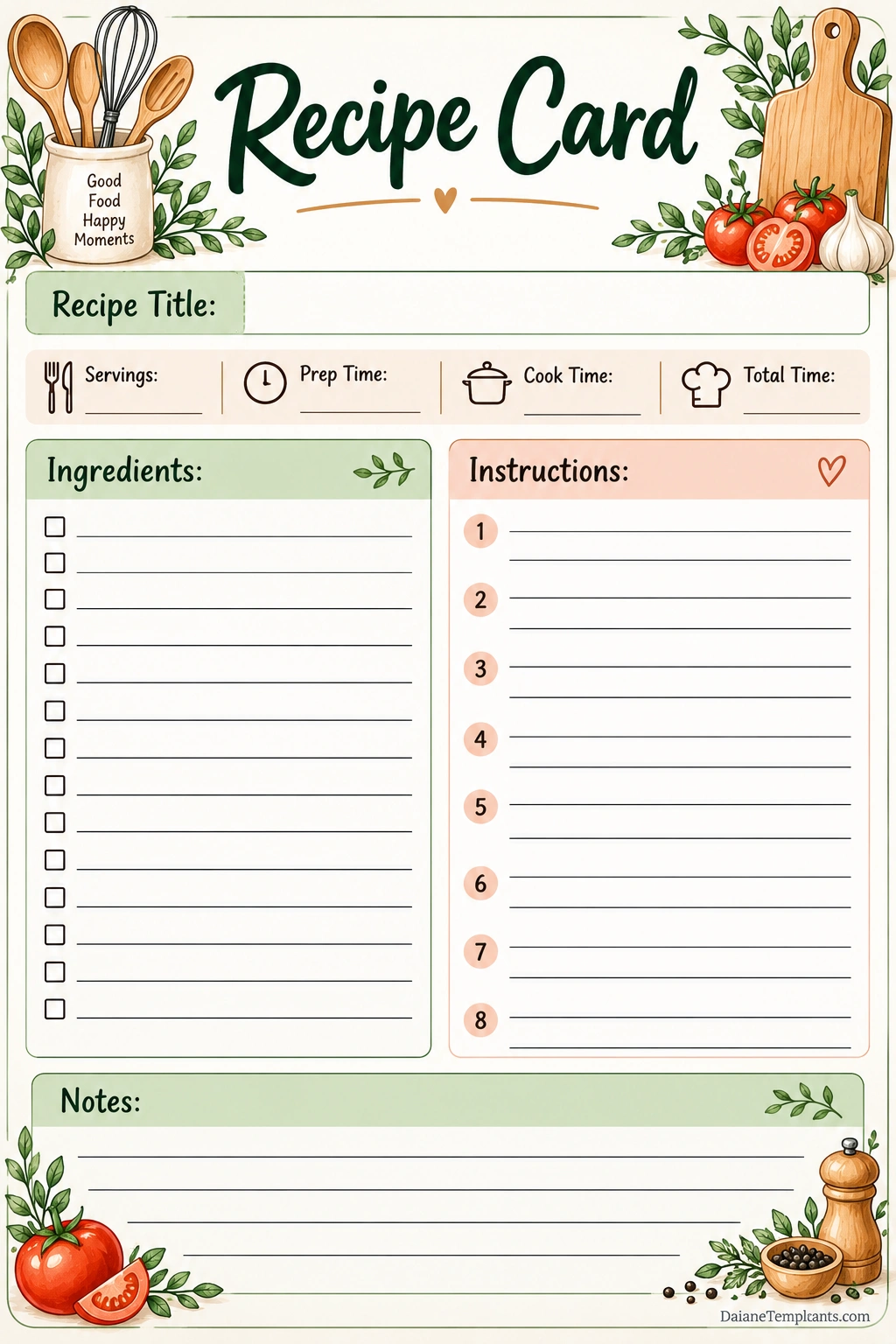
With a printable recipe card template, you can write down ingredients, preparation times, cooking instructions, serving sizes, and helpful notes without searching through scattered papers or digital files. Recipe cards are also useful for sharing homemade dishes with friends, teaching cooking skills, and passing treasured family traditions from one generation to the next.
In this guide, you will learn what a recipe card should include, how to use a printable recipe template, and practical ways to organize your growing collection of recipes.
What Is a Recipe Card?
A recipe card is a compact document that records everything needed to prepare a particular dish. It typically includes the recipe name, ingredient quantities, preparation instructions, cooking time, and serving information.
Unlike informal cooking notes, a structured recipe card provides a consistent format that makes recipes easier to read, follow, repeat, and share. It can be handwritten on a printable sheet or created digitally using a word processor or design tool.
Recipe cards are useful for home cooks, professional chefs, food bloggers, culinary students, and anyone who wants to keep cooking instructions organized. They can also serve as personal keepsakes for traditional dishes associated with family gatherings, holidays, and special occasions.
What Should a Recipe Card Include?
A useful recipe card contains enough information to prepare a dish successfully without making the layout difficult to read. The following sections help create a complete and organized cooking reference.
1. Recipe Title
Start with a clear recipe title, such as Homemade Chocolate Chip Cookies, Classic Tomato Soup, or Creamy Chicken Pasta. A specific name makes it easier to identify a dish when browsing a recipe collection.
2. Ingredients and Measurements
List every ingredient with its quantity and measurement. Include preparation details when necessary, such as chopped onions, softened butter, or freshly grated cheese.
- Use consistent measurements, such as cups, teaspoons, tablespoons, grams, or milliliters.
- List ingredients in the order they are used whenever practical.
- Include optional ingredients and substitutions when they are helpful.
- Specify ingredient conditions, such as room-temperature eggs or drained beans.
Accurate ingredient information helps prevent mistakes and makes it easier to shop for the items needed before cooking.
3. Preparation and Cooking Time
Record the preparation time, cooking time, and total time. These details help readers decide when to begin preparing a meal and how to fit the recipe into their schedule.
For recipes that require chilling, marinating, resting, or rising, include that time separately when it significantly affects the overall preparation process.
4. Serving Size
Include the number of servings or the approximate yield. For example, a recipe might make four servings, twelve muffins, or one 9-inch pie.
Serving information helps cooks adjust ingredient quantities when preparing meals for a smaller household or a larger gathering.
5. Step-by-Step Instructions
Write cooking instructions in a clear, logical order. Begin with preparation tasks and continue through cooking, assembly, and serving.
- Use numbered steps to make instructions easier to follow.
- Describe important temperatures and cooking times.
- Explain visual signs of doneness when useful.
- Separate complicated procedures into shorter steps.
For example, instead of writing “Cook until done,” explain how long to cook the food and what signs indicate that it is ready.
6. Notes and Helpful Tips
Use the notes section to record adjustments, ingredient substitutions, preferred brands, storage instructions, or feedback from previous attempts. These details can improve the recipe over time and help you remember what worked best.
Benefits of Using a Printable Recipe Card Template
A printable recipe card template provides a ready-made structure for recording recipes. Instead of creating a new layout every time, you can use the same format for different dishes and build a consistent recipe collection.
Keeps Recipes Organized
A standard recipe format makes it easier to find ingredients, review cooking times, and follow instructions. You can arrange completed cards by meal type, cuisine, cooking method, or occasion.
Makes Cooking More Consistent
Recording exact ingredient quantities and clear instructions helps you reproduce successful dishes. Consistent documentation is especially valuable when preparing the same meal repeatedly or teaching someone else how to make it.
Saves Time During Meal Preparation
When all the necessary information appears on one card, you spend less time searching through notebooks, websites, and loose notes. You can check the ingredients before shopping and review the instructions before starting to cook.
Preserves Family Recipes
Handwritten recipe cards can preserve more than cooking instructions. They can include the name of the person who shared the recipe, the occasion when it was served, or a short story about its history.
To protect recipes from fading or damage, consider making digital copies of important cards and storing the originals in a dry, safe place.
Supports Cooking and Kitchen Training
Recipe cards are useful for teaching children basic cooking skills, helping new cooks follow a process, or standardizing food preparation in a small kitchen or food business. Clear measurements and repeatable steps reduce confusion and support consistent results.
How to Use a Recipe Card Template
Creating a useful recipe card does not require advanced design skills. Follow these steps to turn a favorite dish into an easy-to-use cooking reference.
Step 1: Choose a Recipe
Select a dish you prepare regularly or want to preserve for future use. Gather the ingredients, measurements, cooking times, and instructions before completing the card.
Step 2: Fill In the Recipe Details
Write the recipe title at the top of the card. Add the serving size, preparation time, cooking time, and total time. These details provide a quick overview before you begin.
Step 3: List the Ingredients
Record each ingredient and its quantity. If the recipe has several components, such as a filling and a topping, group the ingredients under clear labels when the available space allows.
Step 4: Write the Instructions
Arrange the cooking steps in the order they should be completed. Include important temperatures, timing, and preparation techniques. Keep each step concise enough to read while cooking.
Step 5: Add Personal Notes
Record useful details such as possible substitutions, preferred seasoning levels, serving suggestions, or changes you want to make next time. If the recipe comes from a family member, you can also include their name or the date you received it.
Step 6: Print and Store the Card
Print the completed recipe card on standard paper or cardstock, depending on your preference. Keep it in a recipe binder, a labeled box, or a protective sleeve near your other cooking references.
If you prefer digital organization, save a copy of the completed recipe in a folder and use consistent filenames so it is easy to find later.
Tips for Creating Clear and Reliable Recipe Cards
A well-organized recipe card should be easy to read at a glance. Use the following tips to make your cooking notes more useful.
- Be specific: Include exact quantities, temperatures, and cooking times whenever possible.
- Use familiar measurements: Choose a consistent measurement system and avoid unexplained abbreviations.
- Keep instructions practical: Use short sentences and one main action per step when possible.
- Record the yield: State how many servings or portions the recipe produces.
- Include relevant substitutions: Note alternatives that have been tested or that you know work well.
- Update the recipe: Revise measurements and instructions after making meaningful changes.
- Protect important cards: Use sleeves or make digital backups of recipes you do not want to lose.
- Label special requirements: Clearly identify important allergens or dietary considerations when relevant.
For food safety, do not rely on appearance alone when determining whether meat, poultry, seafood, or other temperature-sensitive foods are fully cooked. Include appropriate internal temperature guidance when relevant and consult reliable food-safety recommendations.
Creative Ways to Organize Your Recipe Cards
Once you have collected several recipes, a simple organization system can make your collection much more useful. Choose a method that matches how you cook and search for dishes.
Organize by Meal Type
Separate breakfast, lunch, dinner, snacks, desserts, and beverages. This method is convenient when planning meals for a particular time of day.
Organize by Cuisine
Create categories for Italian, Mexican, Asian-inspired, Mediterranean, or other cuisines you enjoy. This approach makes it easier to plan themed dinners and explore different cooking traditions.
Organize by Main Ingredient
Group recipes by chicken, seafood, beef, vegetables, pasta, grains, or other main ingredients. This is particularly helpful when you want to use ingredients already available in your kitchen.
Create a Family Recipe Collection
Reserve a section for family favorites, holiday dishes, and recipes passed down through generations. Include names, dates, or short memories to preserve the story behind each dish.
Use a Digital Backup
Scan handwritten cards or photograph them clearly and store the files in a dedicated digital folder. Use descriptive filenames, such as “Classic-Apple-Pie” or “Grandmas-Chicken-Soup,” to make searching easier.
Common Recipe Card Mistakes to Avoid
Even a simple recipe card can become confusing if essential information is missing. Avoid these common problems when documenting your dishes.
- Missing measurements: Instructions such as “add some flour” may be difficult to repeat consistently.
- Unclear cooking steps: Skipping important preparation details can lead to different results.
- No serving information: Without a yield, adjusting quantities becomes more difficult.
- Unrecorded changes: Failing to update a successful adjustment can make the next attempt less predictable.
- Overcrowded layouts: Too much text in a small space can make a card difficult to read.
- Poor storage: Unprotected cards may become stained, torn, or misplaced in a busy kitchen.
A recipe card does not need to contain every possible detail. Focus on the information someone needs to prepare the dish accurately, then use the notes section for additional tips.
Frequently Asked Questions About Recipe Cards
What is the purpose of a recipe card?
The purpose of a recipe card is to record ingredients, measurements, preparation details, cooking instructions, and other useful information in one organized format. It helps cooks prepare dishes consistently, share recipes, and preserve favorite meals.
What information should be on a recipe card?
A recipe card should generally include the recipe title, ingredient quantities, serving size, preparation time, cooking time, step-by-step instructions, and a notes section. You can also add storage tips, substitutions, dietary information, and the recipe source when relevant.
What size is a standard recipe card?
Common recipe card sizes include 3 by 5 inches and 4 by 6 inches. Larger printable recipe sheets can provide more room for detailed instructions and ingredient lists. Choose a size that suits the length of your recipes and your storage system.
Can I use a recipe card template for baking?
Yes. A recipe card template works well for cakes, cookies, bread, pastries, and other baked goods. Include precise ingredient measurements, oven temperature, baking time, pan size, and any cooling or resting requirements.
How do I make a recipe card easier to follow?
Use clear headings, consistent measurements, numbered instructions, and short sentences. Put the steps in the order they should be completed, and include specific cooking times and temperatures whenever possible.
Can I use recipe cards to plan meals?
Yes. Recipe cards can support weekly meal planning by helping you review ingredients, estimate preparation time, and organize meals by day. You can also use the ingredient lists to create shopping lists before visiting the grocery store.
Should I keep recipe cards digitally or on paper?
Both methods can work well. Printed recipe cards are convenient to use in the kitchen and can preserve handwritten family notes. Digital copies are easy to search, duplicate, and back up. Keeping important recipes in both formats offers additional protection.
Conclusion
A recipe card is a practical tool for organizing ingredients, documenting cooking instructions, and preserving the dishes you enjoy most. By recording accurate measurements, clear steps, serving sizes, and useful notes, you can make your recipes easier to follow and repeat.
Whether you are building a personal cookbook, collecting family favorites, or organizing everyday meals, a printable recipe card template provides a simple starting point. Complete a card for each dish, store your collection consistently, and update your notes as you discover better ways to prepare your favorite recipes.
With a little organization, your recipe collection can become a reliable kitchen reference and a lasting record of the meals and traditions you want to keep.
Download: Recipe Card Template
