A well-written sponsorship letter can help turn a promising event, project, or community initiative into a successful partnership. Whether you are organizing a fundraising event, hosting a conference, supporting a nonprofit organization, or launching a community program, a professional sponsorship request can help you secure the financial or in-kind support you need.
However, asking a business or individual for sponsorship involves more than requesting a donation. Potential sponsors want to understand what they will receive in return. They need to see how supporting your initiative can increase brand visibility, connect them with a relevant audience, and strengthen their reputation.
This guide explains how to write an effective sponsorship letter, what information to include, and how to present a compelling value proposition. You will also find practical examples, sponsorship request tips, and ideas for communicating the benefits of a potential partnership.
What Is a Sponsorship Letter?
A sponsorship letter is a formal document used to request financial assistance, products, services, or other resources from a company, organization, or individual. It introduces your event or project, explains why you need support, and describes the benefits sponsors can receive by participating.
Unlike a general donation request, a sponsorship proposal emphasizes a mutually beneficial relationship. It explains how the sponsor’s contribution can support your goals while providing meaningful exposure or business opportunities.
Common situations that require a sponsorship request letter include:
- Community events: Requesting support for festivals, neighborhood programs, and public gatherings.
- Sports activities: Seeking sponsorship for tournaments, athletic teams, and sporting competitions.
- Educational programs: Obtaining funding, equipment, or supplies for schools, workshops, and student activities.
- Nonprofit initiatives: Securing financial assistance for charitable programs and awareness campaigns.
- Business events: Finding sponsors for conferences, exhibitions, networking sessions, and industry events.
- Creative projects: Requesting support for art exhibitions, cultural performances, and community productions.
Why Is a Professional Sponsorship Letter Important?
A professional sponsorship letter helps establish credibility and gives potential partners a clear understanding of your initiative. It also makes your request easier to evaluate by presenting the important information in an organized format.
1. Creates a Positive First Impression
Your sponsorship request may be the first introduction a company has to your organization. A well-structured letter demonstrates professionalism, preparation, and respect for the recipient’s time.
2. Explains the Value of the Partnership
Companies are more likely to consider a sponsorship opportunity when they understand its potential benefits. Your letter should explain how the partnership can support brand recognition, audience engagement, and community involvement.
3. Establishes Clear Expectations
A sponsorship request should identify the type of support you need and the recognition or benefits you can offer. This reduces misunderstandings and creates a foundation for a successful working relationship.
4. Makes Follow-Up Easier
A written proposal gives sponsors something they can review and share with their marketing, management, or corporate responsibility teams. It also provides a useful reference for future discussions.
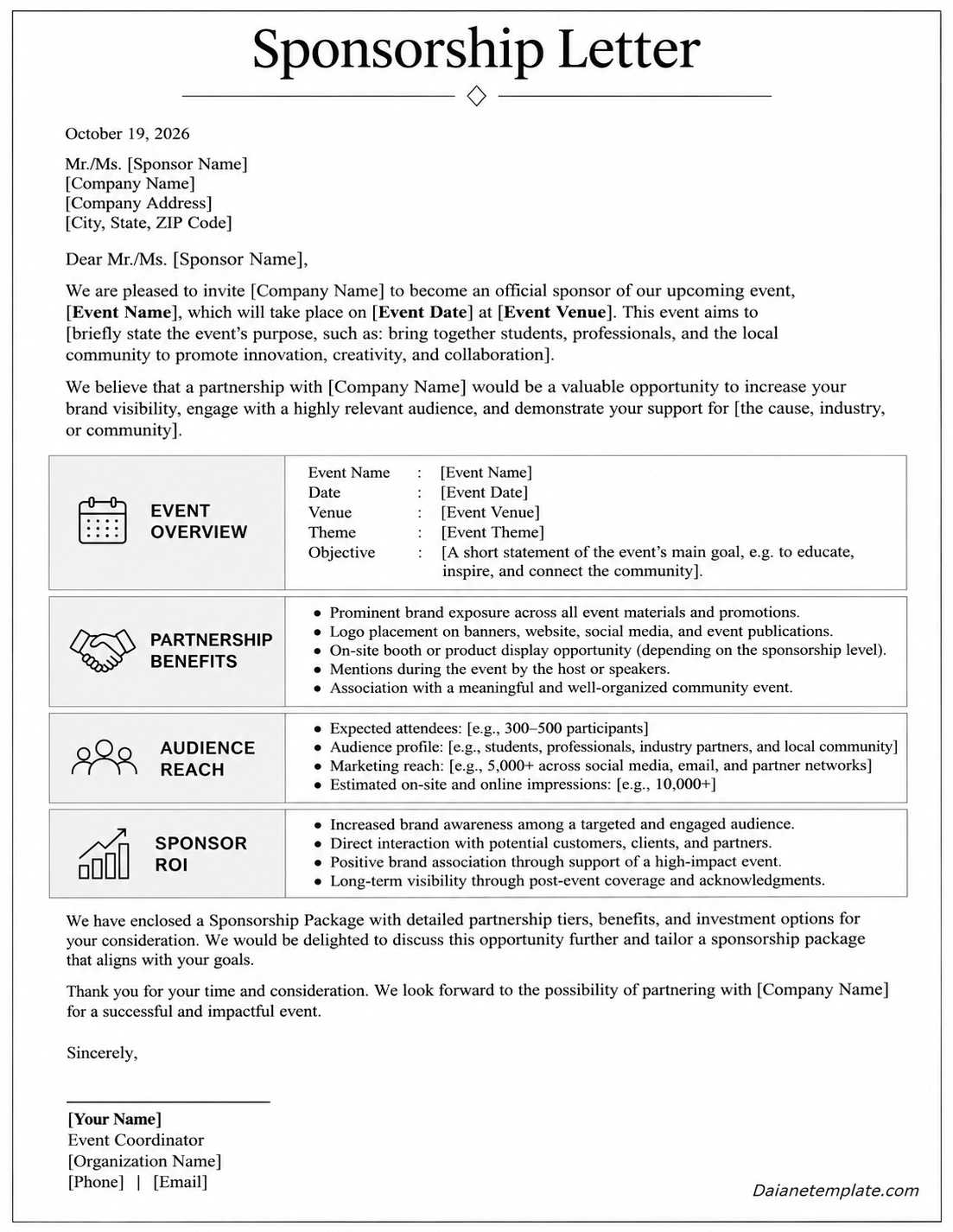
What to Include in a Sponsorship Letter
An effective sponsorship letter should be informative without overwhelming the reader. Focus on the details that help a potential sponsor understand your initiative and evaluate the opportunity.
1. Your Organization’s Information
Begin with your organization’s name, address, email, phone number, and website if available. Include your logo or letterhead to make the document look more professional.
2. The Recipient’s Information
Address the letter to a specific person whenever possible. Research the appropriate contact in the company’s marketing, public relations, community relations, or sponsorship department.
3. A Clear Introduction
Introduce yourself and your organization. Briefly explain why you are contacting the recipient and identify the event, project, or cause you want to support.
4. Event or Project Details
Provide essential information so the sponsor can understand your initiative. Depending on the project, include:
- Event or project name.
- Date, time, and location.
- Main purpose and objectives.
- Expected number of participants or attendees.
- Target audience and community served.
- Important activities or planned outcomes.
5. Your Sponsorship Request
Be specific about the resources you need. Rather than simply asking for support, explain the expected contribution and how it will be used.
For example, you might request $2,000 in financial assistance, 100 promotional products, event equipment, refreshments, or professional services. If you offer different sponsorship levels, briefly introduce the available options.
6. Sponsor Benefits and Return on Investment
This section is particularly important because it explains what the sponsor receives in exchange for their contribution. Depending on the nature of your event, benefits may include:
- Company logo placement on event banners and promotional materials.
- Brand mentions on social media and your organization’s website.
- Recognition during opening or closing announcements.
- Exhibition space or an opportunity to display products.
- Access to relevant networking opportunities.
- Inclusion in press releases and post-event communications.
- Positive association with a community-focused initiative.
Whenever possible, include measurable information such as expected attendance, website traffic, social media reach, or promotional impressions. Avoid promising results that you cannot reasonably deliver.
7. A Clear Call to Action
Finish the main request by inviting the recipient to discuss the opportunity. Suggest a meeting, phone call, or email conversation to explore the available sponsorship arrangements.
8. Professional Closing
Thank the recipient for considering your proposal. Include your full name, position, organization, email address, and phone number so they can contact you easily.
How to Write a Sponsorship Letter Step by Step
Writing a sponsorship request becomes easier when you follow a clear process. These steps can help you create a persuasive message that addresses the interests of potential partners.
Step 1: Research Potential Sponsors
Start by identifying businesses or organizations whose products, services, or values align with your initiative. A company that already supports similar events or community programs may be a suitable prospect.
Consider the sponsor’s target audience, marketing priorities, industry, and previous partnerships. A relevant connection makes your request more convincing.
Step 2: Define Your Objectives
Before writing, determine exactly what you want to achieve. Establish your funding requirements, identify the resources you need, and calculate how sponsorship contributions will help your initiative succeed.
Step 3: Prepare a Compelling Value Proposition
Explain why the opportunity is worth considering. Connect your audience and objectives with the sponsor’s potential marketing or community engagement goals.
For example, a local fitness company may benefit from sponsoring a community sports event because it provides an opportunity to introduce its brand to health-conscious participants.
Step 4: Choose the Right Sponsorship Benefits
Develop realistic benefits that match the size and type of contribution. A larger sponsor may receive prominent branding and speaking opportunities, while a smaller sponsor might receive logo placement and social media recognition.
Step 5: Write a Personalized Letter
Avoid sending exactly the same generic sponsorship request to every company. Mention something relevant about the recipient’s business and explain why you believe the partnership makes sense.
Step 6: Review and Send Your Request
Check your letter for spelling, grammar, contact information, and consistency. Attach a sponsorship package or supporting proposal when additional details are necessary. Send the document to the appropriate contact and keep a record of your communication.
Sponsorship Letter Sample
The following example demonstrates how to request sponsorship for a community event. You can customize the wording, contribution amount, and benefits to match your own project.
Sample Sponsorship Letter
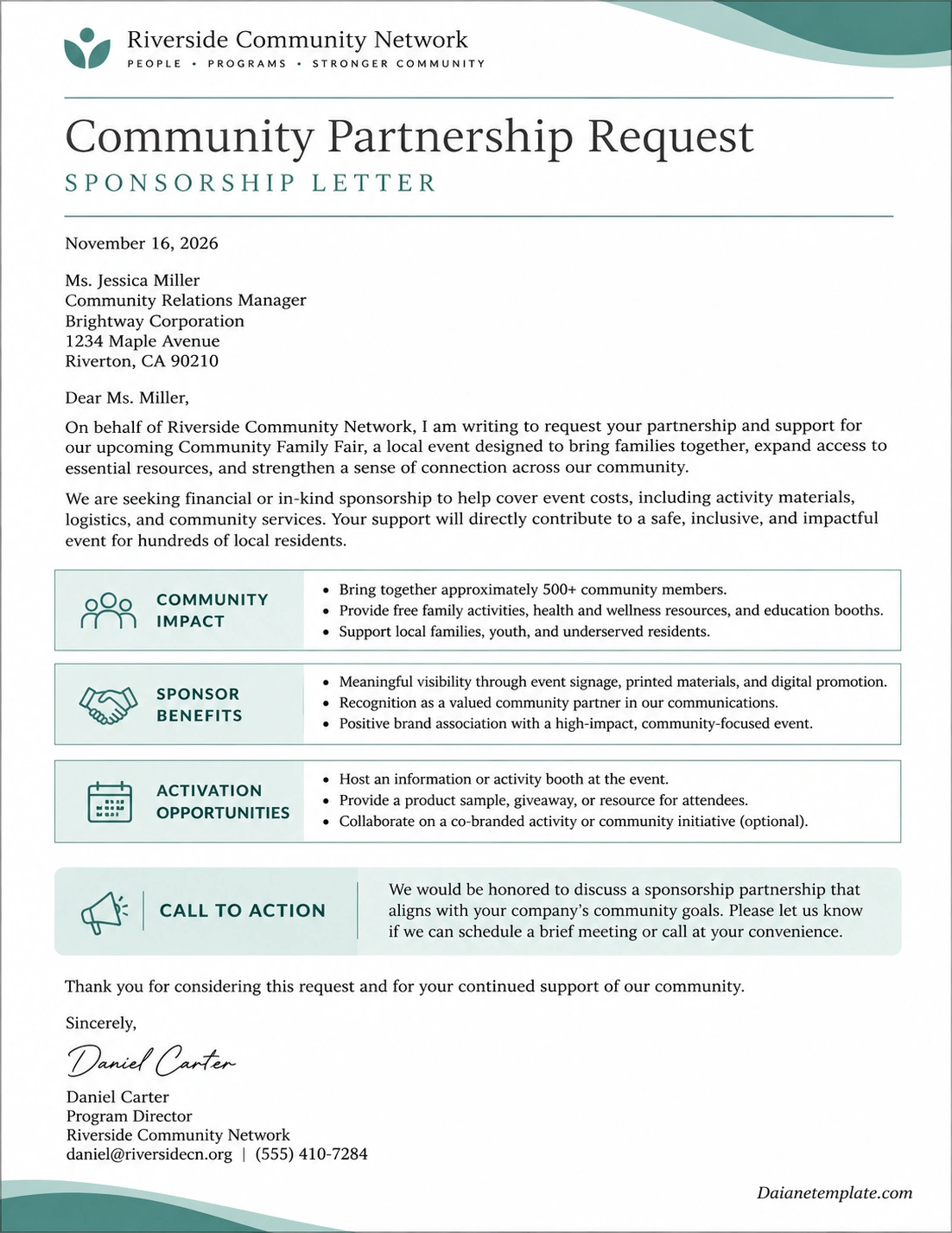
Riverside Community Network
123 Community Avenue
Riverton, CA 90210
Email: info@example.org
Phone: (555) 410-7284November 16, 2026
Ms. Jessica Miller
Community Relations Manager
Brightway Corporation
1234 Maple Avenue
Riverton, CA 90210Dear Ms. Miller,
On behalf of Riverside Community Network, I am writing to invite Brightway Corporation to become a valued sponsor of our upcoming Community Family Fair, scheduled for March 20, 2027, in Riverton.
This event aims to bring local families together through educational activities, entertainment, health resources, and community engagement programs. We anticipate welcoming approximately 500 attendees, including families, students, and local residents.
We are seeking financial sponsorship of $2,000 to help cover event materials, venue arrangements, and activity expenses. In recognition of your support, we would be pleased to offer the following benefits:
- Prominent company logo placement on selected event banners and promotional materials.
- Recognition on our official website and social media channels.
- A dedicated announcement during the event.
- An opportunity to display promotional materials at the venue.
- Recognition in our post-event thank-you communication.
We believe this partnership would provide Brightway Corporation with meaningful exposure while demonstrating its commitment to supporting local families and community development.
We would welcome the opportunity to discuss this proposal and explore a sponsorship arrangement that aligns with your company’s objectives.
Thank you for your time and consideration. We look forward to the possibility of working together to make this event a success.
Sincerely,
Daniel Carter
Program Director
Riverside Community Network
daniel@example.org
(555) 410-7284
Note: The names, addresses, event details, and contribution amounts above are fictional examples. Replace them with accurate information before sending your letter.
Types of Sponsorship Letters
Different initiatives require different sponsorship approaches. Understanding the type of request you are making can help you choose the right wording and supporting information.
Event Sponsorship Letter
An event sponsorship letter requests financial or in-kind assistance for an upcoming event. It should highlight the event’s audience, expected attendance, promotional opportunities, and available sponsorship packages.
Nonprofit Sponsorship Letter
A nonprofit sponsorship request explains the organization’s mission, the community problem it addresses, and the impact of the proposed initiative. It should also explain how sponsor contributions will be used responsibly.
Sports Sponsorship Letter
A sports sponsorship letter seeks support for an athlete, team, tournament, or sporting program. Potential benefits may include jersey branding, event signage, promotional mentions, and community exposure.
School or Educational Sponsorship Letter
Educational sponsorship letters request resources for school events, student programs, competitions, or learning activities. Requests may include financial contributions, learning materials, technology, or equipment.
In-Kind Sponsorship Letter
An in-kind sponsorship letter requests products or services instead of direct financial assistance. Examples include catering, printing, transportation, venue access, equipment, and promotional merchandise.
Tips for Making Your Sponsorship Request More Effective
A persuasive sponsorship letter should focus on the sponsor’s interests as well as your organization’s needs. Use these practical tips to improve your chances of receiving a positive response.
- Keep it concise: Aim for approximately one page when possible. Provide additional details in a separate sponsorship proposal.
- Personalize each request: Address the recipient by name and explain why their organization is a suitable partner.
- Use specific figures: Include realistic attendance estimates, audience demographics, marketing reach, and funding requirements.
- Offer clear benefits: Explain exactly how sponsors will receive recognition and opportunities to engage with your audience.
- Include different sponsorship levels: Consider offering several contribution options with clearly defined benefits.
- Maintain a professional tone: Use polite, confident, and straightforward language.
- Follow up appropriately: If you do not receive a response, consider sending a polite follow-up email after approximately five to seven business days.
- Deliver what you promise: Provide agreed recognition and document the results after the event.
Common Sponsorship Letter Mistakes to Avoid
Even a well-intentioned sponsorship request can be unsuccessful if it lacks clarity or does not demonstrate value. Avoid these common mistakes:
- Making a vague request: Clearly state the amount or type of support you need.
- Focusing only on your organization’s needs: Explain how the sponsor can benefit from the partnership.
- Sending generic messages: Tailor your letter to each potential sponsor.
- Making unrealistic promises: Offer benefits that your organization can actually deliver.
- Ignoring the target audience: Explain who will attend or benefit from your initiative.
- Forgetting contact details: Always provide an easy way for the recipient to respond.
- Using an overly complicated document: Keep the main letter organized and move detailed package information into an attachment.
How to Present Sponsorship Packages and ROI
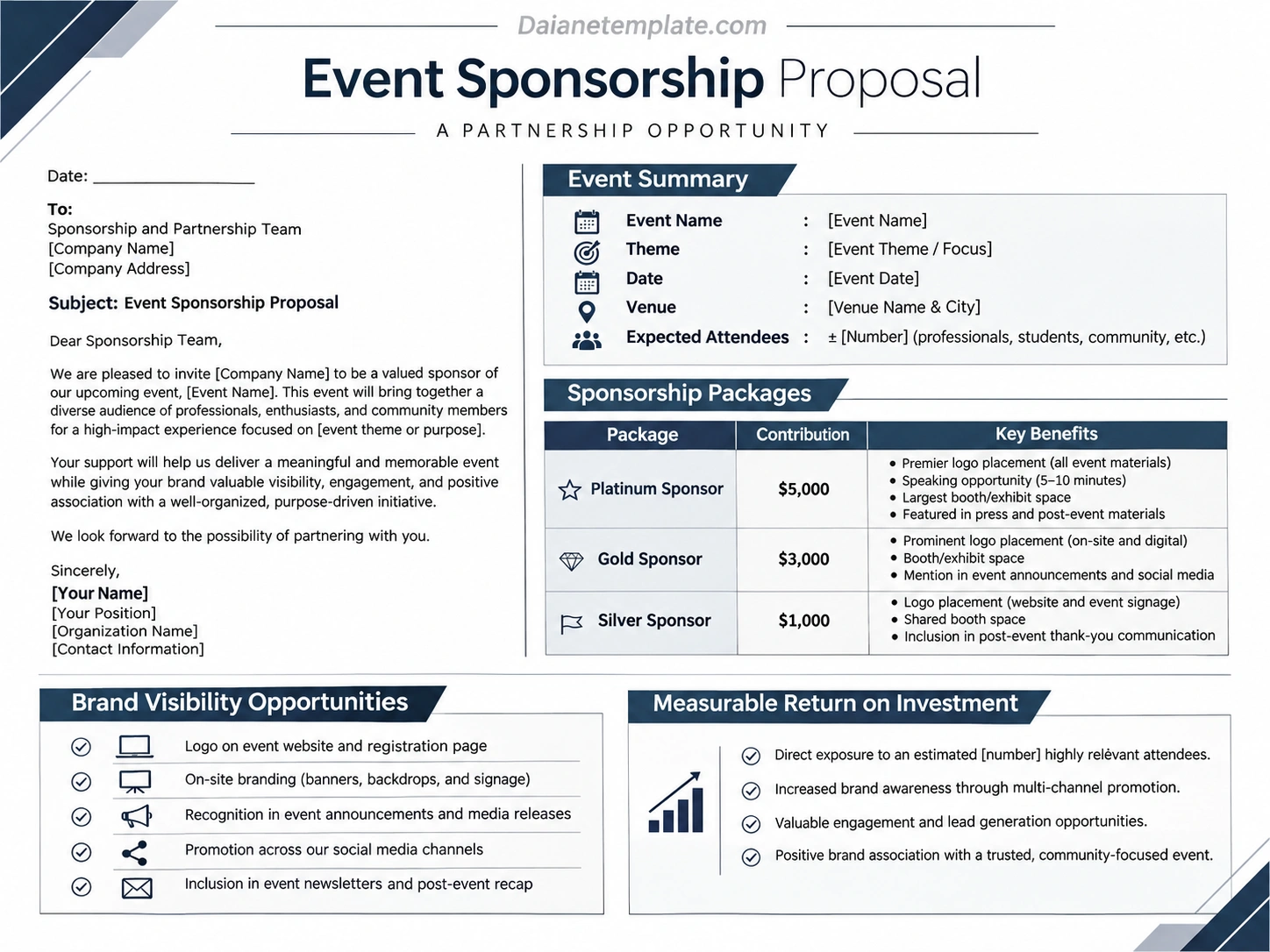
For larger events or projects, consider attaching a separate sponsorship proposal to your letter. This document can provide more detailed information about contribution levels, marketing opportunities, and expected outcomes.
A simple sponsorship package might include the following options:
- Platinum Sponsor: Highest brand visibility, premium logo placement, prominent event recognition, and selected speaking or exhibition opportunities.
- Gold Sponsor: Prominent promotional placement, event recognition, and selected brand engagement opportunities.
- Silver Sponsor: Standard logo placement, website recognition, and inclusion in selected promotional materials.
To communicate return on investment (ROI), explain how you intend to measure the value of these benefits. Useful indicators may include:
- Number of attendees exposed to the sponsor’s brand.
- Social media impressions and engagement.
- Website visits and referral traffic.
- Promotional material distribution.
- Booth visits, inquiries, or qualified leads when tracked appropriately.
- Post-event brand recognition and audience feedback.
Be transparent about the difference between estimated exposure and guaranteed results. A clear measurement plan makes your sponsorship proposal more credible.
Frequently Asked Questions About Sponsorship Letters
1. What is the purpose of a sponsorship letter?
The purpose of a sponsorship letter is to formally request financial or in-kind support for an event, project, organization, or cause. It explains the initiative, identifies the resources needed, and presents the benefits a potential sponsor may receive in return.
2. How long should a sponsorship letter be?
A sponsorship letter should generally be one page long. Keep the main request concise and include additional information, such as sponsorship tiers, budgets, and marketing plans, in a separate proposal when necessary.
3. What should I offer in exchange for sponsorship?
You can offer brand visibility, logo placement, social media mentions, event announcements, exhibition opportunities, promotional displays, networking access, and recognition in post-event materials. Choose benefits that are relevant to the sponsor and realistic for your organization to provide.
4. Should I include a specific sponsorship amount?
Yes. Providing a specific amount or contribution range helps potential sponsors evaluate your request. Explain how the funds will be used and consider including alternative sponsorship levels for different budgets.
5. Can I request products or services instead of money?
Absolutely. An in-kind sponsorship request can ask for products, equipment, venue access, catering, transportation, printing, or professional services. Explain how the requested contribution will support your initiative.
6. Who should receive a sponsorship letter?
Send your letter to someone responsible for sponsorships, marketing, public relations, corporate partnerships, or community relations. Researching the correct contact person can improve the likelihood of your request reaching the right department.
7. When should I send a sponsorship request?
Send your request several weeks or months before your event, depending on its size and the sponsor’s approval process. Larger companies may require additional time for budget reviews and internal authorization.
8. Should I follow up after sending a sponsorship letter?
Yes. If you have not received a response, send a polite follow-up email after approximately five to seven business days. Briefly mention your original request, express your continued interest, and offer to provide additional information.
9. What is the difference between a sponsorship letter and a sponsorship proposal?
A sponsorship letter is a formal introduction and request for support. A sponsorship proposal provides more detailed information about the initiative, funding requirements, contribution levels, sponsor benefits, marketing opportunities, and expected outcomes. The two documents can be sent together.
Conclusion
A successful sponsorship letter does more than ask for financial assistance. It presents a clear opportunity for businesses and organizations to support a meaningful initiative while gaining relevant exposure, building relationships, and strengthening their community presence.
By introducing your project, explaining your sponsorship needs, outlining measurable benefits, and maintaining a professional tone, you can create a request that potential sponsors will take seriously.
Use the sponsorship letter examples and guidelines in this article as a starting point. Customize the details for each recipient, offer realistic partnership benefits, and follow up professionally. With a thoughtful approach, your sponsorship request can become the first step toward a valuable and lasting partnership.
Download: Sponsorship Letter Template Word
