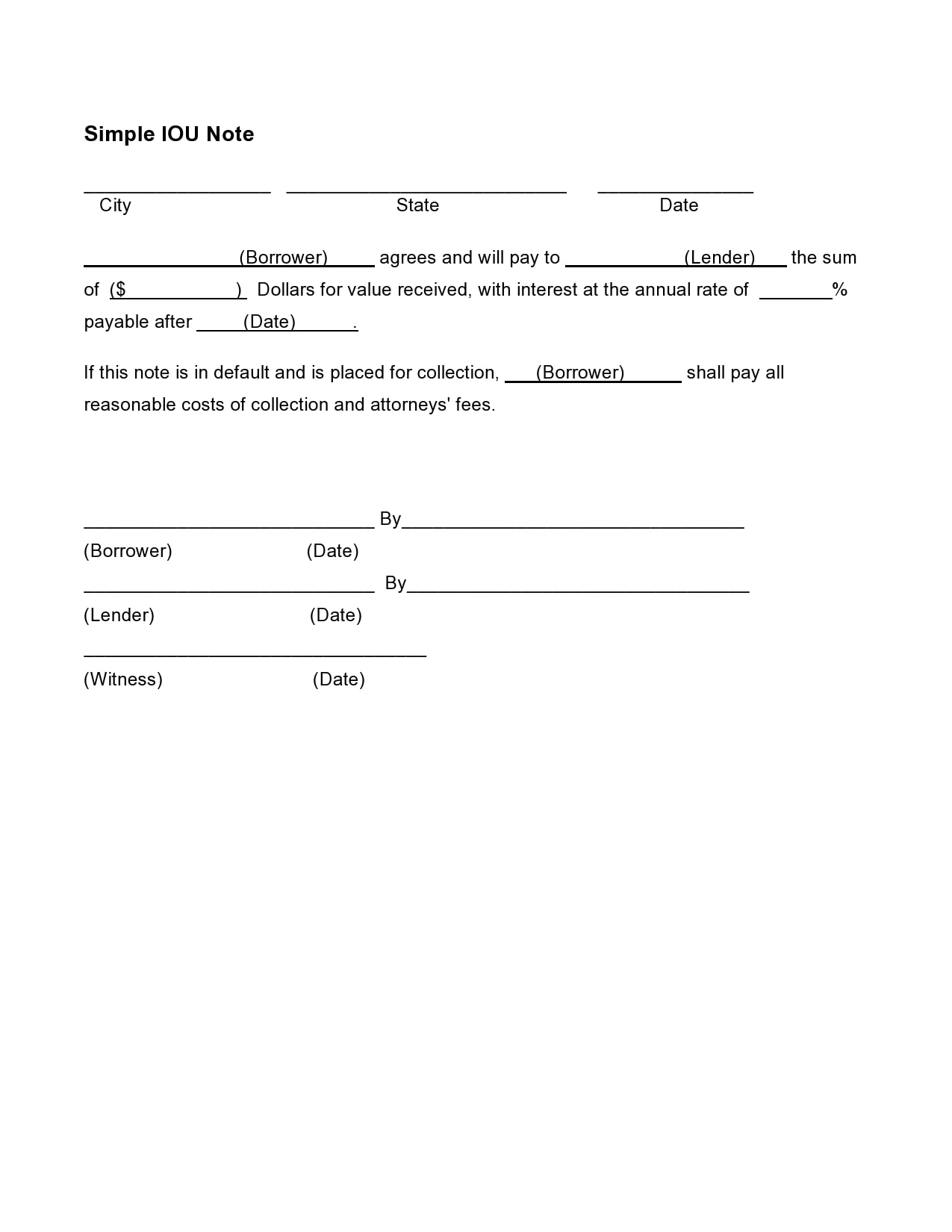
IOU templates are commonly used to document an informal agreement between two parties regarding a debt or obligation. Whether you’re lending money to a friend, borrowing from a family member, or simply keeping track of favors, having a written record can help avoid misunderstandings and disputes in the future. In this comprehensive guide, we’ll explore everything you need to know about IOU templates, including what they are, why they’re important, what to include, how to use them effectively, and tips for successful implementation.
What is an IOU Template?
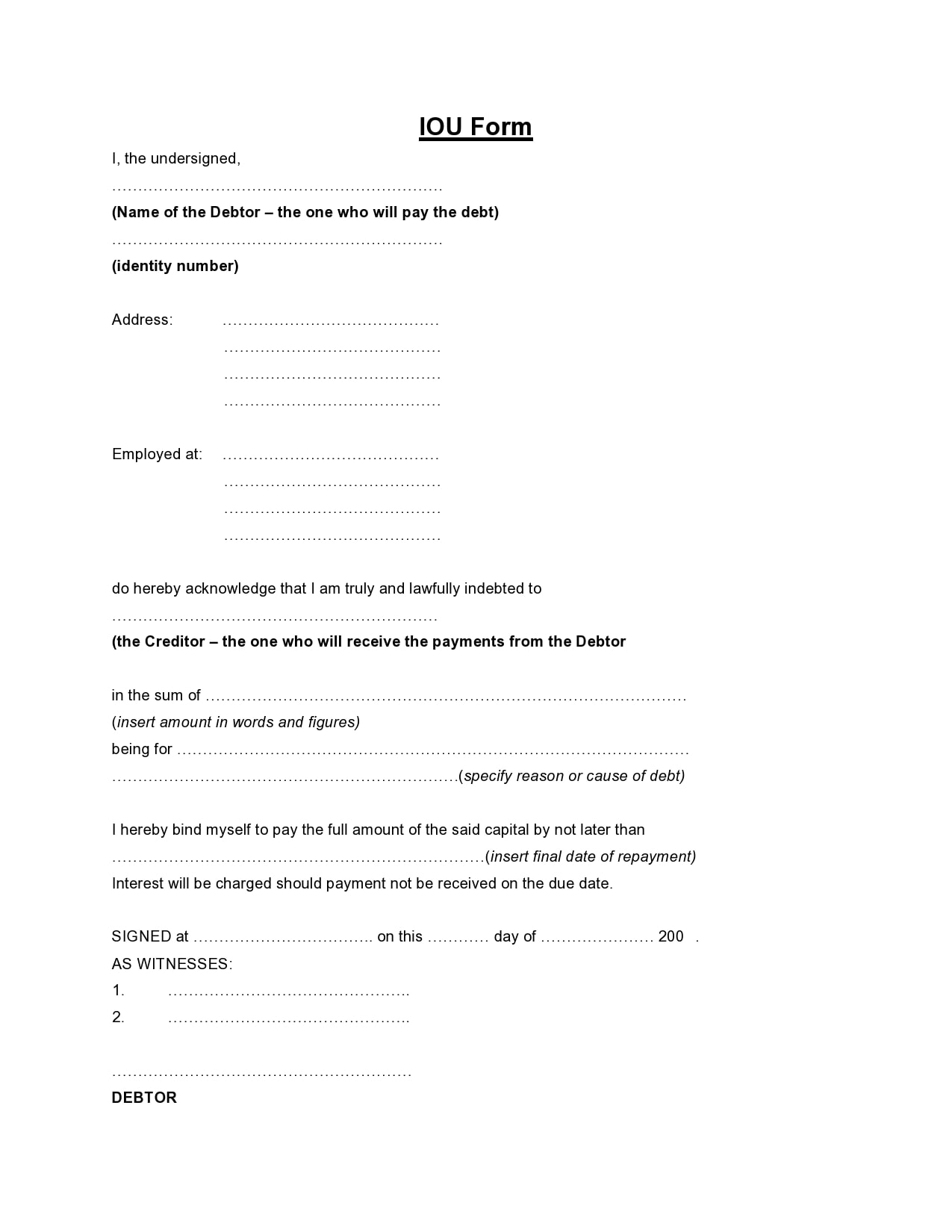
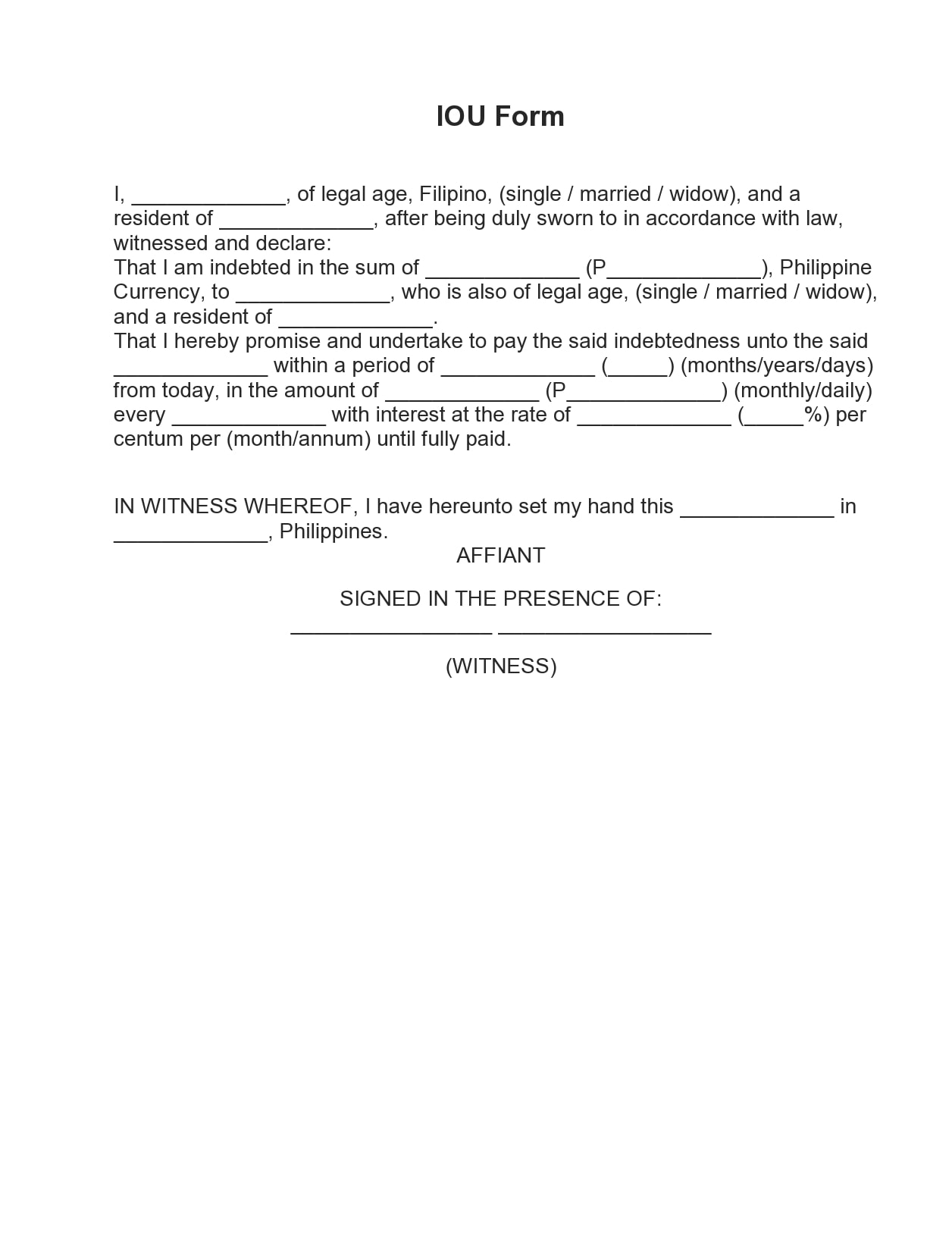
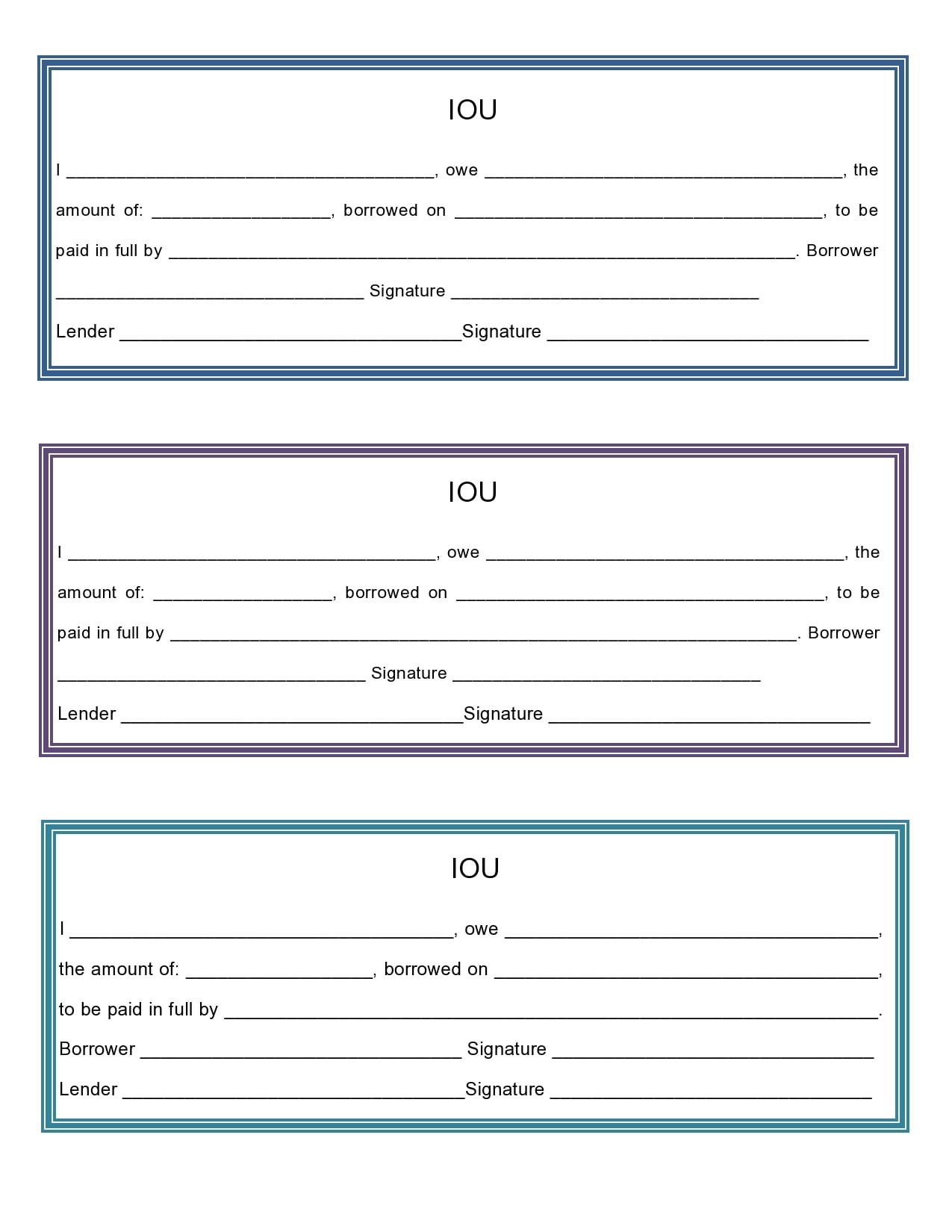
An IOU template, short for “I Owe You,” is a written agreement that acknowledges a debt or obligation between two parties. It typically includes details such as the amount owed, the date of the agreement, the names of the parties involved, and any additional terms or conditions. While an IOU template is not a legally binding document like a promissory note, it can serve as valuable evidence in case of a dispute.
Why Use an IOU Template?
There are several reasons why using an IOU template can be beneficial:
- Clarity: Having a written record of the debt or obligation can prevent misunderstandings and miscommunications.
- Documentation: An IOU template provides a clear record of the agreement that can be referenced in the future.
- Protection: In case of a dispute, the IOU template can serve as evidence of the terms agreed upon by both parties.
What to Include in an IOU Template
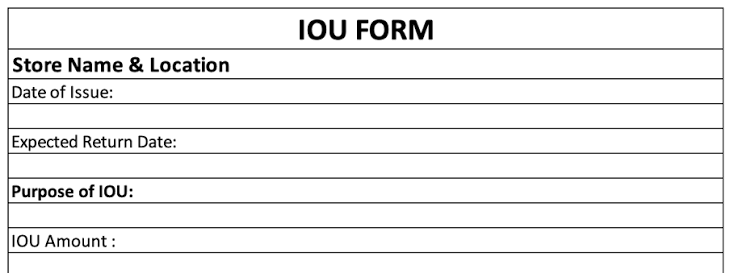
When creating an IOU template, make sure to include the following key elements:
- Names of the Parties: Clearly identify the lender and borrower.
- Amount Owed: Specify the exact amount of money or value of the debt.
- Date of Agreement: Document when the IOU was created.
- Terms and Conditions: Include any additional terms or conditions agreed upon by both parties.
How to Use an IOU Template
Using an IOU template is simple. Follow these steps to create and implement an IOU template effectively:
- Create the Template: Use a pre-made IOU template or create your own with the necessary details.
- Fill in the Details: Input the names of the parties, amount owed, date of agreement, and any additional terms.
- Sign and Date: Both parties should sign and date the IOU template to acknowledge the agreement.
Tips for Successful IOU Templates
Here are some tips to ensure your IOU template is effective and reliable:
- Keep Copies: Make copies of the signed IOU template for both parties to keep for their records.
- Be Specific: Clearly outline the terms of the agreement, including repayment terms and any interest or penalties.
- Communicate Clearly: Ensure both parties understand and agree to the terms before signing the IOU template.
Conclusion
IOU templates are valuable tools for documenting informal agreements and debts between parties. By using a well-crafted IOU template, you can prevent misunderstandings, protect yourself in case of disputes, and maintain clear communication with the other party. Remember to include essential details, communicate effectively, and keep copies for your records to ensure a successful IOU arrangement.
