A Recipe Book is a collection of recipes organized in one convenient place, providing clear instructions, ingredient lists, cooking techniques, and useful notes for preparing meals. It can be a practical kitchen reference, a source of culinary inspiration, or a meaningful way to preserve family recipes and food traditions.
Whether you prefer handwritten recipes, printed pages, or a digital collection, a well-organized recipe book makes it easier to find favorite dishes and prepare them consistently. It can also help you record modifications, cooking times, serving sizes, and personal tips that improve a recipe over time.
A recipe collection does not have to contain hundreds of dishes. Even a small collection of reliable recipes can become a valuable resource for everyday cooking, meal planning, special occasions, and sharing food with family and friends.
What Is a Recipe Book?
A recipe book is a structured collection of recipes that provides the information needed to prepare different dishes. A typical recipe includes a list of ingredients, preparation instructions, cooking methods, serving information, and sometimes additional notes.
Recipe books can be created for many different purposes. A home cook might create one to keep favorite family meals together, while someone learning to cook might use one to build a personal collection of reliable recipes.
Some recipe books are organized around a particular cuisine, dietary preference, season, occasion, or type of food. Others are general collections containing everything from breakfast and lunch dishes to desserts and drinks.
Why Keep a Recipe Book?
Keeping recipes in an organized collection offers several practical benefits. Instead of searching through loose notes, screenshots, websites, or scattered documents, you can keep frequently used recipes in one accessible location.
- Organizes favorite recipes: Keep frequently prepared dishes together.
- Saves time: Make recipes easier to locate when planning meals.
- Improves consistency: Record precise ingredients and preparation methods for repeatable results.
- Preserves family traditions: Document recipes that have been passed down through generations.
- Encourages experimentation: Record substitutions and successful variations.
- Supports meal planning: Build a collection that can be used when planning weekly meals.
- Provides cooking inspiration: Browse familiar and new dishes when deciding what to prepare.
What Should a Recipe Book Include?
The contents of a recipe book depend on its purpose, but several sections can make a collection more useful and easier to navigate.
Recipe Name
Every recipe should have a clear and recognizable name. A descriptive title makes it easier to identify the dish when browsing the collection.
Ingredients
List the ingredients needed to prepare the recipe. Include quantities and useful details such as the form or preparation of an ingredient when it affects the result.
Preparation and Cooking Instructions
Instructions should explain the cooking process in a logical sequence. Include important techniques, temperatures, cooking times, and visual or texture cues when they are relevant.
Serving Information
Recording the number of servings can make recipes easier to use when planning meals. You can also note portion sizes or indicate how the recipe should be adjusted for a larger or smaller group.
Preparation and Cooking Time
Including preparation time and cooking time provides a quick indication of how long the dish may take. This is particularly helpful when planning meals around a busy schedule.
Notes and Variations
A notes section gives you space to record substitutions, adjustments, successful changes, family preferences, or observations from previous attempts.
How to Organize a Recipe Book
A good organizational system makes a recipe collection easier to use as it grows. Choose a structure that matches the way you normally search for recipes.
Organize by Meal
You can divide recipes into breakfast, lunch, dinner, snacks, desserts, and beverages. This approach works well for everyday meal planning.
Organize by Food Category
Another option is to create sections for appetizers, soups, salads, main dishes, side dishes, baked goods, desserts, and other categories.
Organize by Cuisine
If you enjoy cooking different cuisines, create sections based on culinary traditions or regional styles. This can make it easier to find recipes when planning a themed meal.
Organize by Occasion
Recipes can also be grouped by occasion, such as holiday meals, birthday celebrations, family gatherings, dinner parties, or quick weeknight meals.
How to Write a Recipe Clearly
A recipe should provide enough information for the intended cook to follow it without unnecessary guesswork. Clear writing is especially important when documenting a recipe that may be prepared repeatedly.
List Ingredients in the Order They Are Used
One practical approach is to list ingredients in approximately the order in which they appear in the instructions. This helps the cook move through the recipe efficiently.
Use Consistent Measurements
Choose a consistent measurement system and use it throughout the recipe. If useful, include both volume and weight measurements for ingredients where precision is important.
Break Instructions Into Steps
Long paragraphs of cooking instructions can be difficult to follow. Breaking the process into individual steps makes it easier to track progress and reduces the chance of skipping an important instruction.
Include Useful Cooking Cues
Time alone does not always indicate when food is ready. Where appropriate, describe useful cues such as color, texture, aroma, consistency, or internal temperature.
How a Recipe Book Helps Improve Cooking
A personal recipe book can become more useful over time because it allows you to learn from previous cooking experiences. Each time you prepare a dish, you can record what worked and what should be changed.
For example, you might discover that a recipe needs slightly less salt, a longer baking time, a different cooking temperature, or an additional preparation step. Recording these observations means you do not have to rely on memory the next time you make the dish.
This creates a personal collection of recipes that reflects your own cooking preferences and experience.
Using a Recipe Book for Meal Planning
A recipe book can also become the foundation of a practical meal-planning system. Instead of deciding what to cook from scratch every day, select several recipes from your collection and organize them into a weekly plan.
When choosing recipes, consider preparation time, available ingredients, leftovers, and the number of people being served. You can then create a shopping list based on the ingredients required for the selected meals.
Keeping a mixture of quick meals, make-ahead dishes, family favorites, and more elaborate recipes gives you flexibility when planning around different schedules.
Preserving Family Recipes
One of the most meaningful uses of a recipe book is preserving recipes associated with family traditions and important memories.
Recipes passed between relatives may change slightly over time. Writing down ingredients, techniques, preparation methods, and personal notes can help preserve these details for future generations.
Consider adding information about the origin of a recipe, the person who taught it to you, occasions when it was traditionally prepared, or any special techniques associated with it. These details can give a recipe collection personal and historical value beyond the instructions themselves.
Tips for Building a Useful Recipe Collection
- Start with recipes you actually prepare: Build your collection around dishes that are useful in your everyday life.
- Keep instructions practical: Remove unnecessary information that makes recipes harder to follow.
- Record successful modifications: Write down changes that improve the dish.
- Include preparation times: This makes meal planning easier.
- Use clear categories: Choose an organization system that makes recipes easy to find.
- Leave space for notes: Your preferences may change as you gain cooking experience.
- Review recipes periodically: Remove recipes you no longer use and update those that need improvement.
- Preserve important originals: Keep copies of especially meaningful family recipes.
How to Use a Recipe Book Template
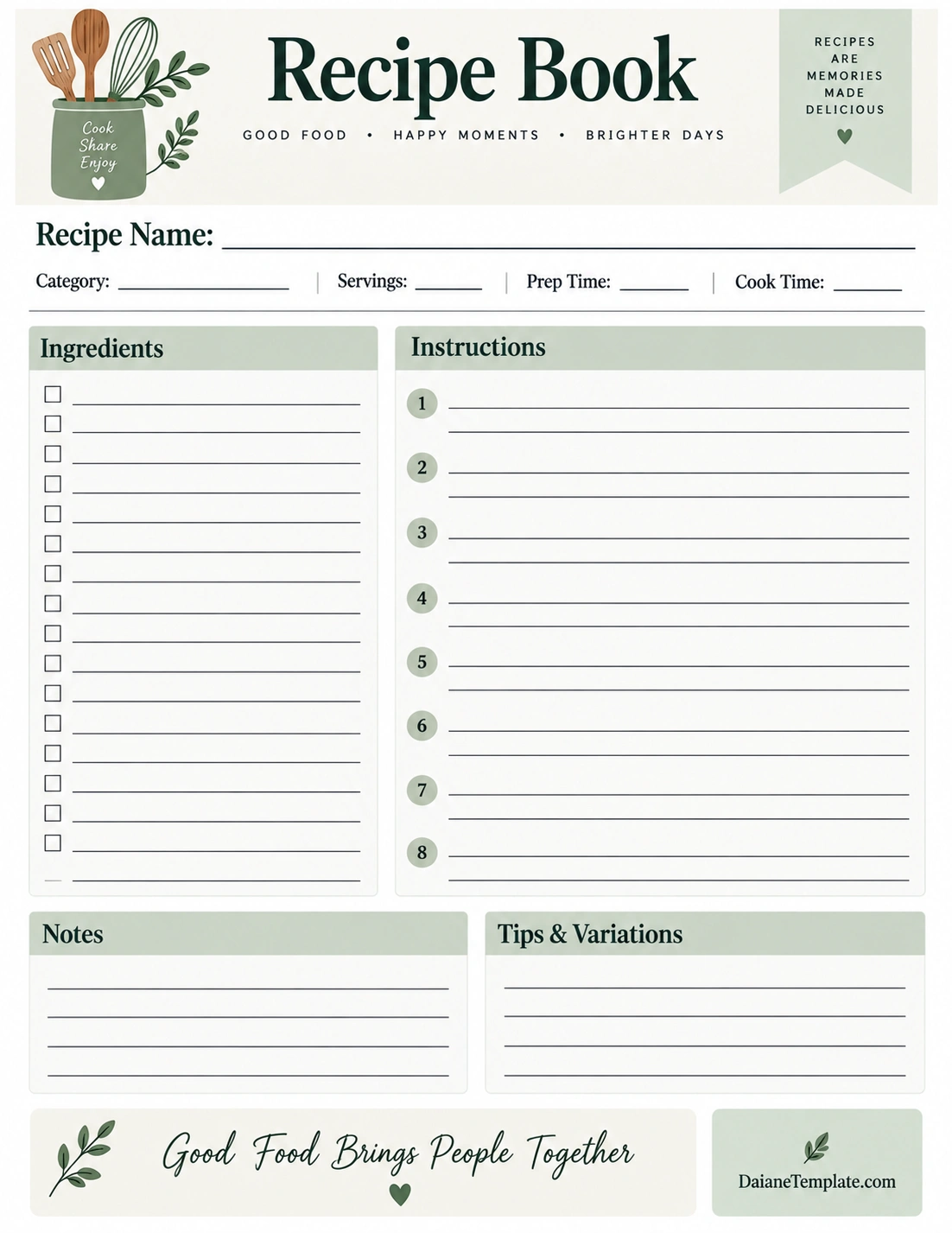
A Recipe Book Template provides a structured page for recording recipes in a consistent format. It can be particularly useful when creating a personal recipe collection from scratch.
Begin by entering the recipe name and category. Add the number of servings and estimated preparation and cooking times. Then list the required ingredients in the ingredients section.
Use the instructions section to record each preparation and cooking step in the correct order. Keep the directions specific enough to make the process easy to repeat.
The notes section can be used for personal observations, substitutions, serving suggestions, or changes you want to remember. The tips and variations area can contain alternative ingredients, cooking ideas, or successful modifications.
Once completed, the page can be stored in a binder, recipe folder, or other organized collection. Using the same format for each recipe creates a consistent recipe book that is easier to browse and maintain.
Digital vs. Printable Recipe Books
Both digital and printable recipe collections have advantages. A digital recipe book is convenient for searching, editing, copying, and storing a large number of recipes. It can also be accessed from different devices.
A printable recipe book provides a physical collection that can be written on, organized in a binder, or passed between family members. Printed pages also make it easy to add handwritten notes while cooking.
Some cooks combine both approaches by maintaining a digital master collection while printing their most frequently used recipes.
Common Recipe Book Mistakes to Avoid
A recipe collection can become difficult to use when recipes are incomplete or inconsistently organized. Avoiding a few common problems can keep the collection practical.
- Leaving out important ingredient quantities.
- Using vague cooking instructions.
- Failing to record cooking temperatures.
- Not documenting successful substitutions.
- Mixing different measurement formats without explanation.
- Creating categories that are difficult to navigate.
- Forgetting to include serving information.
- Allowing duplicate recipes to accumulate unnecessarily.
- Failing to update recipes after discovering useful improvements.
Recipe Book Checklist
Before adding a recipe to your collection, check that it contains the essential information needed for future use.
- Recipe name
- Recipe category
- Serving size
- Preparation time
- Cooking time
- Complete ingredient list
- Accurate quantities
- Step-by-step instructions
- Cooking temperature when applicable
- Useful preparation or cooking techniques
- Notes and substitutions
- Tips or variations
Conclusion
A Recipe Book is more than a collection of cooking instructions. It can be a practical kitchen reference, a source of meal-planning inspiration, and a way to preserve recipes and food traditions that have personal meaning.
A well-organized collection should make recipes easy to find and simple to follow. Including ingredients, measurements, preparation instructions, cooking times, serving information, notes, and variations can make each recipe more useful over time.
Whether you choose a digital collection or a printable format, a Recipe Book Template can provide a consistent structure for recording your favorite dishes. As you cook, test, and refine your recipes, the collection can gradually become a personalized cooking resource that is useful for everyday meals and special occasions alike.
Download: Recipe Book Template
