A Painting Agreement is a written contract between a client and a painting contractor that establishes the terms of a painting project. It provides a clear record of the work to be performed, materials to be used, project schedule, payment arrangements, and responsibilities of both parties.
Whether the project involves painting a single room, an entire house, an office, or another property, putting the details in writing can help prevent misunderstandings. A well-organized painting contract gives the client and contractor a shared reference for what is included in the project and how unexpected situations should be handled.
What Is a Painting Agreement?
A Painting Agreement is a contract that defines the relationship between a property owner or client and a painting contractor. It describes the services the contractor agrees to provide and the conditions under which the work will be completed.
A typical painting agreement may cover surface preparation, painting areas, paint types and finishes, materials, labor, project dates, pricing, payment schedules, cleanup, changes to the original scope, and other project-specific conditions.
The agreement gives both parties an opportunity to discuss important details before work begins. This is particularly useful for projects where the final cost or completion date could be affected by surface conditions, material availability, weather, additional repairs, or client-requested changes.
Why Is a Painting Agreement Important?
A painting project can involve many details that are easy to misunderstand when they are discussed only verbally. A written contract creates a common reference point for the client and contractor.
A Painting Agreement can help both parties:
- Define exactly which areas will be painted.
- Describe the preparation and painting work to be performed.
- Identify the paint brands, colors, finishes, and materials.
- Establish the project price and payment schedule.
- Set expected start and completion dates.
- Clarify responsibilities for preparation and access to the property.
- Explain how additional work or changes will be handled.
- Document cleanup expectations.
- Address warranties and applicable limitations.
- Provide written evidence of the agreed project terms.
A contract cannot prevent every disagreement, but clear and specific terms can reduce the possibility of disputes caused by different assumptions about the project.
What Should a Painting Agreement Include?
The exact contents of a painting contract can vary depending on the project. However, several important sections are commonly useful for residential and commercial painting work.
Client and Contractor Information
Start by identifying the parties involved in the agreement. Include the client’s name and contact information as well as the painting contractor’s legal or business name and contact details.
If applicable, the contractor’s license number, business registration information, or other required credentials can also be recorded according to local requirements.
Property Information
Clearly identify the property where the painting services will take place. Include the complete project address and, when necessary, identify specific rooms, floors, exterior surfaces, or other areas covered by the agreement.
This is especially important for larger properties because it helps establish the exact location and boundaries of the work.
Scope of Painting Work
The scope of work is one of the most important sections of a painting agreement. It should explain what the contractor will actually do rather than simply stating that painting services will be provided.
The scope may specify:
- Interior or exterior painting.
- Rooms, walls, ceilings, doors, trim, or other surfaces.
- Number of coats.
- Surface preparation.
- Sanding or scraping.
- Priming requirements.
- Caulking or minor patching.
- Application methods.
- Final touch-ups.
- Cleanup after completion.
It can also be helpful to identify work that is not included. For example, extensive drywall repair, major carpentry, wallpaper removal, or structural repairs may require separate pricing.
Paint and Materials
The agreement should identify the materials that will be used whenever those details are known. This may include the paint manufacturer, product line, color, finish, primer, caulk, patching compound, and other supplies.
Paint finishes such as flat, matte, eggshell, satin, semi-gloss, and gloss can have different appearances and practical characteristics. Recording the selected finish can help ensure that both parties have the same expectations.
Surface Preparation
Preparation can have a significant effect on the final appearance of a painted surface. A Painting Agreement should explain what preparation work is included in the quoted price.
Depending on the condition of the property, preparation may include cleaning, sanding, scraping loose paint, filling small holes, repairing minor imperfections, caulking gaps, and applying primer.
If substantial repairs are discovered after the project begins, the agreement should explain how additional work will be evaluated and approved.
Project Timeline
Include the expected start date and completion date or estimated project duration. For larger projects, individual milestones can also be documented.
Painting schedules may be affected by weather, drying times, access to the property, material availability, unexpected surface conditions, or other circumstances. The agreement can explain how schedule changes will be communicated and handled.
Payment Terms
Payment provisions should clearly explain the total project price and when payments are due. Depending on the arrangement, payments may include a deposit, progress payments, and a final payment.
A payment section may include:
- Total contract price.
- Deposit amount, if applicable.
- Progress payment amounts and dates.
- Final payment requirements.
- Accepted payment methods.
- Invoice procedures.
- Terms for approved additional work.
Both parties should understand the payment schedule before signing the agreement.
Additional Work and Change Orders
Painting projects can sometimes uncover conditions that were not visible during the initial estimate. A client may also decide to add rooms, change colors, request additional coats, or ask for repairs that were not included in the original scope.
A good painting contract should explain how these changes will be handled.
For example, additional work may require a written change order describing the new work, additional price, materials, and any effect on the completion date. Requiring approval before additional work begins can help prevent disagreements about unexpected charges.
Who Is Responsible for Preparation?
Not every painting project has the same preparation requirements. The agreement should make it clear whether the contractor or client is responsible for moving furniture, removing wall decorations, protecting belongings, covering fixtures, or preparing the work area.
The contractor may be responsible for protecting floors and permanent fixtures during the painting process, while the client may be responsible for removing personal items. The actual arrangement should be documented rather than assumed.
Cleanup and Final Inspection
Cleanup expectations should be addressed before work begins. The contract can specify whether the contractor will remove masking materials, dispose of painting debris, clean tools and work areas, and return furniture or other items to their original positions.
A final inspection can also be included as part of the project process. The client and contractor can review the completed work and identify agreed touch-ups or corrections that fall within the original scope.
Warranty and Touch-Up Terms
Some painting contractors provide a limited workmanship warranty or a specific period during which certain touch-ups may be requested. If a warranty is offered, the agreement should describe what it covers and any applicable exclusions.
It is important to distinguish workmanship issues from problems caused by moisture, structural movement, normal wear, improper maintenance, or conditions outside the contractor’s control when those distinctions are relevant.
How to Create a Painting Agreement
Creating a useful painting contract begins with documenting the project details before work starts.
Discuss the Project in Detail
The client and contractor should review the areas to be painted, desired colors, finishes, preparation requirements, materials, timeline, and expected results.
Write Down the Scope
Convert the project discussion into a specific written scope. Identify the surfaces and services included and clearly separate optional or excluded work.
Document Pricing
Record the agreed project price and payment schedule. If certain costs cannot be determined until additional conditions are discovered, explain how those costs will be estimated and approved.
Review the Contract Together
Before signing, both parties should read the agreement carefully and clarify any terms that are unclear. Names, addresses, dates, prices, paint specifications, and other project details should be checked for accuracy.
Tips for Using a Painting Agreement Template
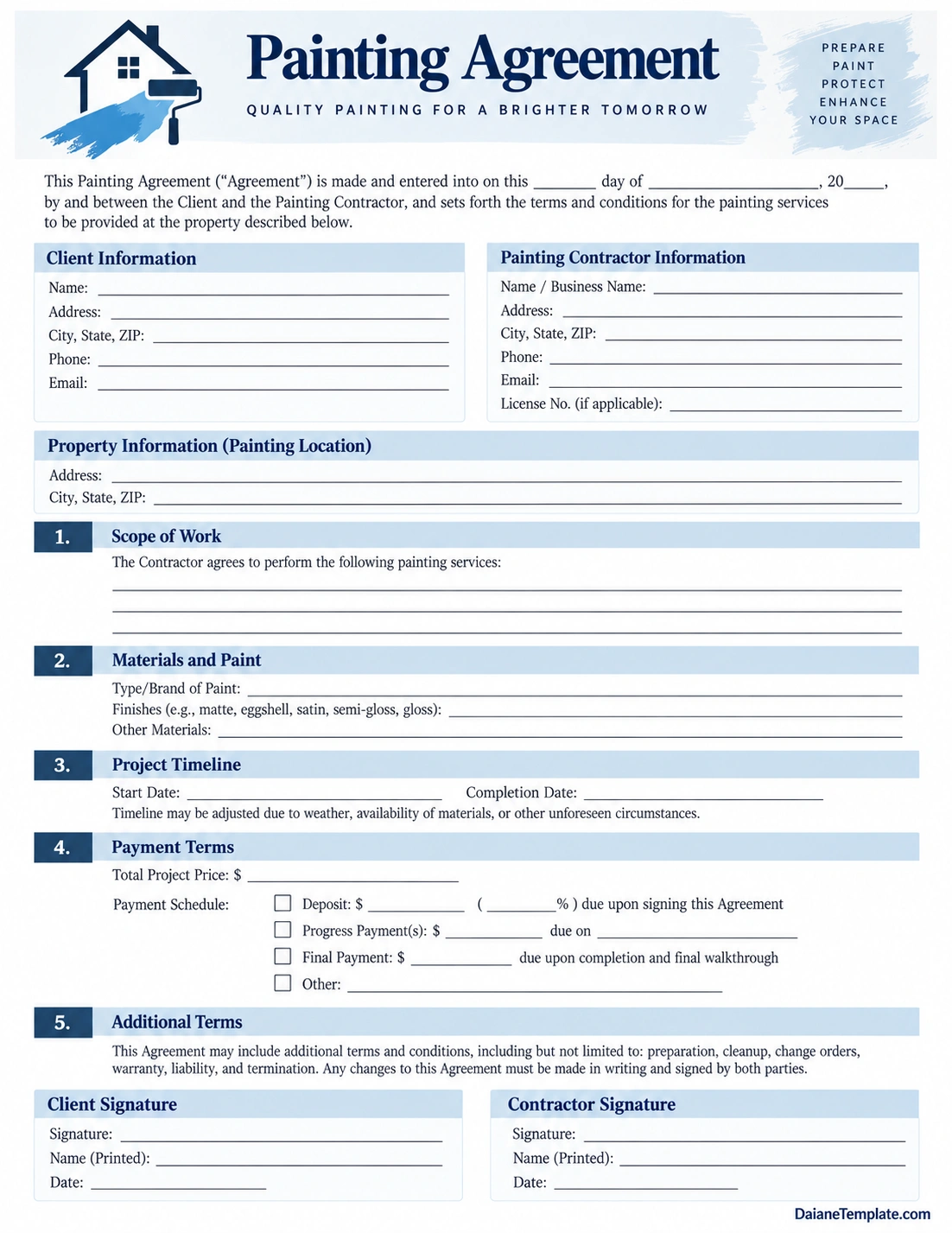
A Painting Agreement Template can make it easier to organize the essential information for a painting project. Instead of starting with a blank document, the template provides a structured framework for recording the parties, property, scope of work, materials, schedule, payment terms, and signatures.
However, a template should be customized to reflect the actual project. Remove sections that are irrelevant and add provisions that are necessary for the particular job.
Before signing, make sure all blank fields have been completed and that any estimates, color schedules, material lists, drawings, or other attachments referenced in the agreement are properly identified.
Common Painting Contract Mistakes to Avoid
- Using a vague scope: Clearly identify the surfaces and services included.
- Failing to specify paint: Record colors, finishes, brands, or product specifications when agreed upon.
- Ignoring preparation: Explain what surface preparation is included.
- Leaving payment terms unclear: State the price and payment schedule in writing.
- Not addressing additional work: Establish a process for approving changes and extra charges.
- Ignoring cleanup: Clearly define who is responsible for cleanup and disposal.
- Relying only on verbal changes: Document significant changes in writing.
- Leaving important fields blank: Complete the agreement before signing whenever possible.
Painting Agreement Checklist
Before finalizing a painting contract, review the following items:
- Client information is accurate.
- Contractor information is accurate.
- Property address is clearly identified.
- Areas and surfaces to be painted are listed.
- Preparation work is described.
- Paint colors and finishes are documented.
- Materials and supplies are identified where appropriate.
- Start and completion dates are included.
- Total project price is stated.
- Payment schedule is clearly explained.
- Additional work and change procedures are addressed.
- Cleanup responsibilities are defined.
- Warranty or touch-up terms are documented when applicable.
- Both parties have reviewed the agreement.
- Required signatures and dates are included.
Conclusion
A Painting Agreement provides a practical framework for managing a painting project from the initial preparation through final completion. By documenting the scope of work, materials, paint specifications, project schedule, payment terms, preparation responsibilities, changes, and other important conditions, the client and contractor can establish clearer expectations before work begins.
The most useful painting contracts are specific enough to describe the actual project without leaving important responsibilities or costs open to interpretation. A Painting Agreement Template can provide a convenient starting point, but it should always be reviewed and customized for the particular project.
Because contract requirements and legal protections can vary by location and circumstance, parties with significant projects or complex contractual issues may wish to obtain advice from a qualified legal professional before signing.
Download: Painting Agreement Template
