A restaurant receipt is a detailed record of a customer’s purchase. It typically shows the items ordered, quantities, prices, taxes, service charges, discounts, payment information, and final amount paid. For both the restaurant and the customer, a receipt provides a useful record of the transaction.
A clear receipt does more than confirm payment. It can help restaurants track sales, organize accounting records, review transactions, handle customer questions, and maintain accurate financial information. Customers can also use receipts to track expenses, submit business meal expenses, review charges, or resolve billing discrepancies.
Whether you operate a full-service restaurant, cafe, food truck, bakery, bar, catering business, or other food service operation, a professional receipt format can make transactions easier to document and manage.
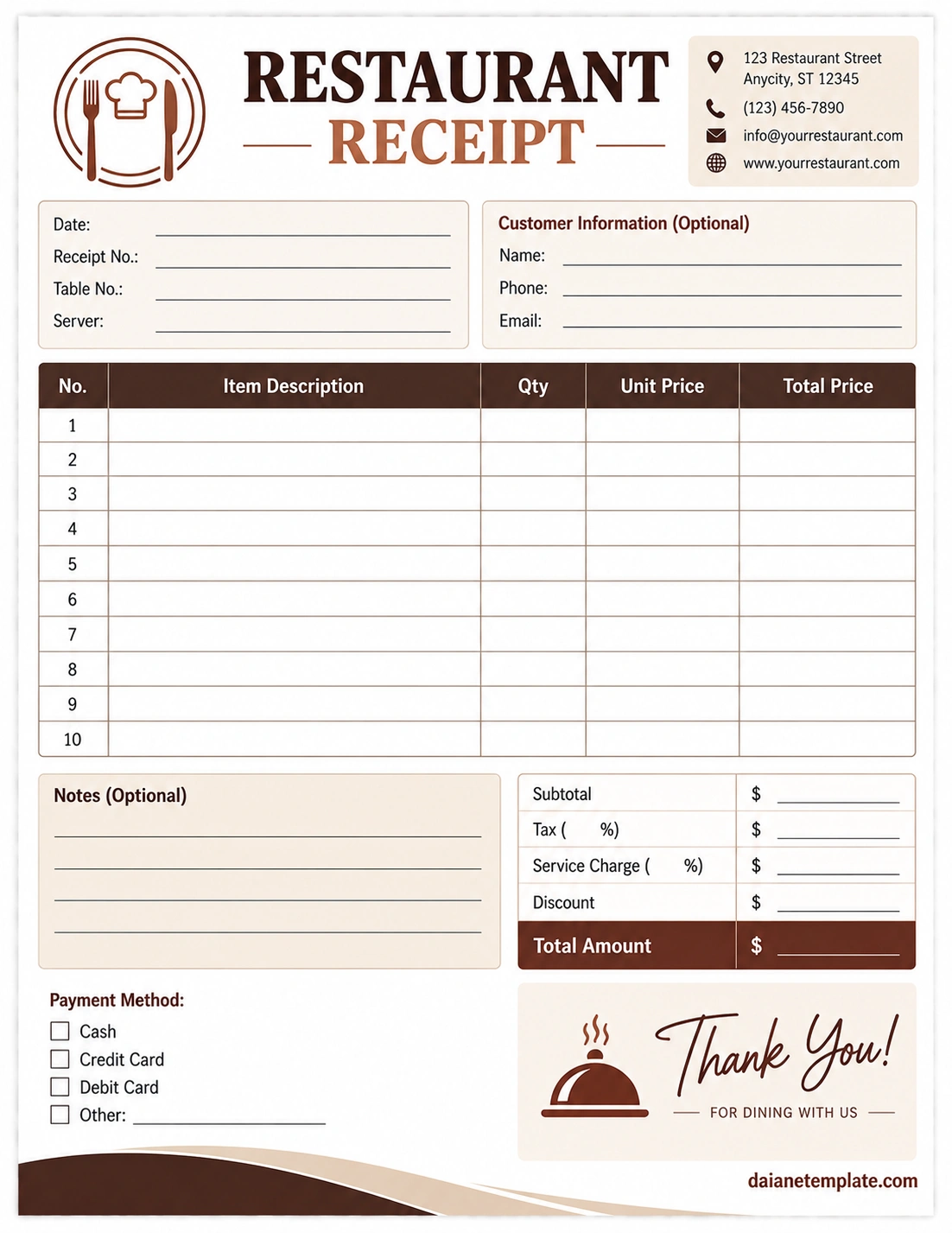
What Is a Restaurant Receipt?
A restaurant receipt is a written or digital record of a transaction between a restaurant and a customer. It documents what was purchased and how much the customer was charged.
A typical receipt identifies the restaurant, lists the products or services purchased, calculates applicable charges, and displays the final amount. Depending on the restaurant and its point-of-sale system, it may also include a transaction number, table number, server name, payment method, customer information, or other details.
Restaurant receipts can be printed on paper or delivered electronically by email, text message, an online ordering platform, or another digital system.
Why Is a Restaurant Receipt Important?
A properly prepared receipt provides useful information for both sides of a transaction. It supports financial organization while making the purchase easier to verify.
Provides Proof of Purchase
A receipt gives the customer a record showing that a purchase was made. It can be useful when a customer needs to verify an order, review a charge, or request assistance with a transaction.
Supports Restaurant Accounting
Restaurants process many transactions every day. Consistent receipts help businesses maintain organized sales records and reconcile transactions with their accounting and point-of-sale systems.
Helps Track Taxes and Charges
A detailed receipt can separate the subtotal, applicable taxes, service charges, discounts, and final amount. This makes the transaction easier to review.
Helps Resolve Disputes
If a customer believes an item was charged incorrectly or a transaction contains an error, the receipt provides specific information that can be checked against the restaurant’s records.
Supports Customer Service
Receipt details can help restaurant staff quickly locate a transaction when handling questions about an order, payment, refund, or other issue.
Creates a Professional Customer Experience
A clean and easy-to-read receipt can reinforce the restaurant’s brand and provide customers with clear information about their purchase.
What Should a Restaurant Receipt Include?
The exact contents of a restaurant receipt can vary depending on the business, transaction type, and local requirements. However, several elements are commonly useful.
1. Restaurant Information
Place the restaurant’s basic business information at the top of the receipt. This may include the restaurant name, address, phone number, email address, website, and other relevant business details.
2. Receipt Number
A unique receipt or transaction number can make individual purchases easier to identify. It is especially useful when a restaurant needs to locate a transaction in its point-of-sale records.
3. Date and Time
Include the transaction date and, when appropriate, the time. This information can help match the receipt with the restaurant’s daily sales records.
4. Table or Order Number
For dine-in restaurants, a table number, order number, or similar identifier can help connect the receipt to the appropriate transaction.
5. Server Information
Full-service restaurants may include the server’s name or identification number. This can help staff locate the transaction when questions arise.
6. Itemized Order
The main section of a restaurant receipt should list the purchased items. Each line can include the item description, quantity, unit price, and total price.
- Food items
- Beverages
- Desserts
- Appetizers
- Special orders or modifications
- Additional services or charges
7. Subtotal
The subtotal shows the amount before applicable taxes, service charges, discounts, or other adjustments.
8. Taxes
Applicable taxes can be displayed separately so the customer can understand how the final amount was calculated. Restaurants should follow the tax requirements applicable to their location and business.
9. Service Charges and Discounts
If applicable, include service charges, discounts, promotional adjustments, or other transaction-specific amounts separately from the food and beverage subtotal.
10. Total Amount
The final amount should be clearly displayed. Customers should be able to identify the total amount charged without having to calculate the receipt themselves.
11. Payment Method
The receipt can identify whether the transaction was paid by cash, credit card, debit card, gift card, digital payment, or another accepted method. Payment information should be displayed in a way that does not unnecessarily expose sensitive payment data.
12. Tip Information
For restaurants where tipping is customary, the receipt may provide a tip line, suggested tip amounts, or a separate gratuity section. The exact format can depend on the payment system and business practices.
13. Customer Information
Customer information may be included when necessary, particularly for catering, delivery, business orders, or customer-requested receipts. Restaurants should avoid collecting unnecessary personal information.
How to Create a Restaurant Receipt
Creating a useful restaurant receipt starts with identifying the information customers and staff need to see after each transaction.
Choose a Clear Layout
Organize the receipt into logical sections. Restaurant information should be easy to find, followed by transaction details, the itemized order, charges, payment information, and the final total.
Use an Itemized Format
List individual products rather than combining unrelated purchases into one general description. An itemized restaurant receipt makes it easier for customers to check their order and for businesses to review transactions.
Separate Charges
Clearly distinguish the subtotal, tax, service charge, discount, tip, and total when applicable. This improves transparency and reduces confusion.
Include Important Contact Details
Adding the restaurant’s phone number, email address, or website gives customers a convenient way to contact the business if they have questions about a transaction.
Add Branding
A restaurant can include its logo, brand name, colors, tagline, or website while keeping the receipt clean and easy to read. Branding should not interfere with important transaction information.
Restaurant Receipt Example: Basic Structure
A simple restaurant receipt can follow a structure such as:
- Restaurant name and contact information
- Date and time
- Receipt or order number
- Table or server information
- Itemized food and beverage purchases
- Subtotal
- Applicable tax
- Service charge
- Discount
- Tip or gratuity
- Total amount
- Payment method
- Customer service or contact information
This basic structure can be customized for the restaurant’s service model and point-of-sale system.
Printed vs. Digital Restaurant Receipts
Restaurants can provide customers with printed receipts, digital receipts, or both. Each option has different practical benefits.
Printed Receipts
Paper receipts are familiar and convenient for customers who need a physical record. They can be especially useful for customers who are not expecting a digital receipt or who need a paper copy for immediate expense tracking.
Digital Receipts
Digital receipts can be sent through email, text message, apps, or online ordering systems. They can reduce paper use and make it easier for customers to store transaction records electronically.
Offering Both Options
Giving customers a choice between paper and digital receipts can provide flexibility. The best option depends on the restaurant’s payment system, customer preferences, operating process, and available technology.
How Restaurants Can Use Receipts for Better Record Keeping
Receipts can become part of a larger financial and operational recordkeeping system. Restaurants can use transaction information to monitor sales and identify patterns in customer purchases.
Track Daily Sales
Transaction records can be compared with point-of-sale reports to verify daily sales totals and identify discrepancies.
Monitor Popular Items
Itemized transaction data can help restaurants identify which menu items are frequently purchased. This information can support menu planning and inventory decisions.
Review Discounts and Promotions
Tracking discounts and promotional adjustments can help restaurant owners evaluate how frequently promotions are used and how they affect sales.
Organize Business Expenses
Customers can use restaurant receipts to document meals and other purchases for their own records. Businesses should follow applicable accounting and tax rules when determining which expenses are deductible or reportable.
Restaurant Receipt Design Tips
A receipt does not need to be complicated to look professional. Clear organization is usually more important than decorative design.
- Make the total easy to find: Use clear typography and spacing for the final amount.
- Keep item descriptions readable: Avoid overly small text.
- Use consistent alignment: Align quantities and prices so customers can scan the receipt quickly.
- Separate sections: Use spacing, lines, or subtle formatting to distinguish different parts of the transaction.
- Keep branding subtle: The receipt should remain primarily functional.
- Include contact information: Make it easy for customers to reach the restaurant.
- Protect sensitive information: Do not unnecessarily display confidential payment details.
Common Restaurant Receipt Mistakes
Missing Transaction Information
A receipt without a date, transaction number, itemized order, or total can be difficult to verify later. Include the information necessary to identify the transaction.
Unclear Pricing
Customers should be able to understand the price of each item and how the final amount was calculated.
Combining Taxes and Other Charges
When appropriate, separating taxes, service charges, discounts, and tips makes the receipt easier to understand.
Overcrowded Design
Too much text, excessive graphics, or unnecessary information can make a receipt difficult to read. Prioritize transaction details.
Inconsistent Information
The receipt should match the restaurant’s transaction records. Regularly check receipt settings and point-of-sale configurations to reduce errors.
How a Restaurant Receipt Can Support Marketing
A restaurant receipt can also provide a small but useful marketing opportunity. Because customers typically see the receipt immediately after completing a purchase, it can be an appropriate place for simple customer communication.
A restaurant might include:
- Website information
- Social media handles
- Loyalty program information
- Customer feedback instructions
- Special promotion details
- Online ordering information
- Reservation information
- A short thank-you message
Marketing content should remain secondary to the transaction information. Customers should be able to find the receipt’s important financial details quickly.
Frequently Asked Questions About Restaurant Receipts
What is the purpose of a restaurant receipt?
The purpose of a restaurant receipt is to provide a record of a completed transaction. It shows what was purchased, how much was charged, applicable taxes or fees, and the final amount paid.
What should a restaurant receipt include?
A restaurant receipt commonly includes the restaurant’s name and contact information, date, receipt number, itemized purchases, quantities, prices, subtotal, applicable taxes, service charges, discounts, payment information, and total amount.
Can I use a restaurant receipt template?
Yes. A restaurant receipt template can provide a consistent structure for recording transaction information. The template can be customized with the restaurant’s branding, contact information, item categories, payment methods, and other relevant fields.
Can restaurant receipts be digital?
Yes. Restaurants can provide digital receipts through email, text messages, mobile applications, online ordering systems, or other electronic platforms. Digital receipts can make record keeping more convenient and reduce paper use.
Why is an itemized restaurant receipt useful?
An itemized receipt shows individual purchases and their prices. This helps customers verify their orders and helps restaurants review transaction details, sales activity, and potential billing discrepancies.
Should a restaurant receipt include a tip?
If tipping is part of the restaurant’s payment process, the receipt may include a tip or gratuity section. The exact format depends on the restaurant’s practices and payment system.
Can a restaurant receipt be used for business expenses?
A restaurant receipt can provide documentation of a meal or other purchase. Whether the expense qualifies for a particular business or tax purpose depends on the applicable rules and circumstances, so customers should retain appropriate supporting records.
How can restaurants make receipts look professional?
Use a clean layout, readable typography, consistent alignment, clear itemization, accurate calculations, visible contact information, and a well-defined total. Subtle branding can also make the receipt look more polished without reducing readability.
Final Thoughts
A restaurant receipt is an essential transaction record that benefits both restaurants and customers. It provides proof of purchase, documents the items sold, explains charges, supports financial record-keeping, and creates a useful reference if questions arise after a transaction.
A professional receipt should be clear, accurate, easy to read, and organized around the information customers need most. Itemized purchases, prices, taxes, service charges, discounts, payment information, and the final total should be presented in a logical format.
Using a restaurant receipt template can make receipt preparation more consistent while providing a practical starting point for customizing the document to a restaurant’s needs. Whether the final receipt is printed or delivered digitally, its primary purpose remains the same: to provide a clear and reliable record of the transaction.
Download: Restaurant Receipt Template
