Whether you are organizing a corporate event, community program, charity fundraiser, sports competition, or creative project, your proposal should communicate a clear business case. It should help potential sponsors understand how supporting your initiative can strengthen their brand visibility, connect them with their target audience, and create meaningful marketing opportunities.
This guide explains how to create a professional sponsorship proposal, what sections to include, how to present sponsorship packages, and how to approach potential partners. You will also find practical examples and writing tips to help you build a proposal that encourages companies to say yes.
What Is a Sponsorship Proposal?
A sponsorship proposal is a formal business document that presents an opportunity for a company or individual to support an event, project, organization, or initiative. In exchange for financial contributions, products, services, or other resources, the sponsor receives agreed-upon benefits.
These benefits may include brand exposure, logo placement, promotional mentions, speaking opportunities, product demonstrations, exhibition space, and direct access to a relevant audience.
Unlike a simple funding request, a sponsorship pitch focuses on mutual value. It explains how the partnership can help the organizer achieve its objectives while supporting the sponsor’s marketing, public relations, or business goals.
Common sponsorship opportunities include:
- Event sponsorship: Supporting conferences, exhibitions, festivals, workshops, and networking events.
- Sports sponsorship: Funding teams, tournaments, competitions, and athletic programs.
- Community sponsorship: Supporting local initiatives, educational programs, and nonprofit activities.
- Media sponsorship: Partnering with podcasts, publications, online platforms, and content creators.
- Project sponsorship: Providing resources for creative projects, campaigns, and special initiatives.
A successful proposal makes the opportunity easy to understand and gives potential sponsors a compelling reason to participate.
Why Is a Professional Sponsorship Proposal Important?
Companies receive many partnership requests. A professional sponsorship proposal helps your opportunity stand out by presenting relevant information in a structured and persuasive format.
It also gives decision-makers something they can share with colleagues, marketing managers, or senior executives when discussing whether to approve the partnership.
1. Demonstrates Professionalism
A well-organized document shows that you understand your project and have carefully considered the sponsor’s expectations. Clear information, realistic figures, and consistent presentation help build credibility.
2. Communicates Mutual Benefits
Sponsors want to understand what they receive in return for their contribution. Your proposal should connect sponsorship benefits with practical business outcomes, such as increased visibility, audience engagement, and brand awareness.
3. Makes Funding Decisions Easier
A proposal provides essential information about the project, sponsorship requirements, available packages, and expected outcomes. This helps internal champions present the opportunity to other decision-makers.
4. Establishes Clear Expectations
Defining deliverables, timelines, responsibilities, and recognition opportunities from the beginning reduces misunderstandings and creates a stronger foundation for collaboration.
What to Include in a Sponsorship Proposal
A strong sponsorship proposal should be informative without overwhelming the reader. Each section should answer a specific question and help the potential sponsor evaluate the opportunity.
Consider including the following essential sections.
1. Cover Page
Start with a professional cover page that introduces the sponsorship opportunity. Include the project or event name, your organization, the proposal title, the recipient’s name when appropriate, and the submission date.
Keep the design clean and consistent with your organization’s branding. A simple layout with clear typography often looks more professional than a page filled with decorative elements.
2. Executive Summary
The executive summary provides a short overview of your proposal. It should explain who you are, what you are planning, why the opportunity matters, and what kind of sponsorship you are seeking.
Focus on the most compelling information. A busy decision-maker should understand the opportunity without reading the entire document.
For example:
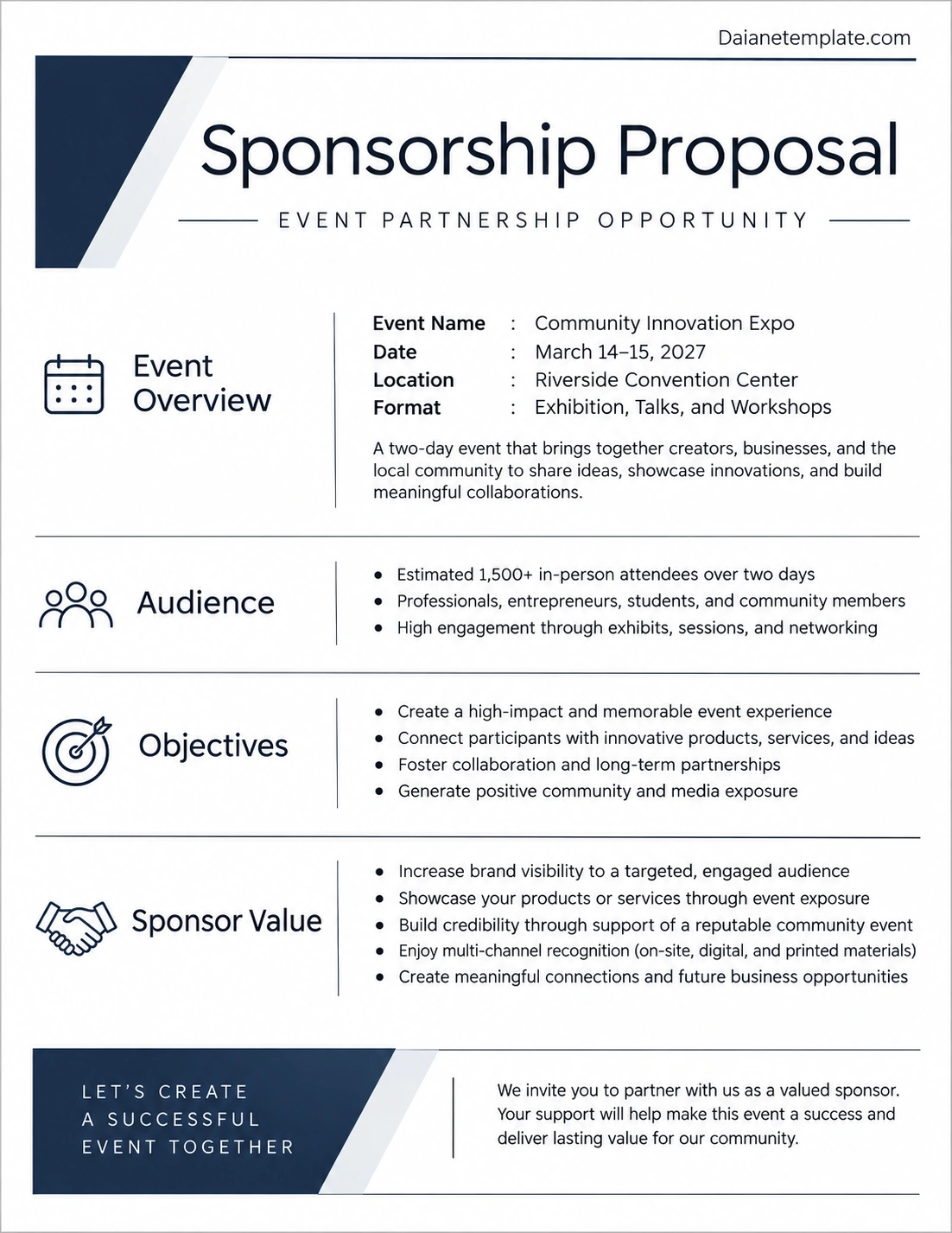
“We are seeking a strategic sponsorship partner for our annual Community Innovation Expo, a two-day event connecting local businesses, entrepreneurs, and industry professionals. Through this partnership, sponsors can increase brand visibility, engage with a targeted audience, and support innovation within the community.”
3. Organization or Event Overview
Introduce your organization, project, or event in more detail. Explain its background, purpose, mission, and primary objectives.
For an event sponsorship proposal, include relevant details such as:
- Event name and description.
- Event date and location.
- Event format and planned activities.
- Expected attendance.
- Previous event achievements, if available.
- Key organizers and partners.
Use specific information wherever possible. Avoid making claims that you cannot support with reliable data.
4. Target Audience and Reach
One of the most important questions sponsors ask is whether your audience matches their target market.
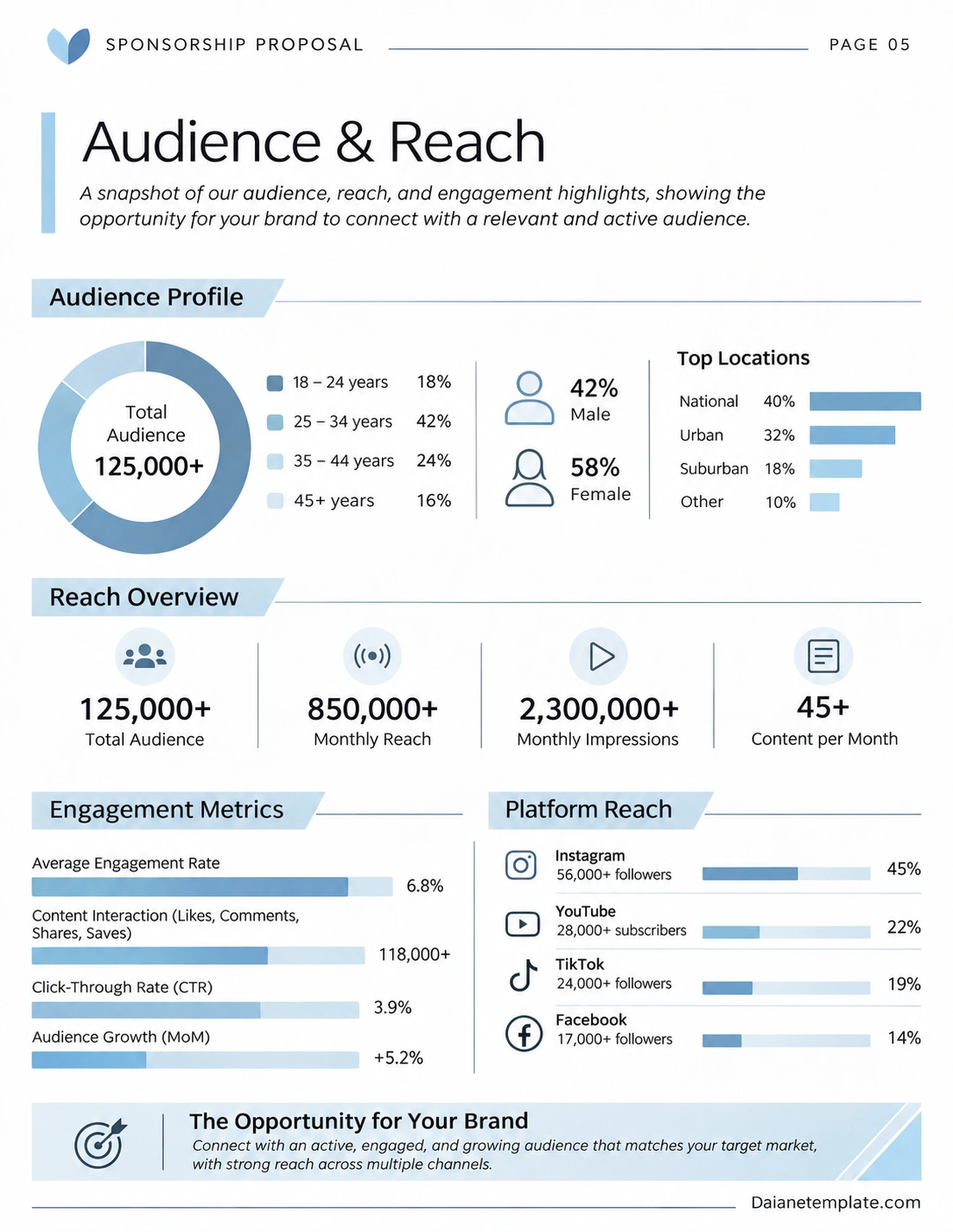
Describe the people your project or event is expected to reach. Include relevant demographic and behavioral information, such as age groups, professional backgrounds, interests, geographic locations, and purchasing preferences.
Where possible, support your audience profile with measurable statistics:
- Expected event attendance.
- Website visitors and monthly traffic.
- Social media followers and engagement rates.
- Email subscriber numbers.
- Previous campaign impressions.
- Audience demographics and geographic distribution.
For digital sponsorship opportunities, explain which platforms will feature the sponsor’s brand and how frequently promotional content will appear.
5. Sponsorship Objectives and Benefits
Explain what the partnership aims to accomplish and why it is valuable to the sponsor.
Instead of simply listing promotional activities, connect each benefit to a potential marketing outcome.
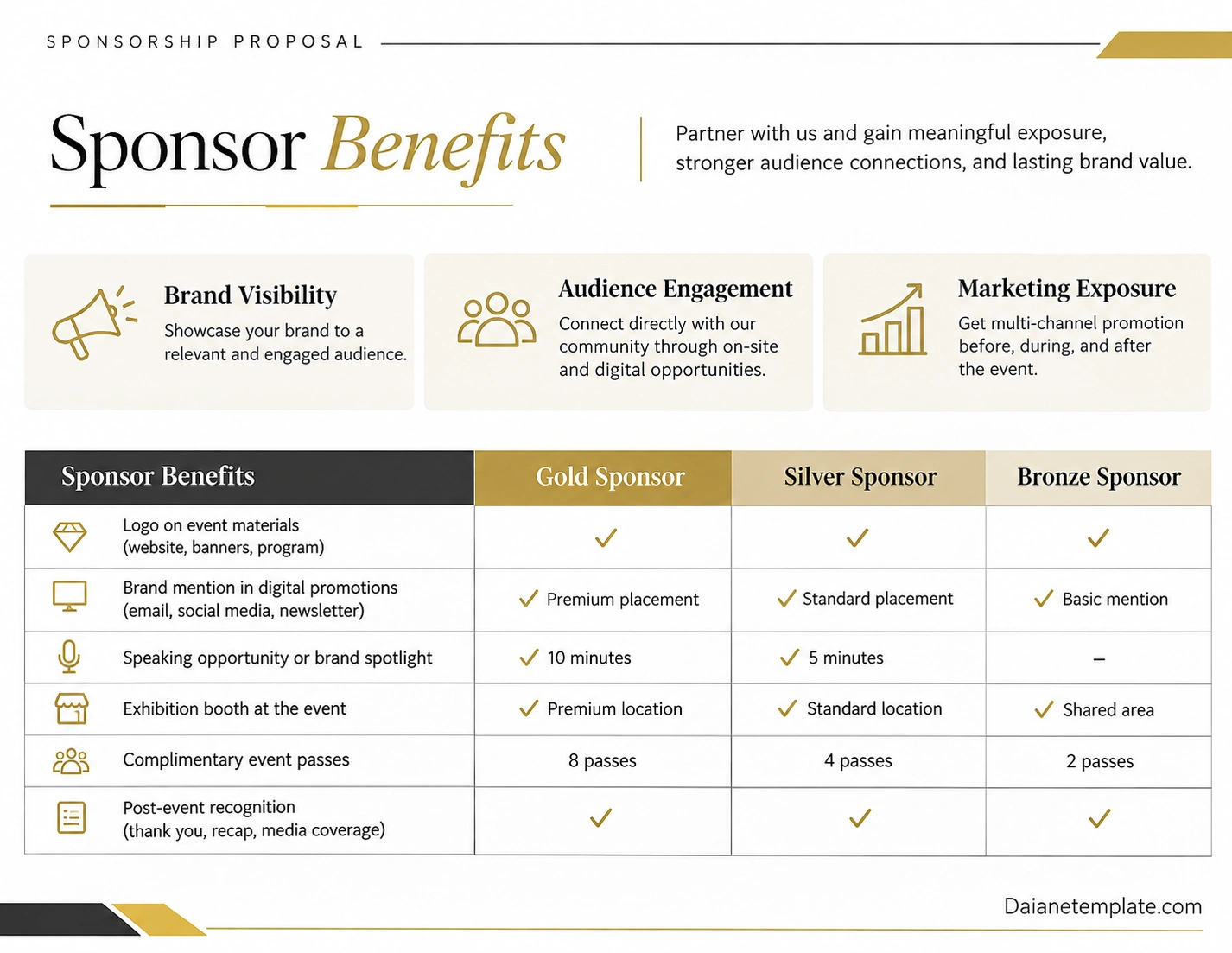
- Brand visibility: Display the sponsor’s logo on event materials, websites, banners, and promotional content.
- Audience engagement: Create opportunities for direct interaction through product demonstrations, booths, and activities.
- Marketing exposure: Include the sponsor in email campaigns, social media posts, press releases, and event announcements.
- Brand credibility: Associate the sponsor with a relevant and reputable initiative.
- Business networking: Provide opportunities to connect with attendees, industry professionals, and potential customers.
Choose benefits that are realistic and relevant to the sponsor’s objectives.
6. Sponsorship Packages and Investment Levels
Present clear sponsorship options so companies can choose a contribution level that matches their marketing budget and partnership goals.
A tiered sponsorship structure is a practical approach for many events and projects.
- Platinum Sponsor: Premium brand placement, prominent promotional exposure, exclusive recognition, and speaking opportunities.
- Gold Sponsor: Enhanced logo placement, dedicated promotional mentions, exhibition opportunities, and complimentary passes.
- Silver Sponsor: Standard brand recognition, selected marketing exposure, and event access.
- Bronze Sponsor: Basic logo placement, sponsor listing, and general event recognition.
Each package should clearly state its contribution amount and corresponding deliverables. You can also offer customized packages for companies with specific requirements.
Remember that sponsorship does not always involve cash. In-kind sponsorship may include equipment, venue space, catering, transportation, technology, promotional materials, or professional services.
7. Budget and Use of Sponsorship Funds
Explain how sponsorship contributions will support the project or event. Provide a transparent breakdown of the main expenses, such as venue rental, production, marketing, equipment, staffing, and logistics.
A clear budget helps potential sponsors understand why the requested support is necessary. It also demonstrates financial responsibility and thoughtful planning.
If you are requesting in-kind support, specify the products or services needed and how they will be used.
8. Marketing and Promotional Plan
Describe how you will promote the event or project before, during, and after the partnership.
Your promotional strategy might include:
- Social media announcements and sponsored posts.
- Email newsletters and promotional campaigns.
- Website banners and dedicated sponsor sections.
- Printed event programs and promotional materials.
- Press releases and media coverage.
- On-site banners, signage, and branded displays.
- Post-event reports and sponsor recognition.
Specify which activities include sponsor recognition and when they will take place.
9. Measurement and Sponsor Deliverables
Explain how you will evaluate the success of the sponsorship. Potential measures include audience attendance, promotional impressions, social media engagement, website traffic, booth interactions, and delivered promotional placements.
Where appropriate, explain how you will report the results to sponsors after the event. A post-event report can demonstrate accountability and help establish long-term relationships.
10. Call to Action and Contact Information
Finish with a clear invitation to discuss the partnership. Tell potential sponsors what the next step should be, such as scheduling a meeting, reviewing package options, or confirming their preferred sponsorship level.
Include the contact person’s name, job title, email address, phone number, and organization website.
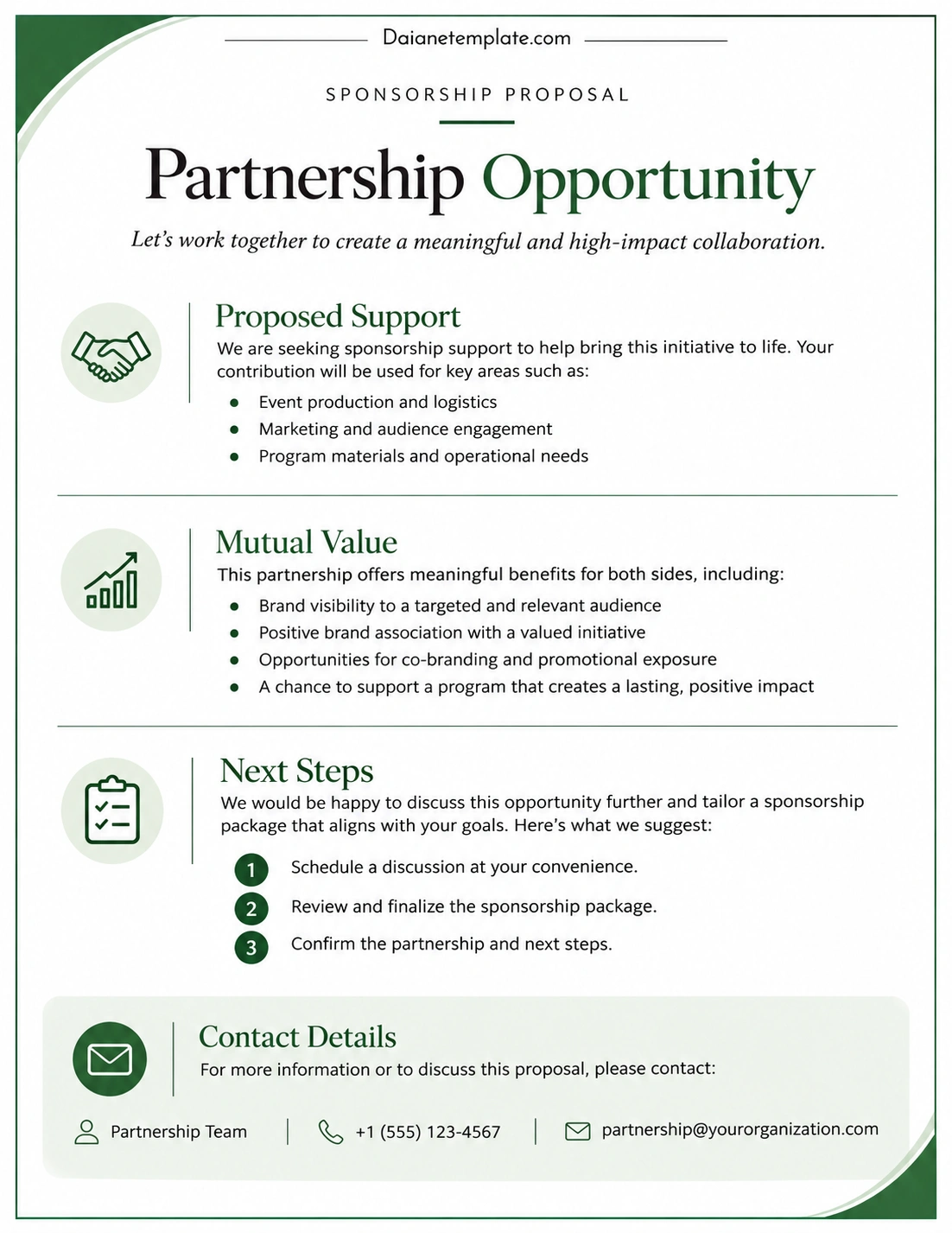
How to Write a Sponsorship Proposal That Gets Attention
Including all the essential sections is important, but the way you communicate your opportunity can make an even bigger difference.
Use these practical strategies to make your sponsorship pitch more persuasive.
Research Potential Sponsors
Identify companies whose products, services, and marketing objectives align with your audience. Review their previous sponsorship activities, target markets, brand values, and promotional campaigns.
A personalized proposal is generally more compelling than sending the same generic document to every company.
Focus on the Sponsor’s Goals
Do not make the entire proposal about your organization’s needs. Explain how the partnership can help the sponsor achieve meaningful business outcomes.
For example, a technology company may value product demonstrations and access to industry professionals, while a local retailer may prioritize community visibility and direct customer engagement.
Use Specific Numbers and Evidence
Whenever possible, replace vague statements with measurable information. Instead of saying that your event will attract a large audience, provide a realistic attendance estimate and explain how it was calculated.
Accurate data makes your sponsorship opportunity easier to evaluate.
Make the Proposal Easy to Present Internally
Your first contact may not have the authority to approve the sponsorship. They may need to share your proposal with a marketing director, finance team, or senior executive.
Give them a strong internal business case by highlighting the requested investment, audience relevance, expected benefits, deliverables, and measurable outcomes. A concise executive summary and a clear package comparison can make internal discussions easier.
Keep the Design Professional
Use consistent typography, appropriate colors, readable headings, and sufficient white space. Include charts, tables, and supporting visuals when they make important information easier to understand.
A professional layout should support your message rather than distract from it.
Common Sponsorship Proposal Mistakes to Avoid
Even a promising opportunity can lose credibility if the proposal contains unclear information or unrealistic promises.
Avoid these common mistakes:
- Making the proposal too generic: Customize your message to reflect each sponsor’s interests and business objectives.
- Focusing only on your financial needs: Explain the value the sponsor receives in return.
- Providing unsupported statistics: Use accurate audience data and realistic projections.
- Offering unclear sponsorship packages: Specify contribution amounts, benefits, and deliverables.
- Overpromising brand exposure: Only include promotional opportunities you can realistically deliver.
- Ignoring follow-up communication: Contact potential sponsors professionally after sending the proposal.
- Using a cluttered design: Make the document easy to scan, understand, and share.
Frequently Asked Questions About Sponsorship Proposals
1. What is the purpose of a sponsorship proposal?
The purpose of a sponsorship proposal is to persuade a company or individual to support an event, project, or organization. It explains the opportunity, requested contribution, and benefits the sponsor will receive in return.
2. How long should a sponsorship proposal be?
A sponsorship proposal typically ranges from five to fifteen pages, depending on the project’s complexity and the amount of supporting information required. A simple proposal may be shorter, while a large event or corporate partnership may need more detail.
3. What should a sponsorship proposal include?
A professional sponsorship proposal should include a cover page, executive summary, organization or event overview, target audience, sponsorship benefits, package options, budget, marketing plan, measurement strategy, and contact information.
4. How do you ask a company for sponsorship?
Research the company first, identify a relevant partnership opportunity, and prepare a personalized sponsorship pitch. Explain how your audience aligns with the company’s goals, outline the requested support, and present clear benefits. Follow up professionally after sending your proposal.
5. What are the different types of sponsorship packages?
Common sponsorship levels include Platinum, Gold, Silver, and Bronze. Each tier offers different contribution amounts and benefits, such as logo placement, promotional mentions, speaking opportunities, exhibition space, and event access.
6. Can a sponsorship proposal request products or services instead of money?
Yes. A sponsorship proposal can request in-kind contributions, including equipment, food, venue space, transportation, technology, and professional services. The proposal should explain the specific requirements and the benefits offered in exchange.
7. How do you make a sponsorship proposal more attractive?
Make the proposal relevant to the sponsor’s marketing goals. Use credible audience statistics, offer clearly defined benefits, present flexible sponsorship packages, and explain how you will measure and report the results.
8. When should you send a sponsorship proposal?
Send your proposal early enough for the company to review the opportunity, obtain internal approval, and allocate its sponsorship budget. For major events, beginning outreach several months in advance is often helpful.
Conclusion
A successful sponsorship proposal is more than a request for financial support. It is a business case that demonstrates why a partnership makes sense for both parties.
By presenting a clear opportunity, identifying the right audience, offering meaningful sponsor benefits, and outlining measurable deliverables, you can make your proposal more persuasive and professional.
Take the time to research potential sponsors and customize each pitch to their business objectives. With a well-structured document and a compelling partnership offer, you can build stronger relationships, secure valuable support, and create opportunities for long-term collaboration.
Download: Sponsorship Proposal Template Word
