A cash flow statement is one of the most important financial reports for understanding how money moves in and out of a business. It shows how much cash a company receives, how much it spends, and how its cash balance changes over a specific period. Whether you manage a small business, operate a growing company, or study accounting, understanding this financial statement can help you make better financial decisions.
Unlike an income statement, which measures revenue and expenses using accrual accounting, a cash flow statement focuses on actual cash movements. This makes it useful for evaluating liquidity, managing operating expenses, planning investments, and determining whether a business has enough cash to meet its financial obligations.
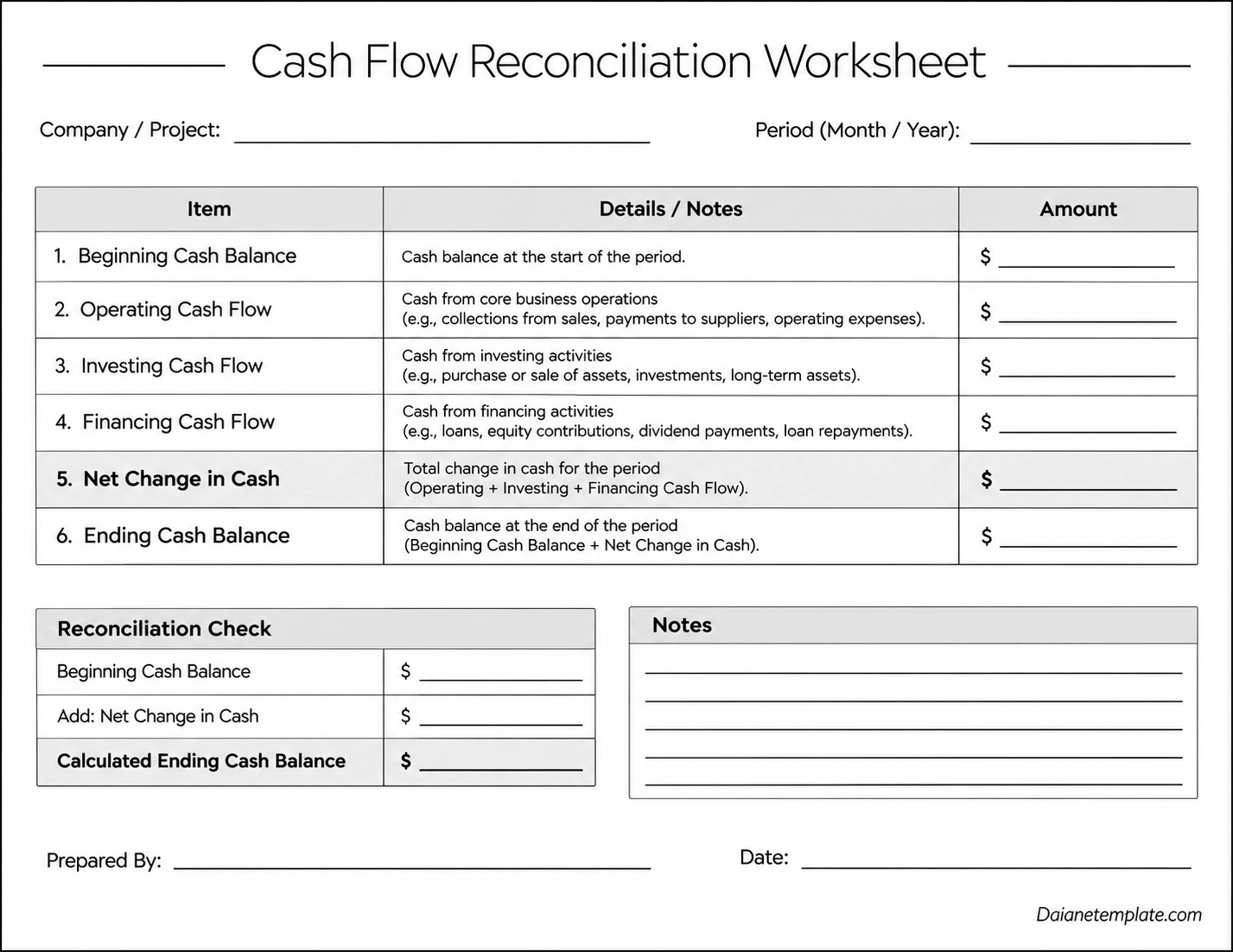
In this guide, you will learn what a cash flow statement is, how its three main sections work, how to prepare one, and how to use a cash flow statement worksheet. You can also use the printable template to organize financial information and simplify the preparation process.
What Is a Cash Flow Statement?
A cash flow statement is a financial report that summarizes all cash inflows and outflows during a specific accounting period. It explains where a company’s cash comes from and how that money is used throughout its operations, investments, and financing activities.
Businesses typically prepare this report monthly, quarterly, or annually. It helps owners, managers, investors, and lenders evaluate whether a company generates sufficient cash to support its activities.
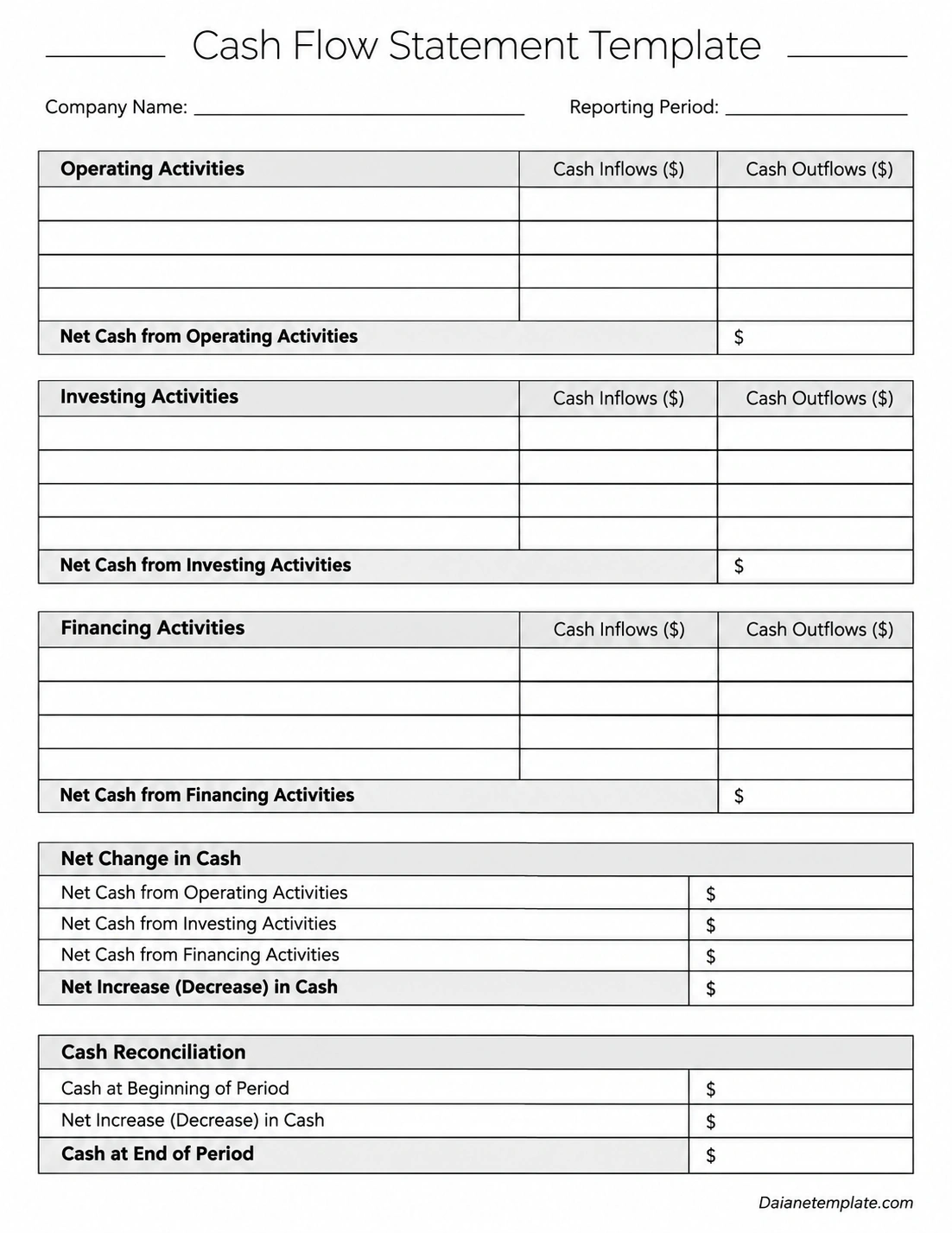
A cash flow statement generally contains three main categories:
- Operating activities: Cash generated from or used in everyday business operations.
- Investing activities: Cash received from or spent on long-term assets and investments.
- Financing activities: Cash received from or paid to lenders and business owners.
These three categories provide a clearer picture of a company’s financial position than looking at profit alone. A business may report positive net income but still experience cash shortages if customers delay payments or operating expenses increase.
What Is a Cash Flow Statement Worksheet?
A cash flow statement worksheet is a working document used to collect, organize, calculate, and reconcile financial information before preparing the final cash flow statement. It provides a structured place to record cash receipts, payments, adjustments, and account balances.
The worksheet acts as a bridge between accounting records, including the income statement and balance sheet, and the final cash flow report. It helps reduce calculation errors and makes it easier to identify differences between reported income and actual cash movements.
A typical worksheet includes:
- Company information and reporting period.
- Operating cash inflows and outflows.
- Investing cash transactions.
- Financing cash transactions.
- Net cash change during the period.
- Beginning and ending cash balances.
- Supporting notes and reconciliation details.
Using a worksheet is particularly helpful for small business owners, bookkeepers, accounting students, and finance professionals who want to prepare financial reports in an organized way.
The Three Main Sections of a Cash Flow Statement
Every standard cash flow statement organizes cash movements into three categories. Understanding each section is essential when preparing an accurate financial report.
1. Operating Activities
Operating activities represent cash generated or spent through the normal operations of a business. These transactions are directly related to the company’s primary products or services.
Common examples of operating cash inflows include:
- Cash collected from customers.
- Payments received for services.
- Cash received from operating-related transactions.
Common operating cash outflows include:
- Payments to suppliers.
- Employee salaries and wages.
- Rent and utility expenses.
- Insurance and other operating costs.
- Cash payments for taxes and interest, where applicable under the reporting framework.
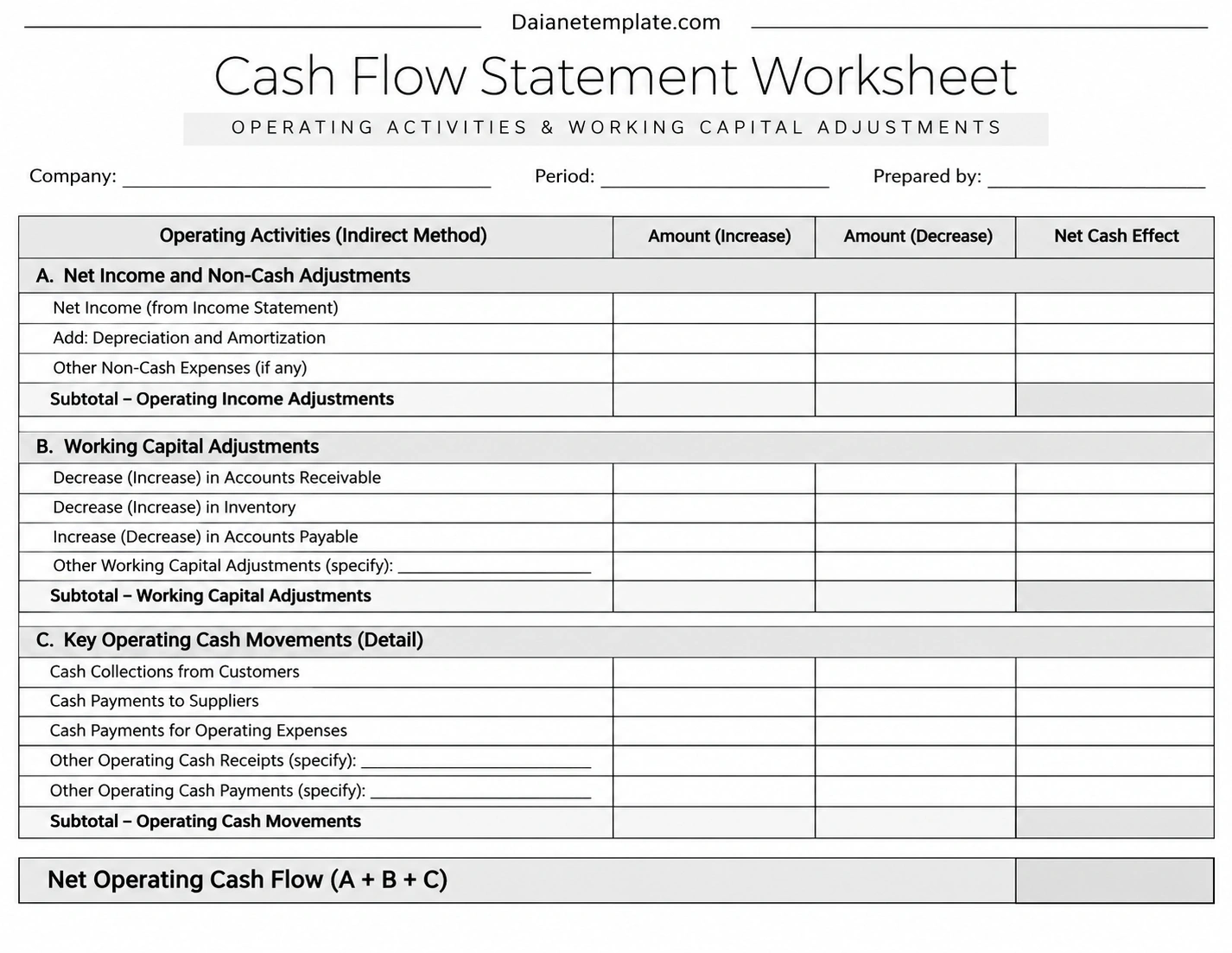
Companies commonly use the indirect method to calculate operating cash flow. This approach begins with net income and adjusts it for non-cash expenses, non-operating items, and changes in working capital.
For example, depreciation reduces accounting profit but does not represent a current-period cash payment. Therefore, it is generally added back when calculating operating cash flow using the indirect method.
Understanding Working Capital Adjustments
Working capital changes can significantly affect operating cash flow. Some common adjustments include:
- Accounts receivable: An increase generally reduces operating cash flow because more sales remain uncollected.
- Inventory: An increase generally reduces operating cash flow because cash is tied up in additional inventory.
- Accounts payable: An increase generally increases operating cash flow because the business has delayed some supplier payments.
- Prepaid expenses: An increase generally reduces operating cash flow because cash has been paid before the related expense is recognized.
Tracking these adjustments helps explain why a company can report accounting profits while generating less cash from its operations.
2. Investing Activities
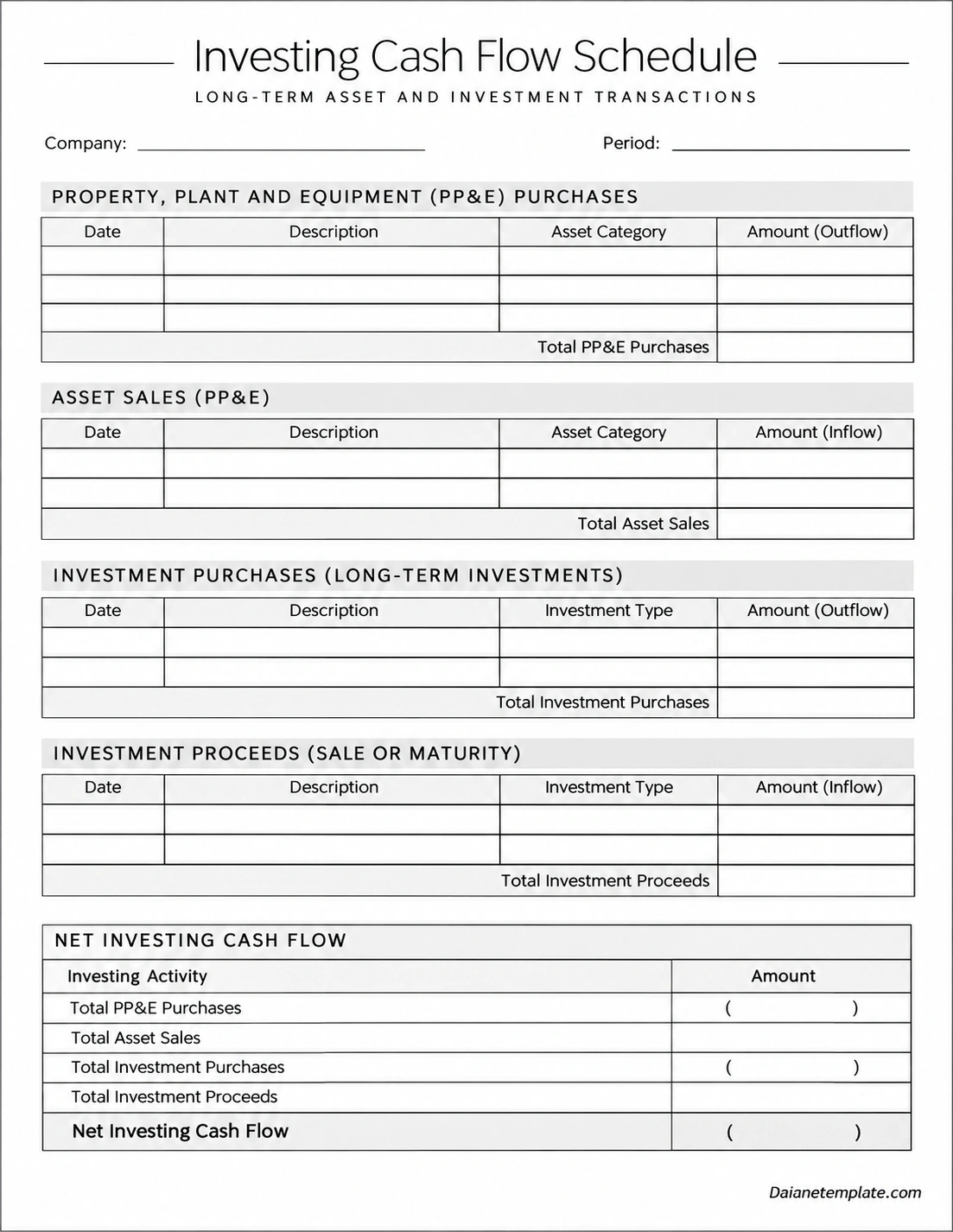
Investing activities show cash transactions involving long-term assets and investments. These transactions help businesses acquire resources, expand operations, and manage their investment portfolios.
Examples of investing cash outflows include:
- Purchasing land or buildings.
- Buying machinery and equipment.
- Acquiring vehicles for business operations.
- Purchasing long-term investments.
Examples of investing cash inflows include:
- Selling property or equipment.
- Selling long-term investments.
- Receiving principal repayments on certain loans made to other entities.
Capital expenditures, commonly called CapEx, are an important part of this section. They represent money spent to purchase, improve, or maintain long-term business assets.
For example, if a manufacturing company purchases new production equipment for $25,000, the payment is generally recorded as an investing cash outflow.
3. Financing Activities
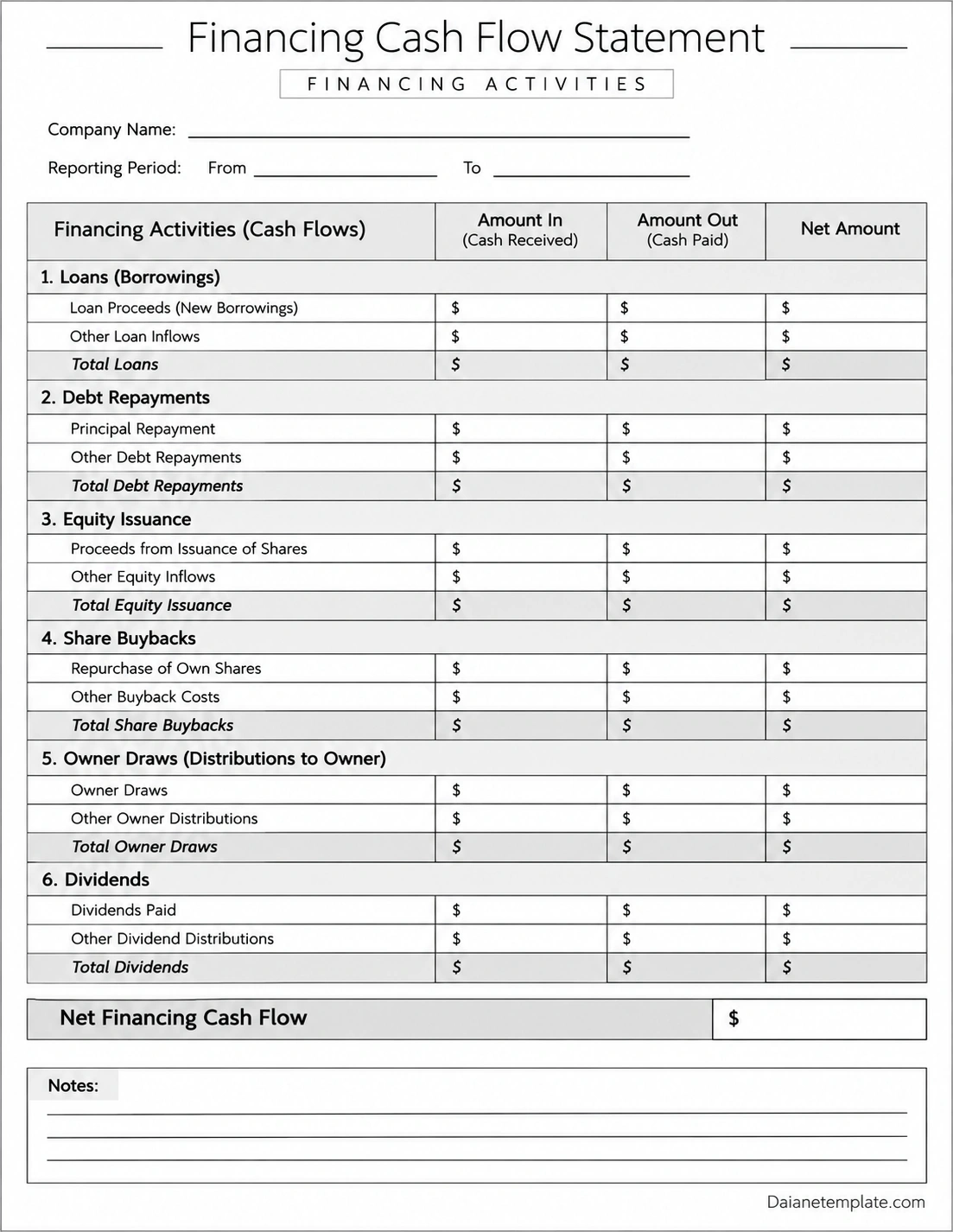
Financing activities show how a business obtains capital and returns funds to lenders or owners. This section helps readers understand how a company finances its operations and manages its financial obligations.
Common financing cash inflows include:
- Proceeds from bank loans.
- Proceeds from issuing shares.
- Capital contributions from business owners.
Common financing cash outflows include:
- Repayment of loan principal.
- Repurchase of company shares.
- Dividend payments.
- Owner distributions and withdrawals.
For example, when a company receives a $40,000 bank loan, the proceeds are generally recorded as a financing cash inflow. When it repays $8,000 of loan principal, that payment is generally recorded as a financing cash outflow.
Classification of interest and dividends can vary depending on the applicable accounting framework. Always follow the reporting requirements relevant to your business.
How to Prepare a Cash Flow Statement
Preparing a cash flow statement becomes easier when financial information is collected systematically. Follow these steps to organize the necessary records and calculate the final cash position.
Step 1: Gather Financial Statements
Collect the income statement, beginning and ending balance sheets, and supporting accounting records for the reporting period. Bank statements and transaction details can also help verify actual cash movements.
Step 2: Calculate Operating Cash Flow
Start with net income if you are using the indirect method. Add back non-cash expenses, remove relevant non-operating items, and adjust for changes in operating assets and liabilities.
Step 3: Record Investing Transactions
Identify cash payments and receipts related to long-term assets and investments. Separate purchases from proceeds received through asset sales or investment maturities.
Step 4: Record Financing Transactions
Review loan agreements, equity transactions, dividend records, and owner contributions or distributions. Include the applicable cash receipts and payments in the financing section.
Step 5: Calculate the Net Change in Cash
Add the net cash flows from all three categories to determine the total increase or decrease in cash.
Net Change in Cash = Operating Cash Flow + Investing Cash Flow + Financing Cash Flow
Step 6: Reconcile the Ending Cash Balance
Add the net change in cash to the beginning cash balance. The resulting figure should agree with the ending cash and cash equivalents balance reported in the financial records, subject to any applicable cash reconciliation adjustments.
Ending Cash Balance = Beginning Cash Balance + Net Change in Cash
Cash Flow Statement Example
The following simplified example demonstrates how the three sections work together for a business during one reporting period.
Example Business: ABC Company
- Net cash from operating activities: $35,000
- Net cash from investing activities: -$12,000
- Net cash from financing activities: $7,000
- Beginning cash balance: $20,000
First, calculate the net change in cash:
$35,000 – $12,000 + $7,000 = $30,000
Next, calculate the ending cash balance:
$20,000 + $30,000 = $50,000
ABC Company therefore has an ending cash balance of $50,000. This example shows how a business can use its operating cash generation to fund investments while also receiving additional financing.
Tips for Using a Cash Flow Statement Worksheet
A well-organized worksheet can make financial reporting more efficient and easier to review. Consider these practical tips when preparing your cash flow information.
- Use a consistent reporting period: Record transactions within the same monthly, quarterly, or annual period.
- Separate inflows and outflows: Clearly identify money received and money paid to avoid calculation errors.
- Keep supporting records: Retain invoices, bank statements, receipts, and loan documentation.
- Check non-cash transactions: Make sure depreciation and other non-cash items are handled correctly.
- Review working capital changes: Examine receivables, inventory, payables, and other operating balances.
- Reconcile cash balances: Compare the calculated ending balance with the relevant accounting records.
- Update the worksheet regularly: Monthly updates can help identify cash shortages before they become serious problems.
Frequently Asked Questions
1. What is the main purpose of a cash flow statement?
The main purpose of a cash flow statement is to show how cash enters and leaves a business during a specific period. It helps users evaluate liquidity, cash generation, payment capacity, and overall financial management.
2. What are the three sections of a cash flow statement?
The three sections are operating activities, investing activities, and financing activities. Together, they explain how a business generates, spends, and obtains cash.
3. What is the difference between a cash flow statement and an income statement?
An income statement reports revenue and expenses to calculate profit or loss using accrual accounting. A cash flow statement focuses on actual cash receipts and payments. As a result, net income and operating cash flow can be different.
4. What is the difference between the direct and indirect methods?
The direct method reports major categories of operating cash receipts and payments, such as customer collections and supplier payments. The indirect method starts with net income and adjusts for non-cash items and changes in working capital.
5. How often should a business prepare a cash flow statement?
Many businesses prepare cash flow statements monthly, quarterly, and annually. Monthly reporting is particularly useful for monitoring liquidity and planning upcoming expenses.
6. Can a business have positive net income but negative cash flow?
Yes. A business can report positive net income while experiencing negative operating cash flow. This may happen when customers have not paid their invoices, inventory increases, or the business has significant cash expenses.
7. What is a cash flow statement worksheet used for?
A cash flow statement worksheet helps organize financial data, calculate cash movements, and reconcile beginning and ending cash balances before preparing the final financial statement.
8. Is a cash flow statement worksheet suitable for small businesses?
Yes. Small businesses can use a worksheet to track operating receipts, supplier payments, asset purchases, loan transactions, and cash balances. It provides a practical way to organize financial information without requiring a complicated reporting system.
Conclusion
A cash flow statement provides valuable insight into a company’s financial health by showing how money moves through operating, investing, and financing activities. It helps business owners understand whether their operations generate sufficient cash, whether investments are affordable, and how financing decisions affect available funds.
Using a cash flow statement worksheet makes the preparation process more organized and manageable. By recording transactions carefully, reviewing working capital adjustments, and reconciling cash balances, you can create a more reliable financial report.
Whether you are managing a small business, preparing accounting assignments, or reviewing company finances, a printable cash flow statement template can help simplify your financial tracking and reporting process.
Cash Flow Statement Template – Download
