Nursing notes are an essential part of patient care in any healthcare setting. They serve as a way for nurses to document important information about a patient’s condition, treatment, and progress. These notes help to ensure continuity of care, facilitate communication among healthcare providers, and provide a legal record of the care provided.
In this article, we will explore the what, why, and how of nursing notes and provide tips for successful documentation.
What are Nursing Notes?
Nursing notes, also known as nursing documentation or nurse’s charting, are written records that nurses create to document important information about a patient’s care. These notes are typically written in a patient’s medical record and can include information such as vital signs, medications administered, treatments provided, and observations of the patient’s condition. Nursing notes are a crucial part of the patient’s overall medical record and are used by healthcare providers to track the patient’s progress, make treatment decisions, and communicate with other members of the healthcare team.
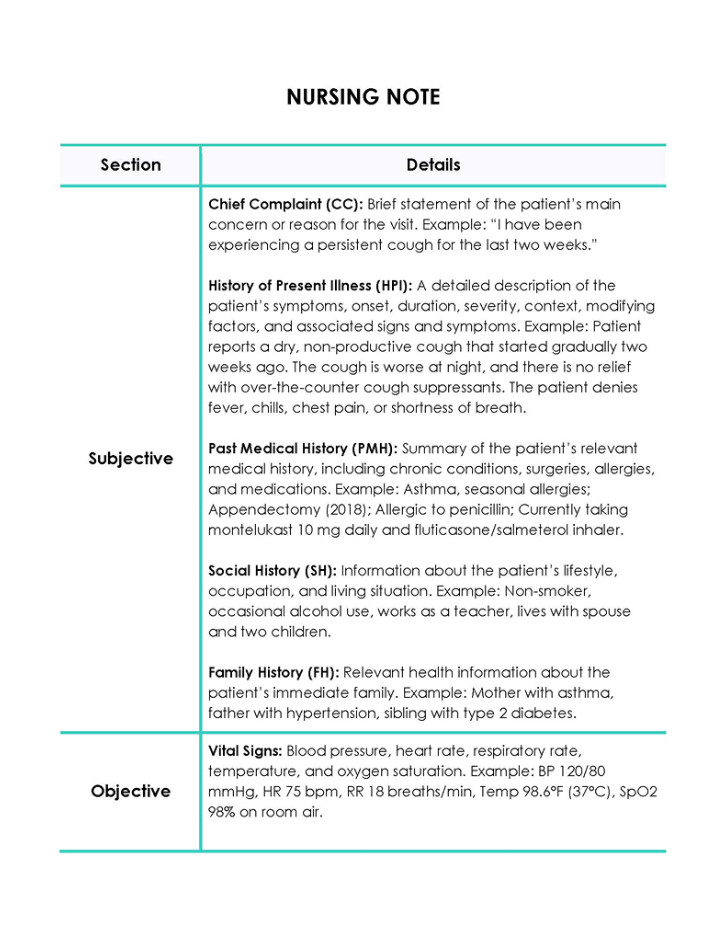
- Objective Data: This includes measurable information such as vital signs, lab results, and physical assessments.
- Subjective Data: This includes information reported by the patient, such as symptoms or concerns.
- Assessment: This is the nurse’s analysis of the patient’s condition based on the data collected.
- Plan: This outlines the nursing interventions that will be implemented to address the patient’s needs.
Why are Nursing Notes Important?
Nursing notes play a crucial role in patient care for several reasons. Firstly, they provide a comprehensive record of the care that has been provided to the patient, which can be used to track the patient’s progress over time. This information is essential for making informed decisions about the patient’s treatment and ensuring continuity of care. Nursing notes also serve as a legal document that can be used in court to defend the care provided to the patient.
Additionally, nursing notes are an important tool for communication among members of the healthcare team, ensuring that everyone involved in the patient’s care is informed and on the same page.
What to Include in Nursing Notes
When documenting nursing notes, it is essential to include all relevant information about the patient’s care. This includes objective data, such as vital signs and lab results, as well as subjective data, such as the patient’s symptoms and concerns. Additionally, nurses should include their assessment of the patient’s condition and their plan for care. It is important to be thorough and accurate when documenting nursing notes, as this information is used to make treatment decisions and provide evidence of the care provided.
- Be concise: Include only relevant information in your notes to ensure clarity and brevity.
- Use clear language: Avoid jargon and abbreviations that may be confusing to other healthcare providers.
- Document in real-time: Try to document patient care as soon as possible to ensure accuracy and completeness.
- Include patient responses: Document how the patient responds to treatments and interventions to track progress.
How to Write Effective Nursing Notes
Writing effective nursing notes is a skill that takes practice and attention to detail. When documenting patient care, nurses should focus on accuracy, clarity, and completeness. It is important to use clear and concise language, avoid jargon, and be specific in describing the patient’s condition and response to treatment. Nurses should also be mindful of patient confidentiality and ensure that their notes are written in a professional manner that respects the patient’s privacy.
1. Use a structured format:
When documenting nursing notes, it can be helpful to use a structured format, such as SOAP (Subjective, Objective, Assessment, Plan) or DAR (Data, Action, Response). This can help ensure that all relevant information is included in the notes and make them easier to read and understand.
2. Be objective and factual:
When documenting patient care, it is important to be objective and factual in your observations and assessments. Avoid making assumptions or judgments about the patient and stick to the facts. This will help ensure that your notes are accurate and unbiased.
3. Use proper grammar and spelling:
Good grammar and spelling are essential when documenting nursing notes. Make sure to proofread your notes for errors before finalizing them to ensure that they are professional and easy to read.
4. Include relevant details:
When documenting nursing notes, include all relevant details about the patient’s care, including any changes in condition, responses to treatment, and interventions provided. This information is crucial for tracking the patient’s progress and making informed decisions about their care.
5. Review and update regularly:
It is important to review and update nursing notes regularly to ensure that they accurately reflect the patient’s current condition and care. This can help prevent errors or oversights and ensure that the patient receives the best possible care.
6. Seek feedback:
If you are unsure about your documentation or would like to improve your nursing notes, don’t hesitate to seek feedback from colleagues or supervisors. Constructive feedback can help you identify areas for improvement and enhance the quality of your documentation.
Tips for Successful Nursing Notes
Documenting nursing notes effectively is essential for providing quality patient care. Here are some tips to help you write successful nursing notes:
– Keep your notes clear, concise, and accurate.- Use a consistent format for documenting patient care.
– Be thorough and detailed in your documentation.- Avoid using jargon or abbreviations that may be misunderstood.
– Document patient responses to treatments and interventions.- Review and update your notes regularly to ensure accuracy.
– Seek feedback from colleagues or supervisors to improve your documentation skills.
In conclusion, nursing notes are a critical aspect of patient care that help to ensure continuity of care, facilitate communication among healthcare providers, and provide a legal record of the care provided. By following the tips outlined in this article, nurses can improve their documentation skills and provide high-quality care to their patients.
