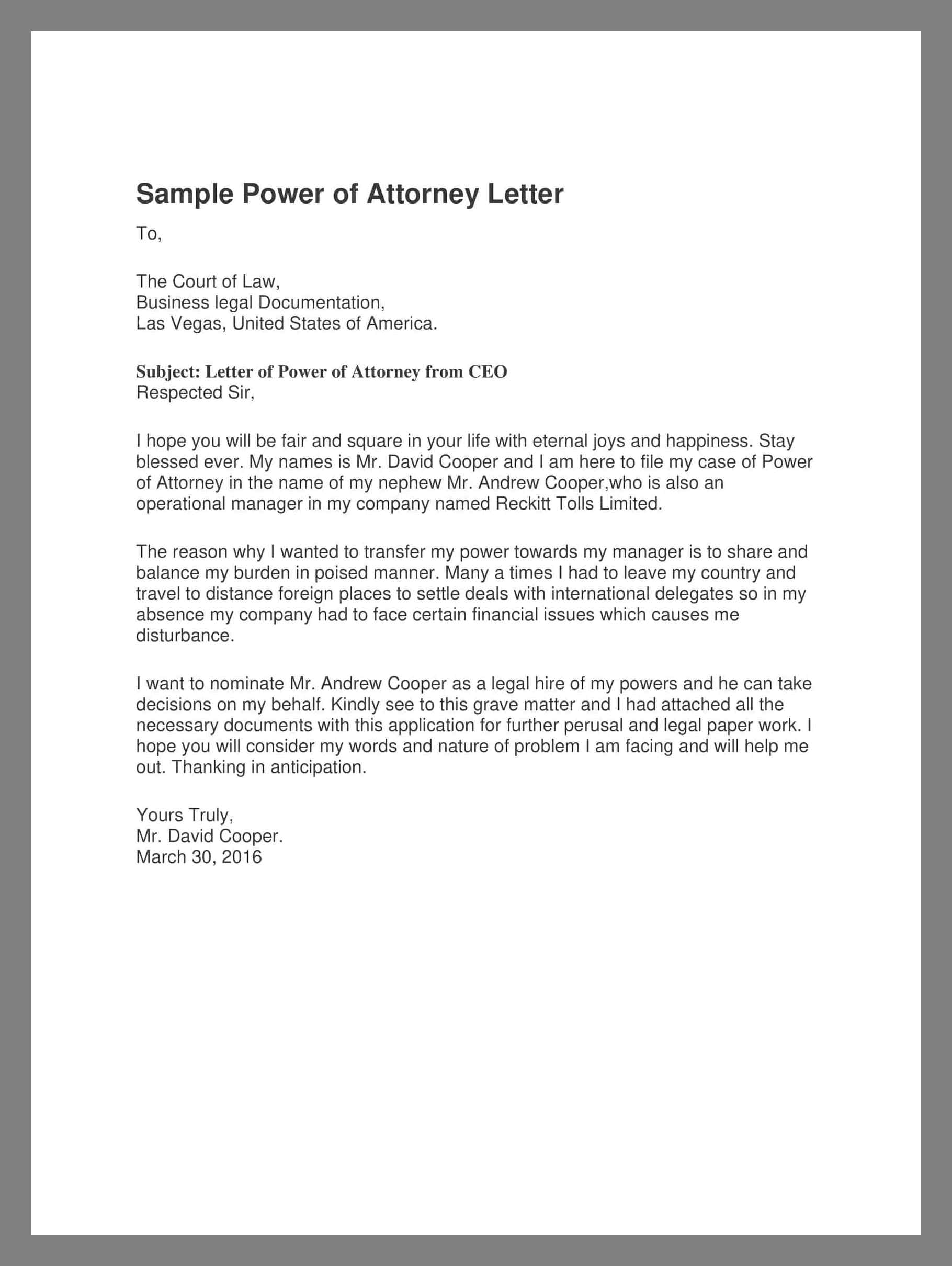
When it comes to legal matters, having a power of attorney letter in place can provide peace of mind and ensure that your wishes are carried out in the event that you are unable to make decisions for yourself. This powerful legal document grants someone the authority to act on your behalf in various situations, making it an essential tool for planning for the future. In this article, we will explore the key elements of a power of attorney letter, why it is important, and how to create one effectively.
What is a Power of Attorney Letter?
A power of attorney letter is a legal document that allows you to appoint someone to make decisions on your behalf. This appointed person, known as the attorney-in-fact or agent, can handle financial, legal, and healthcare matters for you if you become incapacitated or are unable to make decisions for yourself. The power of attorney letter can be customized to grant specific powers to the agent, giving you control over what decisions they can make on your behalf.
Why is a Power of Attorney Letter Important?
Having a power of attorney letter in place is crucial for several reasons. Firstly, it ensures that someone you trust will be able to make decisions for you if you are unable to do so. This can help prevent confusion and disputes among family members during difficult times. Additionally, a power of attorney letter can help you avoid the need for a court-appointed guardian or conservator, which can be costly and time-consuming.
Key Elements of a Power of Attorney Letter
When creating a power of attorney letter, there are several key elements that should be included to ensure its effectiveness:
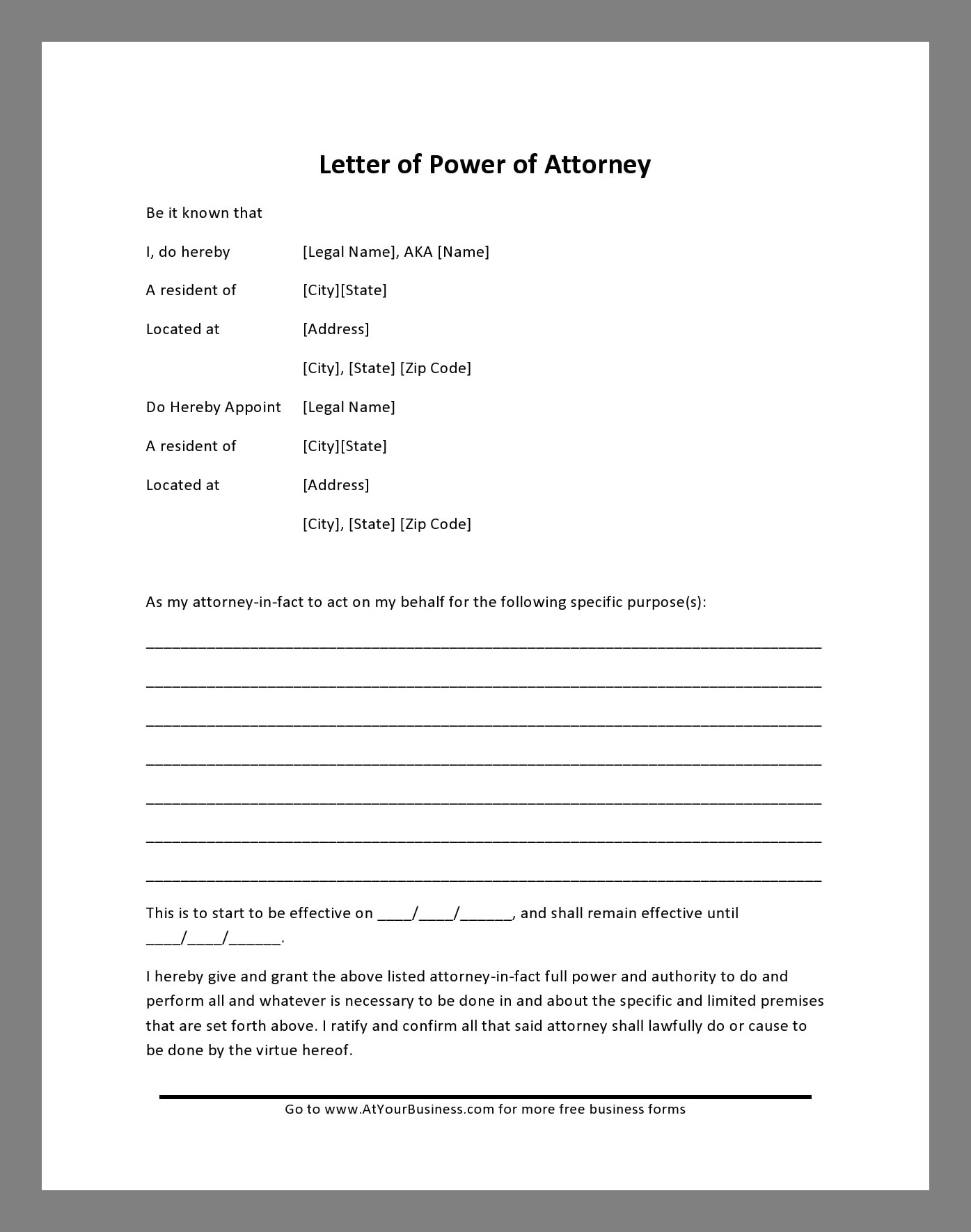
- Identification of Parties: Clearly identify yourself as the principal and the appointed agent.
- Scope of Powers: Specify the powers that you are granting to the agent, whether they are financial, legal, healthcare, or a combination of these.
- Duration: Determine whether the power of attorney is durable (remains in effect even if you become incapacitated) or limited to a specific time period.
- Revocation Clause: Include a clause that allows you to revoke the power of attorney at any time.
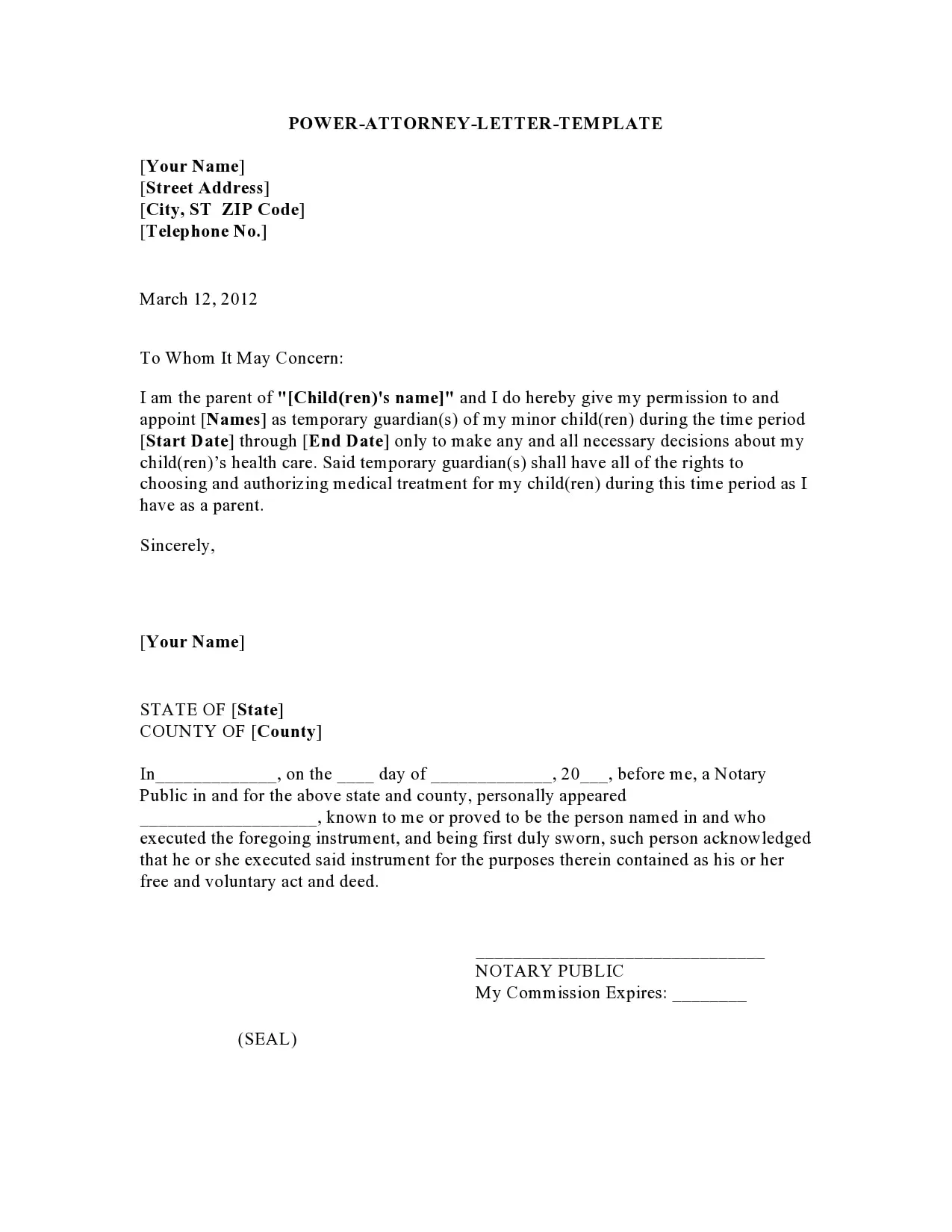
- Witnesses and Notarization: In some states, power of attorney letters must be witnessed and notarized to be valid.
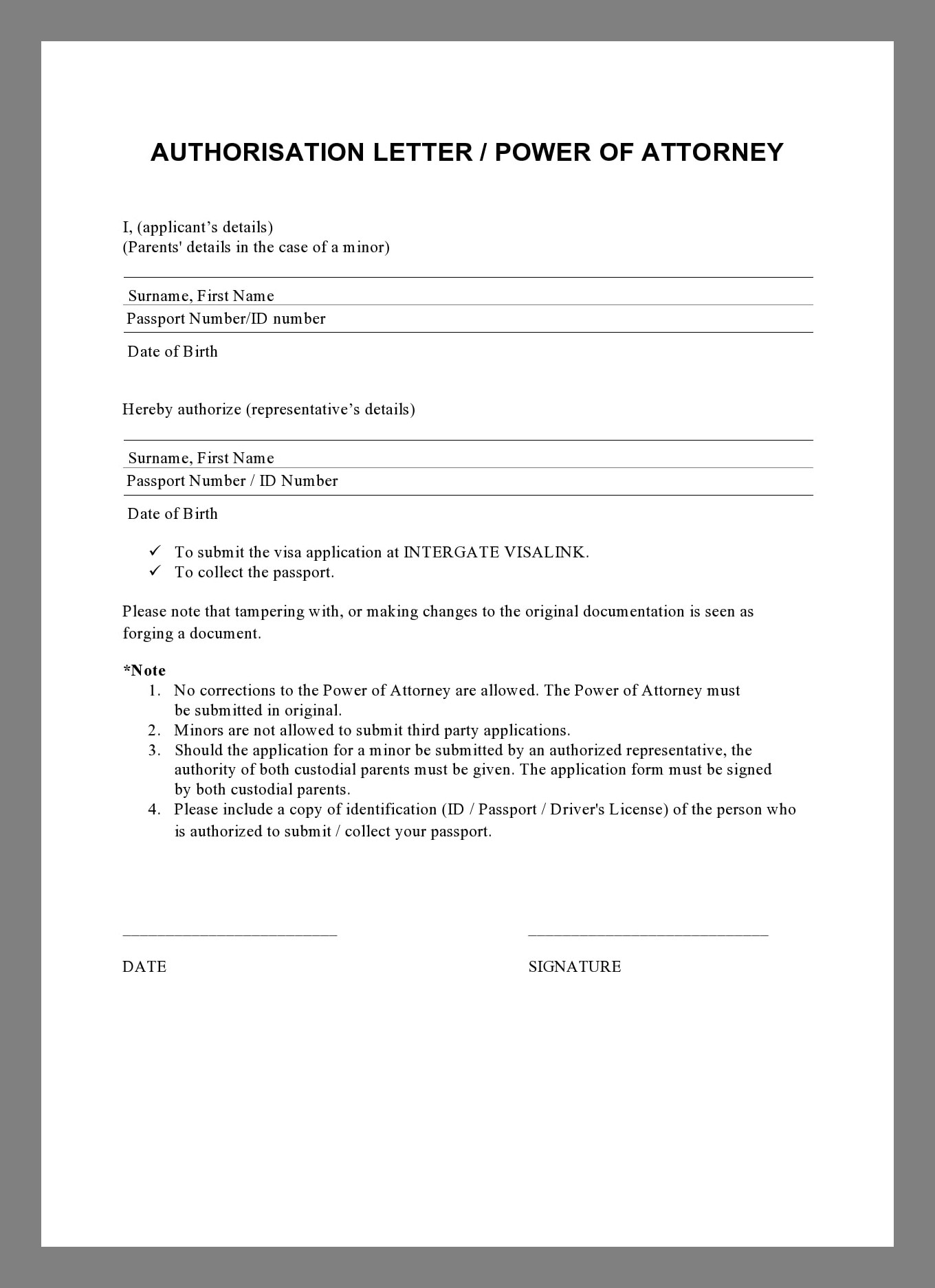
Examples
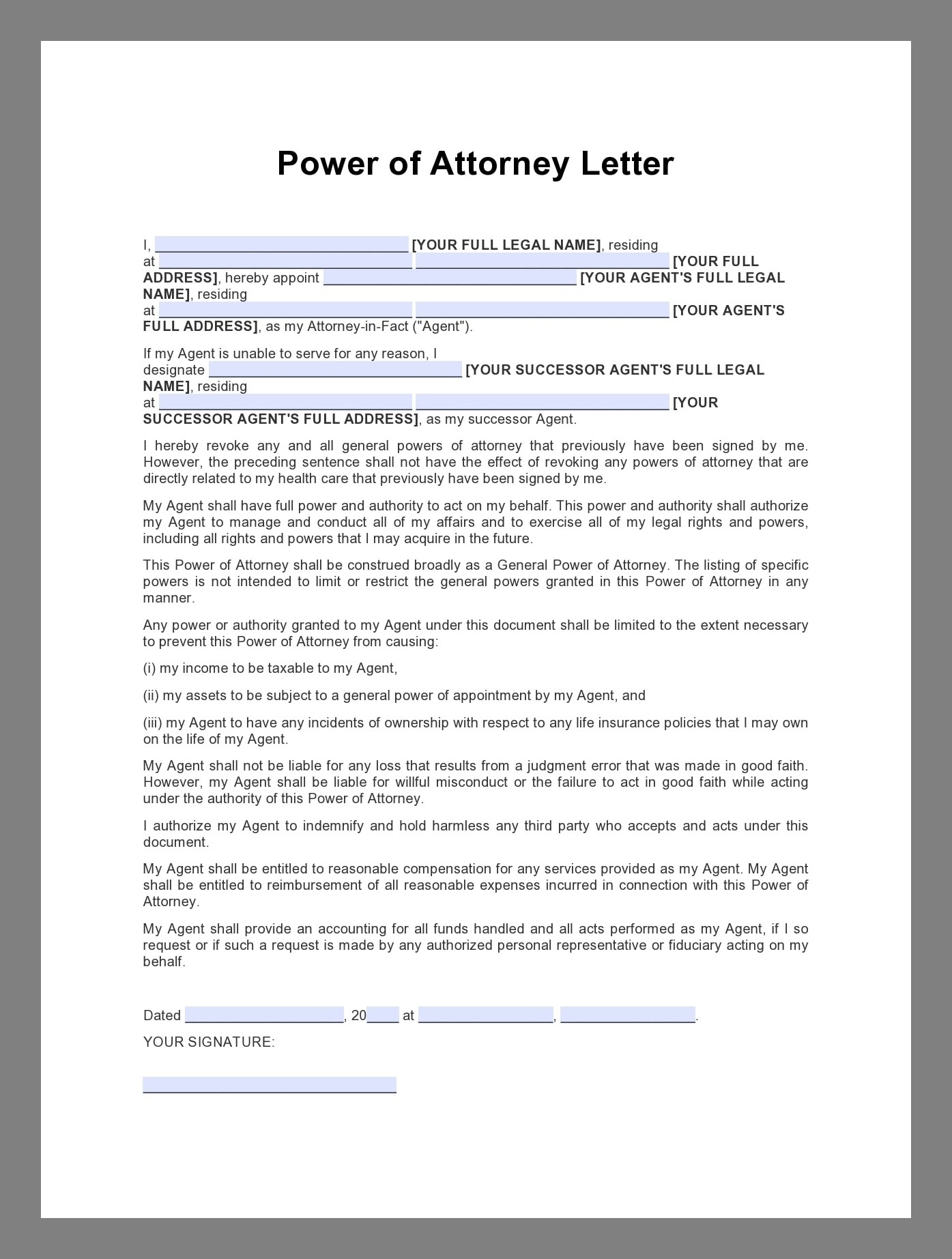
How to Create a Power of Attorney Letter
Creating a power of attorney letter involves several steps to ensure that it is legally valid and meets your specific needs:
1. Choose your Agent
Select someone you trust to act as your agent and make decisions on your behalf. Discuss your wishes with them to ensure they understand your preferences.
2. Determine the Scope of Powers
Decide which powers you want to grant to your agent, whether it be financial, legal, healthcare, or a combination of these. Be specific about what decisions they can make on your behalf.
3. Draft the Letter
Write the power of attorney letter, including all necessary details such as the identification of parties, scope of powers, duration, and revocation clause. Consider seeking legal advice to ensure the document complies with state laws.
4. Sign and Date the Letter
Sign the power of attorney letter in the presence of witnesses and have it notarized if required by your state. Make copies of the document to distribute to relevant parties.
5. Review and Update as Needed
Regularly review your power of attorney letter to ensure it still reflects your wishes and circumstances. Make updates as needed, especially if there are changes in your relationships or health.
Tips for Successful Power of Attorney Letters
- Choose your agent wisely: Select someone you trust to act in your best interests.
- Be specific: Clearly outline the powers you are granting to your agent and any limitations.
- Consult with a legal professional: Seek advice from an attorney to ensure your power of attorney letter complies with state laws.
- Keep copies in a safe place: Store copies of your power of attorney letter in a secure location and provide them to relevant parties as needed.
- Update as needed: Review and update your power of attorney letter regularly to ensure it remains current and reflects your wishes.
By understanding the power of attorney letter and following these guidelines, you can ensure that your interests are protected and your wishes are honored in challenging situations. Take the time to create a power of attorney letter that reflects your values and priorities, providing you and your loved ones with peace of mind for the future.
Power of Attorney Letter Template – Download
