A prenuptial agreement helps couples clarify their financial rights and responsibilities before getting married. It can establish how certain assets, debts, and property interests will be handled if the marriage ends through divorce or separation, subject to applicable law.
Although discussing finances before marriage may feel uncomfortable, an open conversation about money can help couples understand each other’s expectations and avoid uncertainty later. A well-prepared prenuptial agreement provides a framework for addressing financial matters before the wedding rather than leaving every issue to be resolved during a difficult time.
Whether you own property, operate a business, have existing debts, or simply want to establish clear financial expectations, understanding how a prenuptial agreement works is a useful first step. This guide explains its purpose, common provisions, preparation process, and important considerations before signing.
What Is a Prenuptial Agreement?
A prenuptial agreement, often called a prenup or premarital agreement, is a legal agreement that a couple enters into before marriage. It sets out agreed terms concerning certain financial matters during the marriage or if the relationship ends.
Depending on the jurisdiction and the agreement’s terms, a prenup may address separate property, marital property, business interests, debt responsibilities, inheritance, and spousal support. It can also explain how specific assets or financial obligations should be treated.
The rules governing prenuptial agreements differ between countries and, in some places, between states or provinces. Not every provision is enforceable in every jurisdiction. Couples should therefore obtain advice based on the law that applies to their circumstances.
Why Do Couples Consider a Prenuptial Agreement?
Couples have different financial circumstances and priorities. A prenuptial agreement can provide a structured way to discuss those differences and document mutually agreed arrangements.
1. Clarifies Property Ownership
One partner may own a home, investment portfolio, or other valuable assets before marriage. A prenup can help clarify how eligible premarital property should be treated and which assets are intended to remain separate.
Clear records can also help distinguish separate assets from property acquired jointly, although the legal treatment of property may depend on how it is used, titled, or combined during the marriage.
2. Addresses Existing Debts
Partners may enter marriage with student loans, business obligations, personal loans, or other debts. A prenuptial agreement may document how the couple intends to allocate certain financial responsibilities, to the extent permitted by law.
However, an agreement between spouses does not automatically change a lender’s rights or release a borrower from an existing contract. Couples should review their obligations carefully before relying on a prenup to address debt.
3. Protects Business Interests
Someone who owns a business may want to clarify how that interest, its growth, or related income will be treated during marriage and if the relationship ends.
Business ownership can involve complex valuation, tax, and legal issues. Professional advice may be particularly important when a company has multiple owners or existing shareholder agreements.
4. Supports Financial Transparency
Preparing a prenuptial agreement usually requires both partners to discuss assets, income, debts, and financial expectations. This process can reveal differences that deserve attention before marriage.
Honest disclosure helps each person understand the arrangement they are considering. It also reduces the risk of misunderstandings about what the agreement covers.
5. Establishes Expectations for Future Changes
A couple may want to address how certain financial arrangements will work if they acquire property, start a business, or experience changes in income.
A prenup can establish terms for some future circumstances, subject to applicable law. Couples should also understand that changing an agreement later may require specific formalities or the written consent of both parties.
What Should a Prenuptial Agreement Include?
The appropriate provisions depend on the couple’s assets, obligations, goals, and local legal requirements. The following topics are commonly considered during the drafting process.
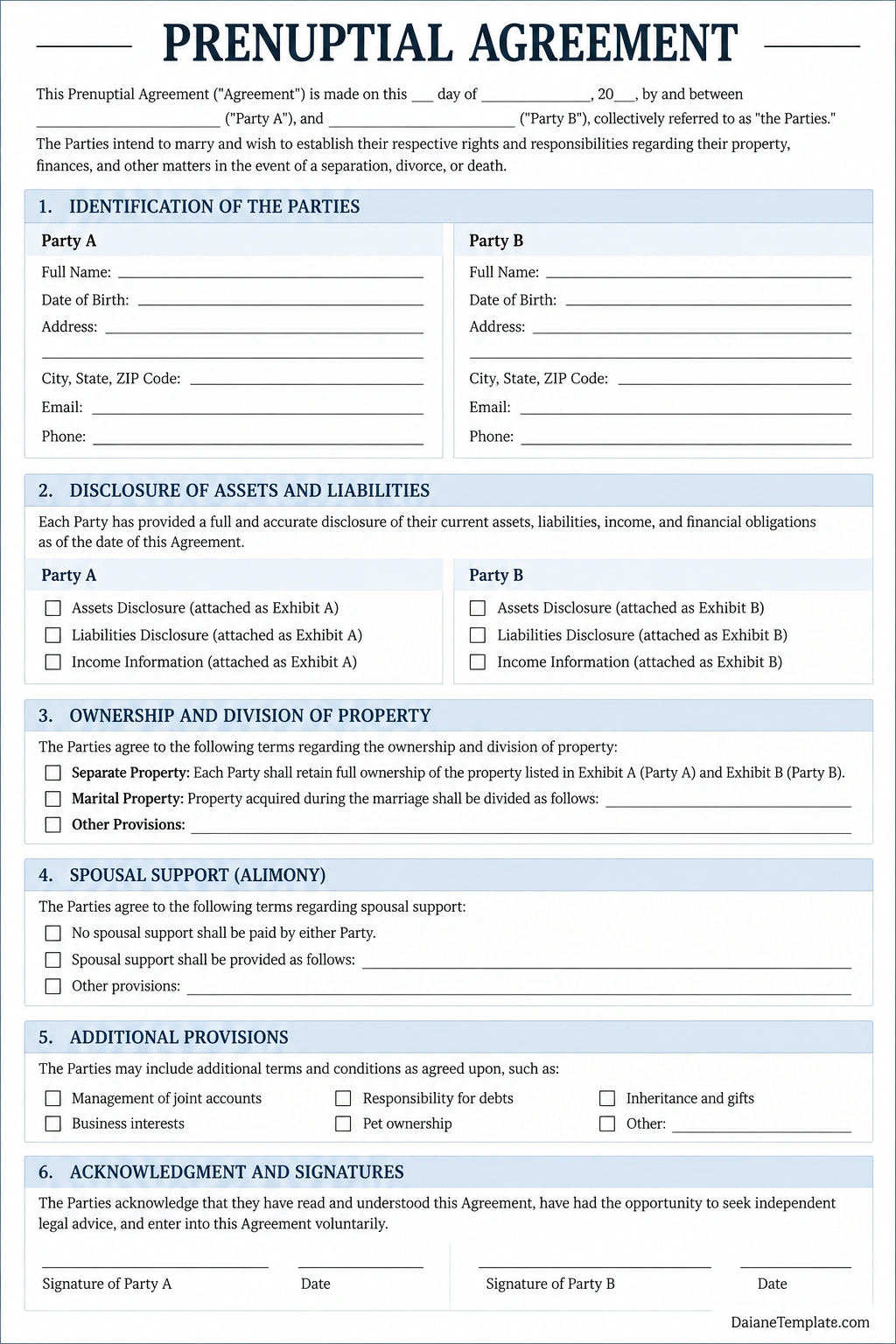
1. Identification of Both Parties
The agreement should correctly identify both people entering the marriage. It may include their legal names, addresses, and other information required by the applicable drafting process.
2. Financial Disclosure
Each person should provide accurate information about relevant assets, liabilities, income, and financial interests. Supporting schedules may list property, bank accounts, investments, business ownership, loans, and other obligations.
Full and accurate disclosure is important because incomplete information can create disputes and may affect enforceability under applicable law.
3. Separate Property
Separate property provisions describe assets intended to remain individually owned. These may include property acquired before marriage, certain inheritances, gifts, or other assets recognized under the relevant legal framework.
The agreement should explain how the couple intends to treat income, appreciation, proceeds, or assets acquired in exchange for separate property when those issues are relevant.
4. Marital or Joint Property
Couples may want to document how property acquired during marriage will be classified or divided if the relationship ends. The agreement can describe intended arrangements for jointly purchased real estate, savings, investments, or other assets.
Because property regimes vary, the agreement should be reviewed under the law governing the couple’s circumstances.
5. Debt Responsibilities
A prenup may address how the couple intends to allocate responsibility for existing debts and certain future obligations. It should distinguish between the parties’ arrangements with each other and obligations owed to third-party creditors.
6. Spousal Support
Some prenuptial agreements address spousal support, also known in some jurisdictions as alimony or maintenance. The terms may discuss whether support is contemplated and how relevant factors should be considered.
Restrictions apply in some jurisdictions, and a court may decline to enforce certain provisions. Obtain jurisdiction-specific legal advice before including terms intended to waive or limit support.
7. Inheritance, Gifts, and Family Interests
Couples may wish to clarify their intentions concerning inheritances, family gifts, or property connected to a family business. These arrangements can be particularly important when one partner expects to receive assets from relatives or wants to preserve property for children from a previous relationship.
A prenuptial agreement does not necessarily replace a will, trust, beneficiary designation, or estate plan. These documents should be reviewed together when inheritance planning is important.
8. Additional Financial Provisions
Depending on the circumstances, the agreement may address business interests, financial recordkeeping, ownership of certain assets, or procedures for reviewing future arrangements.
Keep provisions specific and consistent with applicable law. Avoid assuming that every personal or family matter can be controlled through a premarital financial agreement.
How to Prepare a Prenuptial Agreement Step by Step
Preparing a prenup takes planning, disclosure, and careful review. Starting early gives both partners time to understand the proposed terms without unnecessary pressure.
Step 1: Start the Conversation Early
Discuss the idea well before the wedding date. Explain your reasons for considering an agreement and give each person time to raise questions or concerns.
A constructive discussion should focus on mutual understanding and financial planning rather than treating the agreement as a prediction that the marriage will fail.
Step 2: Gather Financial Information
Prepare a list of assets, debts, income sources, and relevant financial obligations. Collect supporting records where appropriate, including property documents, loan statements, investment summaries, and business ownership information.
Organizing this information early can make the drafting process more efficient and help both parties understand the financial circumstances being addressed.
Step 3: Identify Shared Priorities
Discuss which issues need to be addressed. These may include premarital property, business ownership, existing debts, inheritance, or arrangements for certain assets acquired during marriage.
Write down the questions that need resolution and distinguish between areas of agreement and matters requiring further advice.
Step 4: Obtain Independent Legal Advice
Each partner should consider consulting their own qualified lawyer. Independent advice can help each person understand the proposed terms, potential consequences, and available alternatives.
A lawyer familiar with the applicable jurisdiction can also explain formal requirements, including disclosure, execution, witnesses, notarization, or other steps that may be necessary.
Step 5: Draft and Review the Agreement
Prepare the document using the agreed terms and appropriate legal guidance. Check that names, financial schedules, definitions, and provisions are consistent and complete.
Both partners should have enough time to review the draft, ask questions, and request changes. Avoid signing a document that you do not understand.
Step 6: Sign Using the Required Formalities
Follow the signing requirements that apply to the agreement. Depending on the jurisdiction, formalities may include written execution, witnesses, notarization, or other procedures.
Timing can also matter. Completing the process well before the wedding may help demonstrate that the agreement was considered voluntarily, although the legal effect of timing depends on the applicable law.
Step 7: Keep Copies and Review When Necessary
Both partners should retain complete copies of the signed agreement and any incorporated financial schedules. Store them securely and make sure they can be located when needed.
If circumstances change significantly, seek legal advice about whether an amendment or replacement agreement is appropriate and what formalities would be required.
Common Prenuptial Agreement Mistakes to Avoid
A poorly prepared prenup may create confusion instead of providing clarity. Avoid these common problems during the drafting process.
- Starting too late: Allow enough time for disclosure, independent advice, and careful review.
- Providing incomplete disclosure: Document relevant assets, income, debts, and financial interests accurately.
- Using unclear wording: Define important terms and describe the intended treatment of assets precisely.
- Ignoring local law: Check the rules that apply to the couple and the agreement.
- Relying on a generic template alone: Treat a template as a starting point rather than a substitute for legal advice.
- Overlooking existing contracts: Consider the effect of mortgages, business agreements, and creditor rights.
- Assuming every clause is enforceable: Some terms may be restricted or rejected under applicable law.
- Failing to keep a signed copy: Store the final agreement and supporting schedules securely.
Prenuptial Agreement Template: How to Use One
A prenuptial agreement template can help couples identify topics to discuss and organize the information needed for a draft. It may include sections for party identification, financial disclosure, property ownership, debt responsibilities, spousal support, additional provisions, and signatures.
Use the Template as a Planning Checklist
Review each section and note which issues apply to your circumstances. Gather the relevant financial information before attempting to complete detailed provisions.
Customize the Terms Carefully
Do not assume that standard wording is suitable for every couple. Property rules, disclosure requirements, support provisions, and execution formalities can vary significantly by jurisdiction.
Have the Document Reviewed
Before signing, ask a qualified lawyer to review the proposed agreement under the applicable law. Confirm that the provisions reflect your intentions and that required formalities have been addressed.
A template can improve organization, but legal review is particularly important when substantial assets, business interests, children from previous relationships, or cross-border issues are involved.
Frequently Asked Questions About Prenuptial Agreements
What is the main purpose of a prenuptial agreement?
The main purpose is to document agreed financial arrangements before marriage. Depending on applicable law, it may address property ownership, debt responsibilities, business interests, and spousal support if the relationship ends.
Is a prenuptial agreement legally binding?
It may be enforceable if it satisfies the relevant legal requirements. Enforceability can depend on factors such as disclosure, voluntary consent, procedural fairness, drafting, and whether particular provisions are permitted by law.
When should a couple sign a prenuptial agreement?
Couples should begin the process well before the wedding so both parties have time to disclose financial information, obtain independent legal advice, negotiate terms, and complete the required formalities.
Can a prenuptial agreement protect property owned before marriage?
A prenup may clarify the intended treatment of premarital property, subject to applicable law. The agreement should identify relevant assets and address how income, appreciation, or property acquired in exchange for those assets will be handled where appropriate.
Can a prenup cover debts?
A prenuptial agreement may document how partners intend to allocate certain debts between themselves. However, it does not automatically change a creditor’s rights or release either person from an existing loan contract.
Can a prenuptial agreement be changed after marriage?
In some jurisdictions, couples can amend or replace a premarital agreement after marriage, often through a separate agreement with required formalities. The process and legal effect depend on local law.
Does each partner need a separate lawyer?
Independent legal advice is strongly worth considering because each person has different interests and should understand the agreement’s consequences. Whether separate representation is legally required depends on the jurisdiction and circumstances.
Can a prenuptial agreement determine child custody or child support?
Child custody and child support are generally governed by legal standards focused on the child’s interests and applicable law. A prenup should not be assumed to control these matters, and any proposed provisions require jurisdiction-specific legal advice.
Conclusion
A prenuptial agreement gives couples an opportunity to discuss financial expectations and document arrangements before marriage. It can address matters such as property ownership, existing debts, business interests, and certain forms of spousal support, depending on applicable law.
Start by discussing your priorities, gathering accurate financial information, and identifying the issues that need attention. Allow enough time for negotiation and independent legal advice before signing.
A template can help organize the process, but it should not replace a document tailored to your circumstances and reviewed under the relevant law. With careful preparation, a prenuptial agreement can provide greater financial clarity and help both partners enter marriage with a clearer understanding of their arrangements.
Download: Prenuptial Agreement Template
