This agreement outlines an employee’s responsibility to keep business information private during and after employment. It may cover trade secrets, customer records, financial information, internal procedures, intellectual property, and other proprietary materials.
In this guide, you will learn what a staff confidentiality agreement includes, why businesses use one, and how to prepare an agreement that clearly explains employee responsibilities. You can also use the printable template below as a starting point for creating your own document.
What Is a Staff Confidentiality Agreement?
A Staff Confidentiality Agreement is a written document between an employer and an employee. It establishes the employee’s obligation to protect confidential information obtained through their work.
The agreement typically prohibits employees from disclosing, copying, distributing, or using protected information for unauthorized purposes. It also explains how confidential materials should be handled and what happens when employment ends.
This document is closely related to an Employee Non-Disclosure Agreement (NDA). Other common names include:
- Employee Confidentiality Agreement
- Employee Non-Disclosure Agreement
- Confidential Disclosure Agreement (CDA)
- Proprietary Information Agreement
- Staff Non-Disclosure Agreement
Although these terms are sometimes used interchangeably, their scope may differ depending on the document. A confidentiality agreement generally focuses on protecting private information, while a broader proprietary information agreement may also address intellectual property ownership and related obligations.
Why Do Businesses Need a Staff Confidentiality Agreement?
Employees often have access to information that is not available to the public. Without clear confidentiality rules, sensitive business information may be accidentally shared, improperly stored, or used for personal benefit.
A written agreement helps communicate expectations and provides a reference point when handling confidential information.
1. Protect Business Trade Secrets
Businesses may develop valuable processes, formulas, product designs, marketing strategies, and technical methods. A confidentiality agreement helps prevent employees from improperly sharing this information with competitors or unauthorized parties.
2. Safeguard Customer and Client Information
Customer databases, contact details, contracts, transaction histories, and private communications should only be accessed and used for legitimate business purposes. Confidentiality requirements help employees understand their responsibility when handling these records.
3. Protect Financial and Internal Business Data
Financial statements, salary records, pricing strategies, budgets, and internal reports can affect business operations if disclosed without permission. An employee NDA helps establish restrictions on accessing and sharing these materials.
4. Establish Clear Employee Responsibilities
A written agreement explains what employees can and cannot do with confidential information. This reduces misunderstandings and encourages responsible information handling throughout the organization.
5. Maintain Confidentiality After Employment
Confidentiality responsibilities may continue after an employee resigns or their employment ends. The agreement can explain which obligations survive termination and how company information must be returned or deleted.
What Should a Staff Confidentiality Agreement Include?
A useful Staff Confidentiality Agreement should be specific, understandable, and appropriate for the company’s operations. The following sections are commonly included in an employee confidentiality form.
1. Employer and Employee Information
Start with basic identification details for both parties. These details help establish who is entering the agreement.
- Company or employer name
- Business address
- Employee’s full name
- Job title or position
- Department
- Effective date of the agreement
2. Definition of Confidential Information
This section identifies the information protected by the agreement. Use clear descriptions rather than relying on a vague statement that all company information is confidential.
Examples may include:
- Business plans and marketing strategies
- Customer and supplier databases
- Financial reports and pricing information
- Trade secrets and proprietary processes
- Software, source code, and technical documentation
- Product designs and research materials
- Internal employee and operational records
The agreement should also identify appropriate exclusions. Information that is already public through no wrongdoing by the employee, for example, generally should not be treated as confidential solely because it appears in the agreement.
3. Permitted Use and Disclosure
Employees should only use confidential information for authorized work-related purposes. The agreement should explain when disclosure is permitted and who may receive protected information.
For example, sharing information with an authorized colleague who needs it to complete a business task may be permitted. Sharing the same information with an outside party without approval may violate company policy.
4. Confidentiality Obligations
This section explains the employee’s responsibilities when handling sensitive information. Common obligations include:
- Keeping confidential information private.
- Preventing unauthorized access to company records.
- Avoiding unnecessary copying or distribution.
- Using approved systems to store business information.
- Reporting suspected data breaches promptly.
- Following applicable company security policies.
5. Duration of Confidentiality
Explain when confidentiality obligations begin and how long they continue. Some obligations apply throughout employment and remain effective after termination.
Trade secrets may require protection for as long as they legally qualify as trade secrets. Other confidential information may have a different protection period. The duration should be reasonable and consistent with applicable law.
6. Return or Deletion of Company Materials
Employees should understand what happens to confidential materials when they leave the organization or when the employer requests their return.
This section may require employees to return company devices, documents, storage media, access cards, and other business property. It may also require deletion of unauthorized copies, subject to applicable legal retention requirements.
7. Breach and Legal Remedies
Explain the potential consequences of violating the agreement. Depending on the circumstances and applicable law, a breach may result in disciplinary action, termination of employment, or legal proceedings.
Potential remedies may include financial damages or court orders preventing further unauthorized disclosure. However, any remedy must be legally available and appropriate to the circumstances.
Free Staff Confidentiality Agreement Template
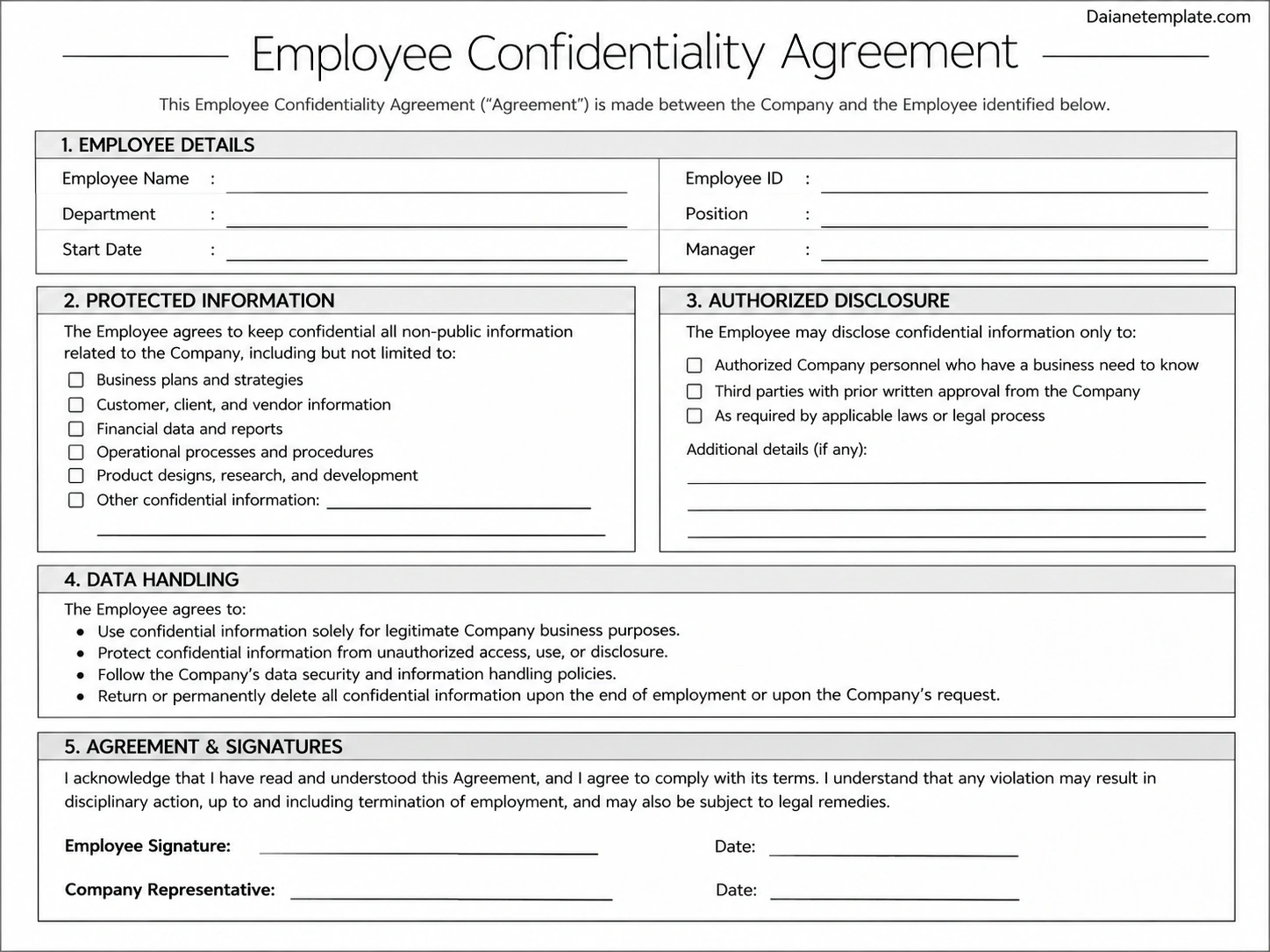
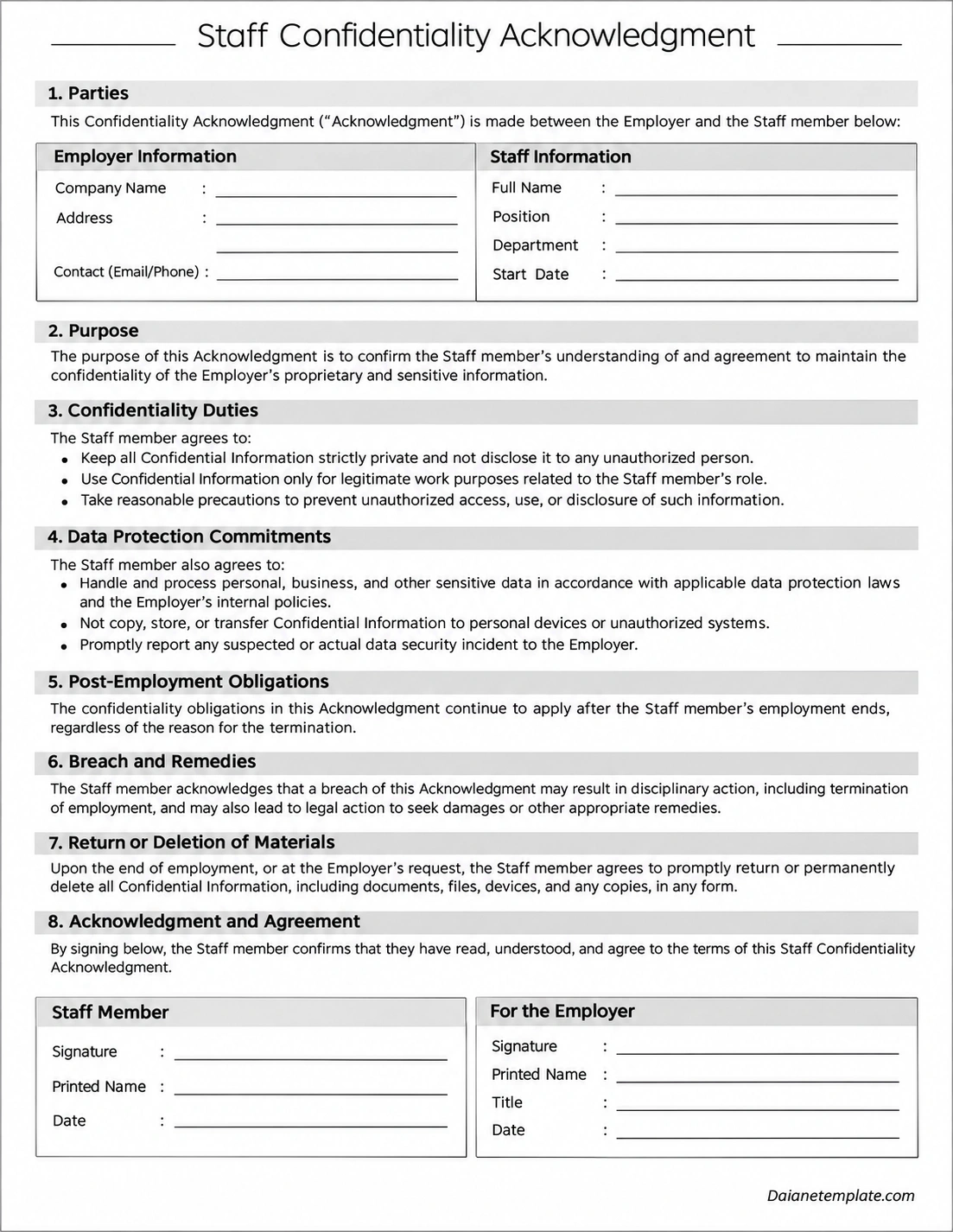
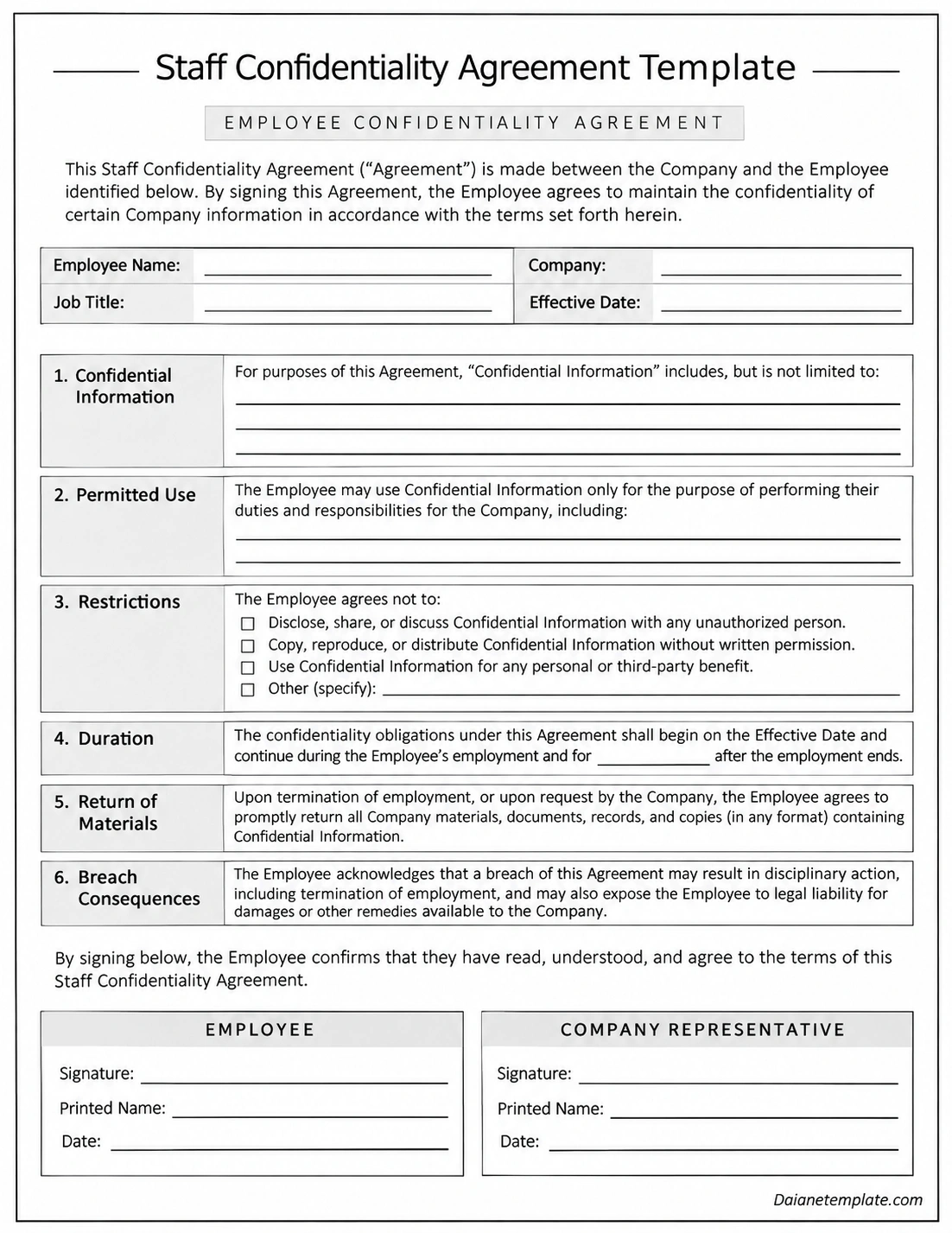
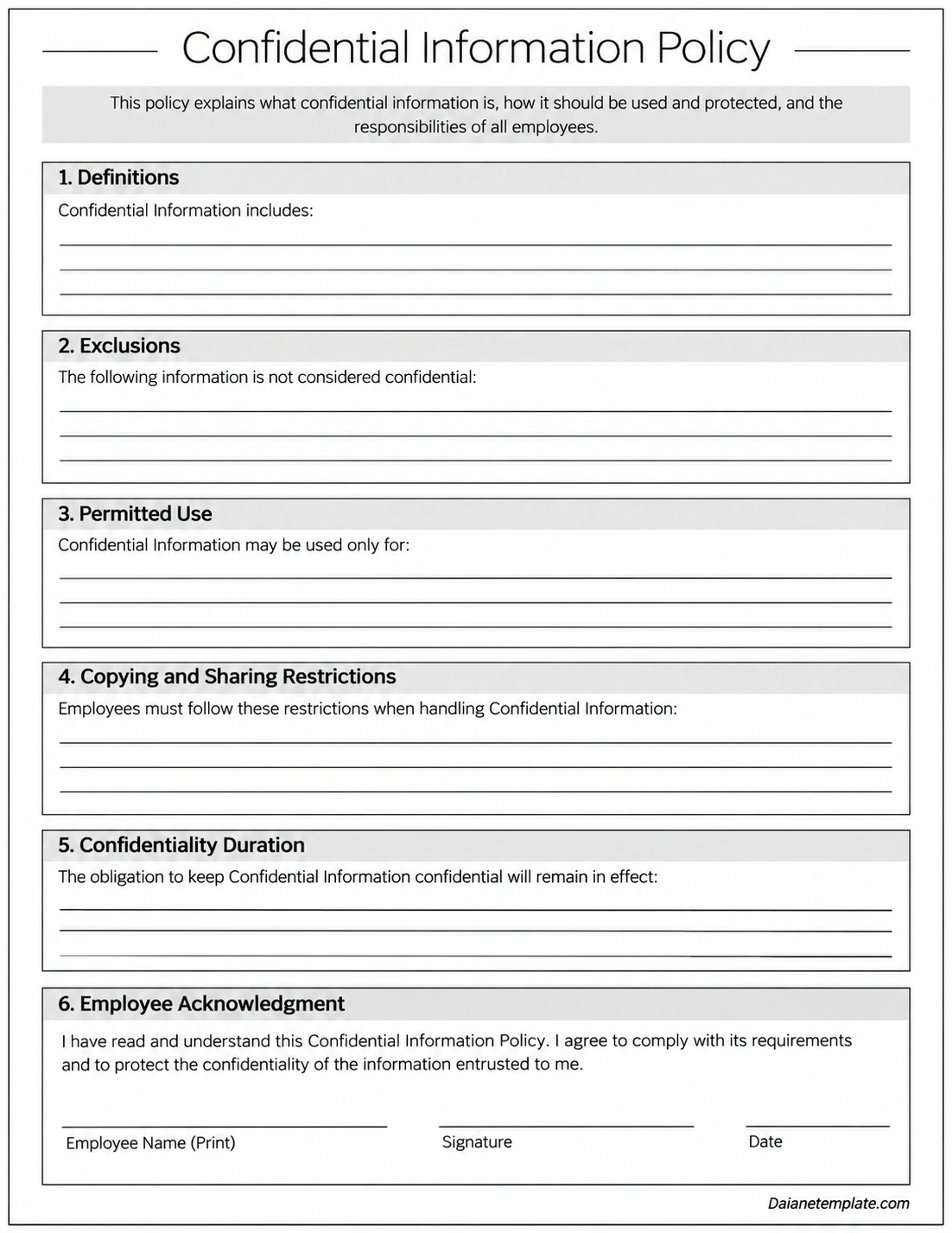
Use the following Staff Confidentiality Agreement Template as a starting point for documenting confidentiality expectations between an employer and an employee. The printable layout provides space for company details, employee information, confidentiality terms, restrictions, and signatures.
Review the document carefully and customize its clauses to reflect your organization’s information security policies and employment requirements.
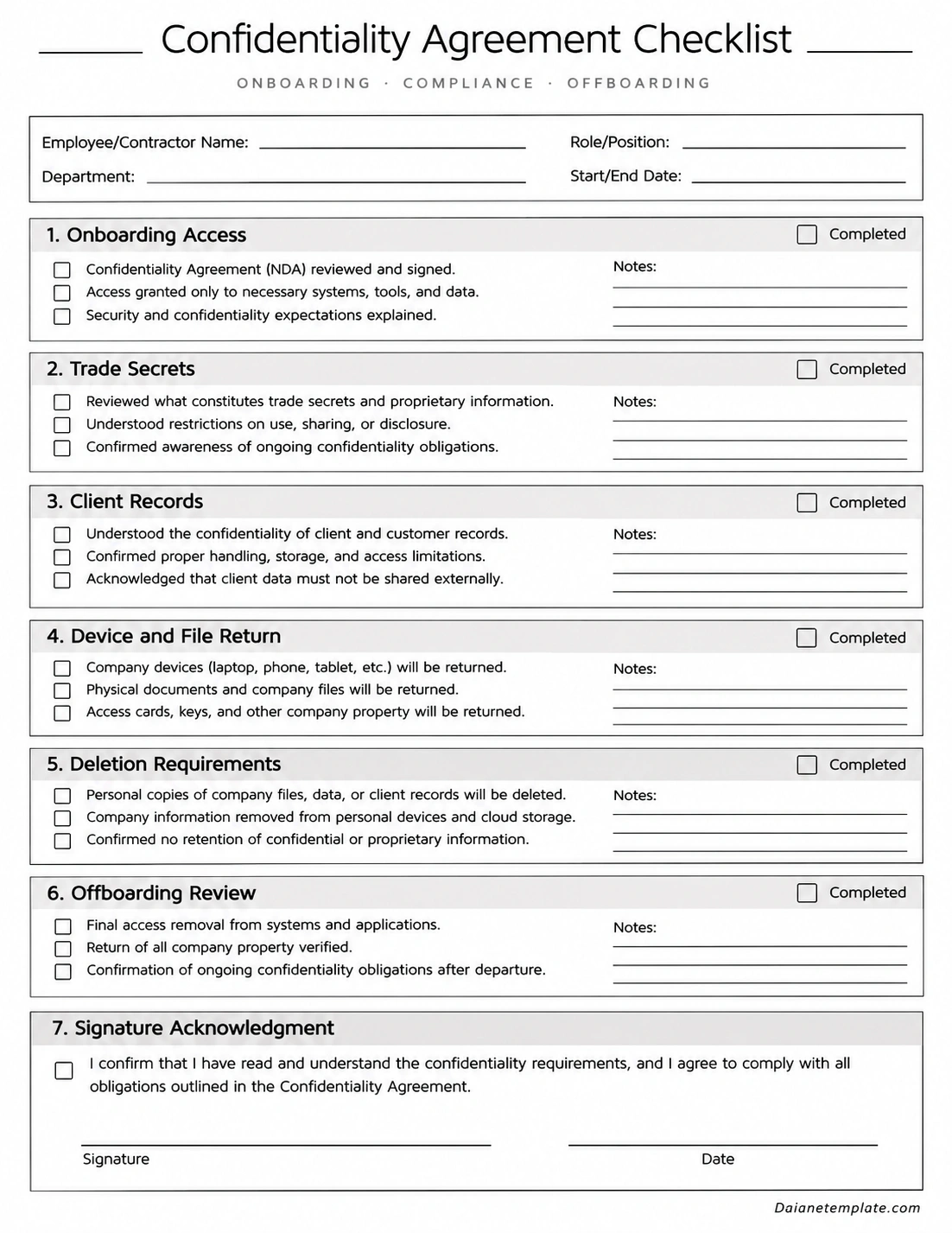
How to Create and Use an Employee Confidentiality Agreement
Preparing an employee confidentiality agreement does not have to be complicated. Follow these practical steps to create a document that reflects your business needs.
Step 1: Identify the Information That Needs Protection
List the types of sensitive information employees may access. Consider customer records, financial documents, product development files, internal communications, and trade secrets.
Focus on information that genuinely requires protection rather than labeling every business document as confidential.
Step 2: Define Employee Responsibilities
Explain how employees should access, store, use, and share confidential information. Include practical instructions that match your existing workplace policies.
Step 3: Establish Disclosure Restrictions
Specify who may receive confidential information and when written approval is necessary. Include appropriate exceptions for disclosures required or protected by law.
Step 4: Determine the Confidentiality Period
Choose a reasonable duration for the employee’s confidentiality obligations. Consider the type of information involved and the legal requirements in your jurisdiction.
Step 5: Review and Sign the Agreement
Give employees enough time to read and understand the document before signing. Both parties should receive a copy for their records.
Step 6: Store the Signed Document Securely
Keep the completed agreement in a secure employee records system. Limit access to authorized personnel and follow applicable document retention requirements.
When Should Employees Sign a Confidentiality Agreement?
Businesses can introduce confidentiality agreements at several stages of the employment relationship.
- During onboarding: New employees may sign before receiving access to confidential systems or business records.
- When changing roles: Employees moving into sensitive positions may need additional confidentiality requirements.
- Before special projects: Staff working with confidential research, product development, or strategic plans may require project-specific agreements.
- During policy updates: Employers may review existing confidentiality arrangements when business operations or legal requirements change.
- During offboarding: Employers may remind departing employees of continuing confidentiality duties and arrange the return of company property.
Tips for Writing an Effective Staff Confidentiality Agreement
A well-written agreement should be easy to understand and practical to enforce. Consider these recommendations before using your document.
- Use specific language: Clearly identify the information that requires protection.
- Avoid overly broad restrictions: Do not attempt to restrict lawful employee activities or information that cannot legally be protected.
- Include reasonable exceptions: Address legally protected disclosures, whistleblowing, and other rights that cannot be waived.
- Keep the document organized: Use numbered clauses and descriptive headings.
- Match workplace policies: Ensure the agreement is consistent with data security, privacy, and employee handbook requirements.
- Seek legal review: Have an employment attorney review the agreement before introducing it across your organization.
Frequently Asked Questions
1. What is the purpose of a Staff Confidentiality Agreement?
The purpose is to protect sensitive business information by explaining what employees can access, how they may use it, and when disclosure is prohibited. It also establishes expectations for protecting company information during and after employment.
2. Is a Staff Confidentiality Agreement legally binding?
A properly formed and enforceable agreement can be legally binding. However, enforceability depends on applicable laws, the agreement’s wording, the circumstances of signing, and any relevant employee rights. Businesses should seek legal advice before relying on one.
3. Is an employee confidentiality agreement the same as an NDA?
They are closely related. An employee NDA is a type of confidentiality agreement designed for employment relationships. Both documents generally restrict unauthorized disclosure or misuse of protected information, although their scope may differ.
4. How long does an employee confidentiality agreement last?
The agreement may remain effective throughout employment and continue afterward. The appropriate duration depends on the type of information, contractual terms, and applicable law. Trade secrets may require protection for as long as they retain their legal status.
5. Can employees refuse to sign a confidentiality agreement?
Employees can raise questions or request clarification before signing. Whether an employer can make signing a condition of employment depends on applicable employment laws and the circumstances. Employees should understand the terms and seek independent legal advice if necessary.
6. What happens if an employee violates a confidentiality agreement?
Depending on the seriousness of the violation and applicable law, consequences may include disciplinary action, termination, or legal claims. Employers should investigate alleged violations and obtain appropriate legal advice before taking action.
7. Does a confidentiality agreement apply after an employee resigns?
It may. Many agreements expressly state that confidentiality obligations continue after employment ends. Departing employees may still be required to protect trade secrets and other information covered by enforceable confidentiality provisions.
8. Can a confidentiality agreement protect customer information?
Yes. An agreement can establish employee responsibilities for protecting customer records, contact information, contracts, and other sensitive business data. However, employers must also comply with applicable privacy and data protection laws.
9. Should every employee sign a confidentiality agreement?
Not every role requires the same level of confidentiality protection. Businesses should assess which employees have access to sensitive information and determine whether an agreement is appropriate for their responsibilities.
10. Can I customize a Staff Confidentiality Agreement Template?
Yes. You can customize a template to include your company information, employee details, protected information categories, disclosure restrictions, confidentiality duration, and signature fields. Have the final version reviewed by a qualified legal professional before use.
Conclusion
A Staff Confidentiality Agreement is an important document for businesses that need to protect trade secrets, customer information, financial records, and internal operations. By defining confidential information and establishing clear employee responsibilities, organizations can reduce the risk of unauthorized disclosure.
Use a well-structured employee confidentiality agreement template as a starting point, then customize it to match your business requirements. Make sure employees understand their obligations, retain signed copies securely, and review the document whenever workplace policies or legal requirements change.
A clear agreement, supported by effective information security practices, helps create a more responsible and trustworthy workplace.
Disclaimer: This template is provided for general informational and educational purposes. It is not legal advice and does not guarantee enforceability. Consult a qualified attorney to ensure the agreement complies with applicable employment, privacy, and confidentiality laws.
Staff Confidentiality Agreement Template Word – Download
