A reception schedule is an essential planning tool for organizing a wedding reception or other special celebration. It outlines the order of events, assigns time slots to activities, and helps coordinate vendors so everything runs smoothly from the beginning to the end. With a clear schedule, couples and event organizers can reduce confusion, prevent unnecessary delays, and create a memorable experience for their guests.
From the grand entrance and wedding speeches to dinner service, the first dance, and the final send-off, every activity benefits from thoughtful timing. A well-prepared reception timeline also helps photographers, DJs, caterers, venue coordinators, and other vendors understand when they need to be ready.
In this guide, you will learn how to create a reception schedule, what activities to include, how to coordinate vendors, and how to use a printable reception schedule template to keep your event organized.
What Is a Reception Schedule?
A reception schedule is a written timeline that organizes the activities taking place during a wedding reception or another formal gathering. It lists each event in chronological order, along with its planned time, location, responsible person, and any special instructions.
For a wedding reception, the schedule may begin with guest arrival and cocktail hour before moving into the newlyweds’ entrance, dinner, speeches, dancing, and the closing activities. The exact order depends on the couple’s preferences, cultural traditions, venue rules, and overall event style.
A typical reception timeline includes:
- Event details: The couple’s names, reception date, venue, and estimated guest count.
- Activity times: The planned start and end times for each event.
- Reception activities: The entrance, meal service, speeches, dances, entertainment, and send-off.
- Vendor assignments: The people responsible for photography, music, catering, lighting, and coordination.
- Locations: The areas where each activity takes place.
- Special instructions: Song selections, announcement cues, dietary arrangements, and other important details.
Why Is a Reception Schedule Important?
A reception schedule does more than list events. It helps everyone involved understand the plan and prepare for their responsibilities. Without a clear timeline, activities can overlap, vendors may miss important moments, and guests may experience long periods of uncertainty.
1. Keeps the Reception Organized
A chronological timeline creates a logical flow between activities. Guests can move from one part of the celebration to the next without unnecessary confusion, while the event team knows what should happen at each stage.
2. Coordinates Vendors and Staff
Photographers need to be ready for key moments, DJs need to prepare announcements and music, and caterers need to coordinate food service. A shared reception schedule helps these vendors anticipate their tasks and communicate about timing changes.
3. Reduces Delays and Awkward Downtime
Planning transitions between activities helps prevent long gaps when guests do not know what to expect. It also allows the organizer to build in short buffers for photography, meal service, speeches, and other activities that may take longer than anticipated.
4. Protects Important Moments
Some reception moments cannot easily be repeated, such as the first dance, family speeches, or special performances. Including them in the schedule helps ensure the right people and equipment are ready at the appropriate time.
5. Creates a Better Guest Experience
A well-paced event balances formal activities, dining, conversation, and entertainment. Guests have enough time to enjoy the celebration without feeling rushed or spending too much time waiting between events.
What to Include in a Wedding Reception Schedule
The best reception schedule is detailed enough to guide the event team but simple enough to read quickly. Consider including the following sections in your wedding reception timeline.
Event Information
Start with the couple’s names, reception date, venue, guest count, and theme if relevant. These details help distinguish the schedule from other event documents and make it easier to share with vendors.
Time and Activity
Assign a specific time to each major activity. Include both the planned start and approximate duration when possible. For example, a welcome announcement may take five minutes, while dinner service may require an hour or longer depending on the guest count and serving style.
Location and Responsible Person
Identify where each activity takes place and who is responsible for coordinating it. The person listed may be the wedding planner, venue coordinator, DJ, photographer, catering manager, or a designated family member.
Vendor Instructions
Use the notes section to record details that vendors need to know. Examples include the entrance song, microphone requirements, lighting changes, photography group lists, meal-service cues, and the timing of special announcements.
Contingency Notes
Record backup arrangements for important activities. These may include an indoor alternative for outdoor entertainment, a revised photography location in bad weather, or instructions for handling delays. Clear contingency notes help the team respond calmly when circumstances change.
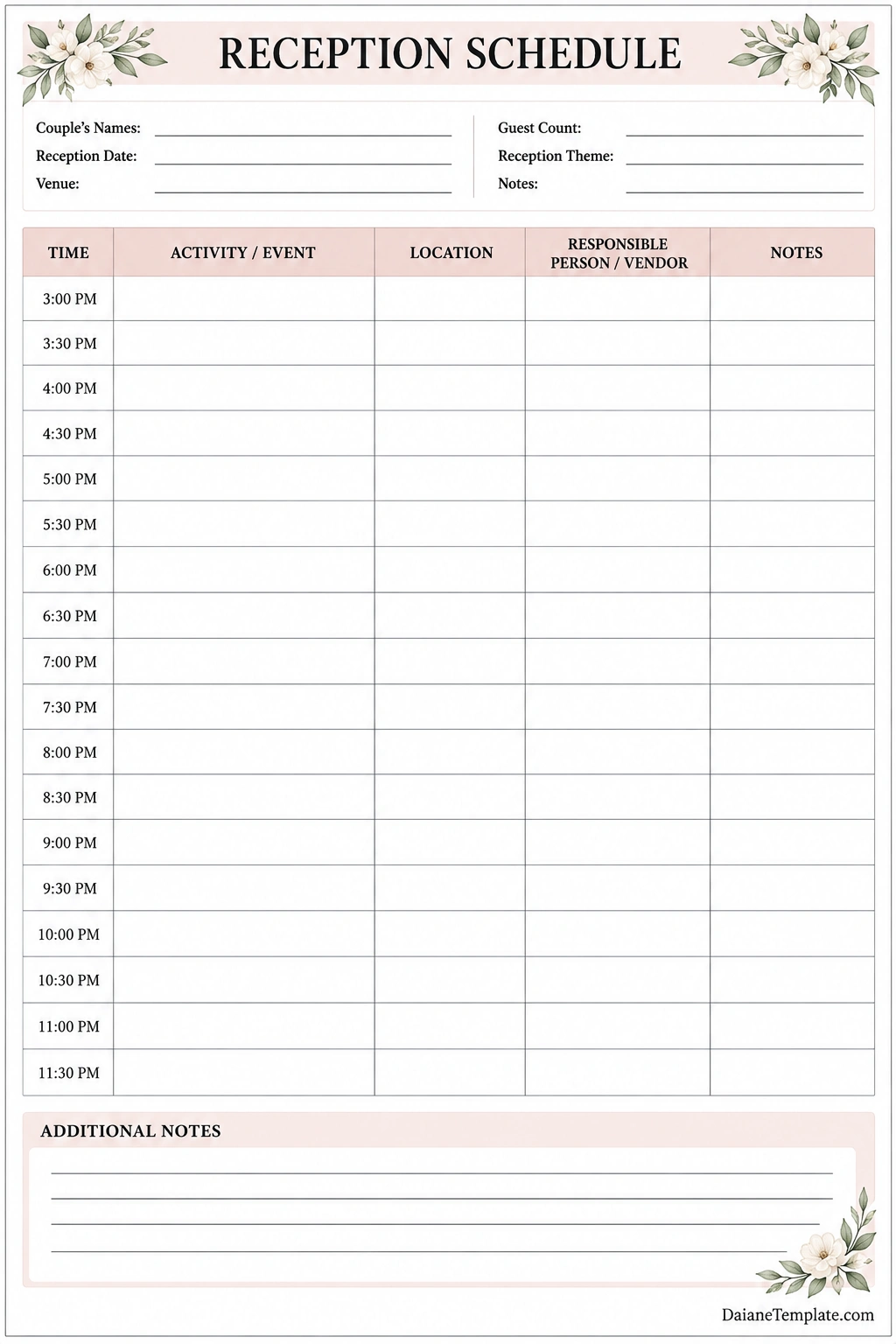
Sample Wedding Reception Timeline
Every reception is different, but a sample timeline can help you estimate how much time to allocate to each activity. The following example assumes a reception that begins at 5:00 PM and ends around 11:00 PM. Adjust the times to match your ceremony, venue, and event preferences.
- 5:00 PM – Cocktail hour: Guests arrive at the reception area, enjoy refreshments, and socialize.
- 6:00 PM – Guest seating: The coordinator invites guests to their seats while the DJ prepares the entrance music.
- 6:15 PM – Grand entrance: The wedding party and newlyweds enter the reception.
- 6:30 PM – Welcome remarks: The host or couple welcomes guests and explains the evening’s program.
- 6:45 PM – Dinner service: Guests enjoy the meal while the catering team follows the planned service sequence.
- 7:45 PM – Speeches and toasts: Selected family members or friends deliver their prepared remarks.
- 8:15 PM – First dance: The couple shares their first dance, followed by any planned parent dances.
- 8:45 PM – Open dancing: The DJ opens the dance floor and continues the entertainment program.
- 9:30 PM – Cake cutting or dessert: Guests gather for the cake-cutting moment or dessert service.
- 10:15 PM – Final entertainment: The event team prepares for the last dance, special announcement, or planned send-off.
- 10:45 PM – Closing and departure: Guests begin leaving while vendors follow the venue’s breakdown and closing procedures.
This sample is a starting point rather than a fixed rule. If your reception includes cultural ceremonies, multiple speeches, performances, or a formal multi-course dinner, allow additional time for those activities.
How to Create a Reception Schedule Step by Step
Step 1: Confirm the Event Details
Before building the timeline, confirm the reception start and end times, venue access hours, guest count, catering format, and any restrictions imposed by the venue. These details establish the boundaries of the schedule.
Step 2: List Every Planned Activity
Write down all the activities you want to include, from guest arrival to the final departure. Ask the couple, planner, or event host whether there are special traditions, performances, announcements, or surprises that need dedicated time.
Step 3: Estimate the Duration of Each Activity
Assign a realistic duration to each item. Consider the time needed to move guests between spaces, set up equipment, serve food, gather people for photographs, and prepare for the next activity. Avoid scheduling every minute so tightly that a small delay disrupts the entire reception.
Step 4: Coordinate with Vendors
Share the proposed schedule with the DJ, photographer, caterer, venue coordinator, and other relevant vendors. Confirm arrival times, setup requirements, important cues, and any activities that depend on their equipment or services.
Step 5: Add Transitions and Buffer Time
Include short gaps between major activities to allow for guest movement, announcements, and unexpected delays. For example, allow time for guests to find their seats before dinner or for the photographer to organize family members before group photographs.
Step 6: Assign Responsibilities
Identify who will announce each activity, confirm readiness, and handle changes. A wedding planner or designated coordinator can manage the overall timeline while vendors handle their own responsibilities. Make sure everyone knows whom to contact if the schedule needs to change.
Step 7: Share the Final Schedule
Distribute the approved reception timeline to the relevant vendors and event team before the reception. Keep a printed copy available at the venue and identify one person authorized to communicate schedule changes. If the timeline changes, make sure affected vendors receive the updated information.
Tips for Keeping Your Reception on Schedule
- Prioritize essential moments: Identify the activities that must happen at a specific time and protect them when adjusting the timeline.
- Avoid overloading the program: Too many speeches, games, and announcements can make the reception feel rushed.
- Confirm vendor readiness: Check that music, microphones, lighting, food service, and photography arrangements are prepared before each major activity.
- Allow flexibility: Build in reasonable buffer time rather than assuming every activity will finish exactly on schedule.
- Keep announcements concise: Give the host or DJ clear instructions so transitions remain smooth.
- Consider guest comfort: Schedule meals, refreshments, seating, and entertainment with the guests’ needs in mind.
- Plan the ending: Confirm the venue’s closing time, transportation arrangements, vendor breakdown schedule, and any final send-off.
- Use one master timeline: Make sure vendors are working from the same approved version rather than different drafts.
Common Reception Scheduling Mistakes to Avoid
Even a detailed plan can become difficult to follow if it overlooks practical event requirements. Watch out for these common mistakes:
- Scheduling activities back to back: Without transition time, a minor delay can affect the rest of the reception.
- Forgetting vendor setup: Equipment, decorations, food stations, and sound checks may need to be completed before guests arrive.
- Leaving responsibilities unclear: If no one owns an activity, announcements and preparations may be delayed.
- Ignoring venue restrictions: Music curfews, access windows, and cleanup requirements can affect the final schedule.
- Making last-minute changes without communication: A change that is not shared with the relevant vendors can cause confusion.
- Failing to plan for delays: Outdoor weather, late arrivals, and extended speeches may affect the timing.
Frequently Asked Questions
What is a reception schedule?
A reception schedule is a timeline that lists the activities planned for a reception, along with their times, locations, and responsible people. It helps coordinate vendors, manage transitions, and keep the event organized.
How long should a wedding reception last?
Many wedding receptions last approximately four to six hours, although the ideal duration depends on the venue, meal format, entertainment, cultural traditions, and the couple’s preferences. Confirm the venue’s permitted hours before finalizing the timeline.
When should I create a reception schedule?
Start drafting the schedule once the venue, event hours, and major activities are confirmed. Review it with vendors as planning progresses, then distribute the final version before the event so everyone has time to prepare.
Who is responsible for following the reception timeline?
The wedding planner or designated event coordinator often manages the overall timeline. Vendors are responsible for their assigned services, while the host or DJ may handle announcements and transitions. Responsibilities should be agreed upon in advance.
Should I include vendors in the reception schedule?
Yes. Include the responsible vendor or person for important activities and note any required cues, setup times, or special instructions. This helps the photographer, DJ, caterer, and venue team coordinate their work.
How much buffer time should a reception schedule include?
The amount depends on the event’s complexity. Allow extra time around guest movement, meal service, photographs, and major transitions. Discuss realistic durations with vendors rather than using one fixed buffer for every activity.
Can I use a printable reception schedule template?
Yes. A printable reception schedule template is useful for listing activities, assigning responsibilities, recording vendor instructions, and keeping the timeline accessible at the venue. Customize the time slots and sections to fit your event.
Conclusion
A well-organized reception schedule helps create a smooth, enjoyable, and memorable celebration. By arranging activities in a logical order, coordinating vendors, assigning responsibilities, and allowing time for transitions, you can reduce avoidable delays and keep guests engaged throughout the event.
Use a printable reception schedule template to record the event details, timeline, locations, vendor assignments, and special instructions in one place. Review the plan with your event team, share the final version with everyone involved, and remain flexible when adjustments are needed. With thoughtful preparation, you can spend less time managing logistics and more time enjoying the celebration.
Planning note: Every reception has different requirements. Confirm timing, venue rules, vendor arrangements, and local event requirements with the relevant professionals before finalizing your schedule.
Download: Reception Schedule Template
