A roof estimate helps homeowners understand the expected cost, materials, labor, and timeline for a roofing project before work begins. Whether you need a minor roof repair, a complete roof replacement, or a new roof installation, a detailed estimate gives you a clearer picture of the work involved and the budget required.
A professional roof estimate should explain the scope of work, identify the roofing materials, break down labor and other charges, and outline the expected project schedule. It also helps you compare bids from different roofing contractors and identify important differences that may affect the final price.
In this guide, you will learn what a roof estimate includes, which factors affect roofing costs, how to compare contractor quotes, and what to check before approving a project. You will also find a printable roof estimate template that can help organize project details and pricing information.
What Is a Roof Estimate?
A roof estimate is a document that outlines the anticipated cost and scope of a roofing project. It typically identifies the property, describes the proposed work, lists materials and labor, and provides an estimated total price.
Roofing contractors prepare estimates using information such as roof measurements, material choices, roof condition, accessibility, and the amount of work required. Depending on the contractor and project, the estimate may also include disposal fees, permits, flashing, ventilation improvements, and other related expenses.
A roof estimate is useful for both homeowners and contractors. Homeowners can use it to plan their budget and compare proposals, while contractors can use it to communicate the work they expect to perform and the resources required.
It is important to distinguish an estimate from a final invoice. An estimate describes anticipated costs, while an invoice requests payment for work or materials according to the agreed payment terms. A signed proposal or roofing contract may establish additional obligations beyond the estimate itself.
What Does a Roof Estimate Include?
A detailed roof estimate should provide enough information for you to understand what you are paying for. Although formats vary, most useful estimates include the following sections.
1. Contractor and Property Information
The document should identify the roofing company, its contact information, the homeowner or customer, and the property address. It may also include an estimate number, preparation date, expiration date, and the name of the person who prepared the quote.
Check these details carefully before approving the proposal. Accurate information helps keep the estimate organized and reduces confusion if you receive multiple bids.
2. Scope of Work
The scope of work describes the tasks included in the roofing project. For a roof replacement, this may include removing existing shingles, inspecting the roof deck, installing underlayment, replacing flashing, installing new roofing materials, and cleaning up the site.
For a repair, the scope may identify a specific leak, damaged shingles, a flashing problem, or a section of the roof that requires attention. Ask the contractor to explain any vague descriptions so you know exactly what the quoted price covers.
3. Roofing Materials and Specifications
The estimate should identify the proposed roofing materials and, where relevant, their brand, product line, color, grade, or other specifications. Different materials have different purchase prices, installation requirements, maintenance needs, and expected service lives.
Common roofing materials include asphalt shingles, metal panels, clay or concrete tiles, wood shakes, and membrane roofing systems for certain low-slope roofs. Make sure you understand which product is included rather than assuming every quote covers equivalent materials.
4. Labor and Installation Costs
Labor charges account for the work required to prepare the roof, install materials, complete details, and finish the project. The amount can vary based on roof complexity, height, accessibility, existing roof conditions, and local labor rates.
A clear estimate should identify labor costs or explain how installation charges are included in the total. It should also state whether specialized work, such as replacing damaged decking or improving ventilation, is included.
5. Additional Charges
Some roofing projects involve costs beyond the main materials and installation. These may include old roofing removal, waste disposal, delivery, permits, equipment rental, flashing, ventilation components, or repairs discovered after the existing roof is removed.
Ask which additional expenses are included and which could be charged separately. The estimate should explain how unexpected damage or extra work will be documented, priced, and approved before the contractor proceeds.
6. Project Timeline
A roof estimate may include an anticipated start date, estimated completion date, and project duration. The schedule can depend on weather, material availability, crew scheduling, roof complexity, and the need for inspections or permits.
Ask how delays will be communicated and whether the proposed schedule assumes that materials and approvals will be available on time.
7. Payment Terms and Warranty Information
The estimate or accompanying contract should explain the payment schedule, deposit requirements where applicable, milestone payments, and final payment conditions. Confirm that you understand when each payment is due and which payment methods are accepted.
Review the warranty information as well. Roofing projects may involve separate manufacturer warranties for materials and contractor warranties for workmanship. Ask for the written terms, exclusions, coverage period, and any maintenance requirements.
Printable Roof Estimate Template
A roof estimate template provides a consistent way to organize contractor information, customer details, roofing materials, labor charges, additional expenses, and the total project price. It can be useful for roofing contractors preparing quotes or homeowners keeping track of proposals.
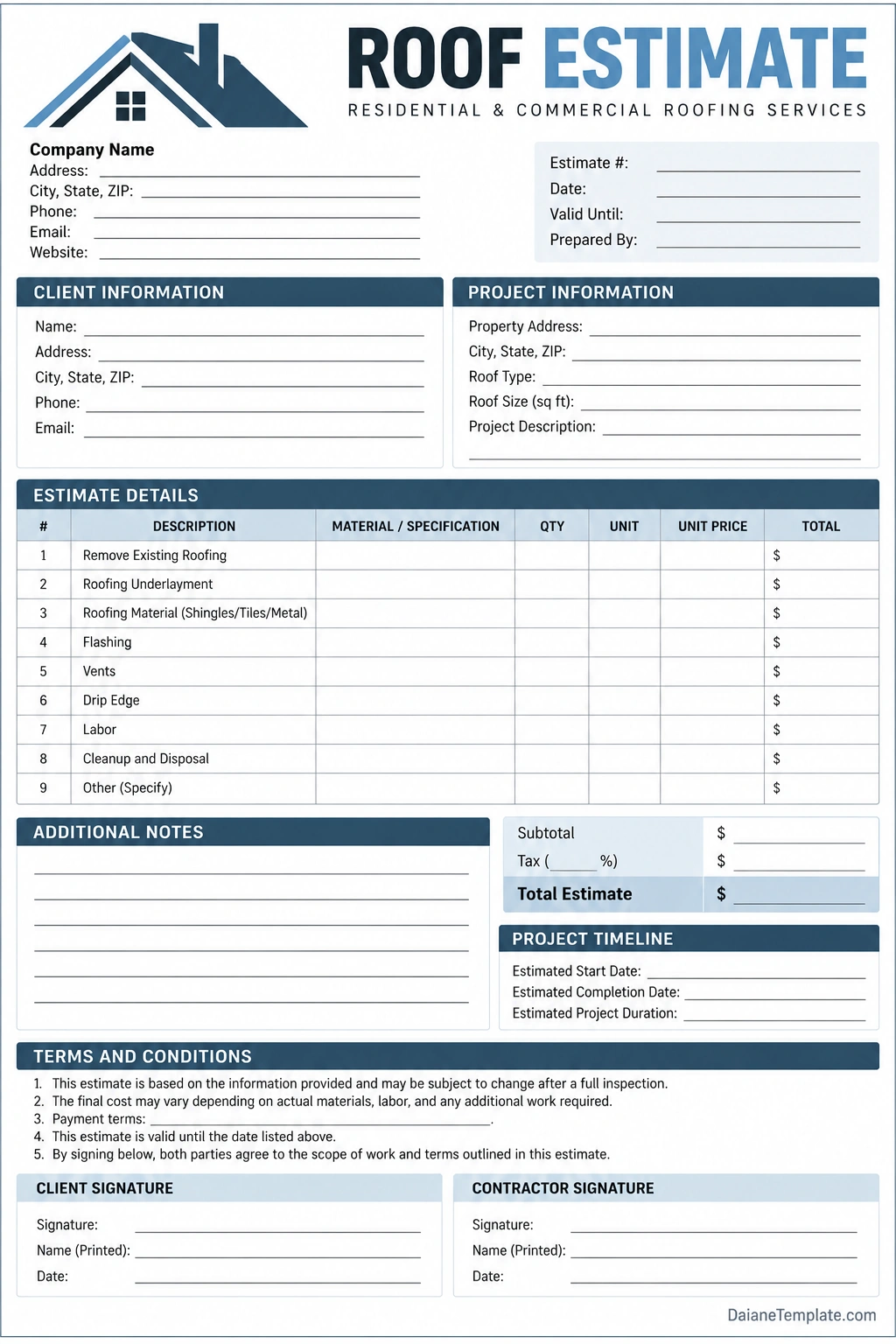
To use the template, complete the relevant fields and make sure the figures match the proposed work. A useful roof estimate worksheet should include:
- Company information: Roofing contractor name and contact details.
- Customer and property details: Homeowner name and project address.
- Project description: Roof repair, replacement, installation, or other specified work.
- Materials and quantities: Roofing products, underlayment, flashing, vents, and related components.
- Labor and removal: Installation charges, old roof removal, and disposal costs.
- Cost summary: Subtotal, applicable taxes, additional charges, and estimated total.
- Timeline: Proposed start date, completion date, and expected duration.
- Terms and approval: Estimate validity, payment conditions, notes, and signature fields where appropriate.
A printable estimate template is an organizational tool, not a substitute for a detailed inspection or a complete roofing contract. Adapt it to the project and include any disclosures or requirements that apply in your location.
What Factors Affect a Roof Estimate?
Roofing prices can vary considerably because each property has different dimensions, materials, and installation requirements. Understanding the main cost factors can help you evaluate a quote more accurately.
Roof Size and Complexity
Larger roofs generally require more materials and labor. Roofs with multiple slopes, valleys, dormers, skylights, chimneys, or other features may require additional cutting, flashing, and installation time.
Contractors may measure roof area rather than relying only on the home’s floor area. Ask how the roof was measured and whether the estimate accounts for the actual roof design.
Roofing Material
Material selection is one of the main factors affecting the total price. Standard asphalt shingles, premium shingles, metal roofing, and tile systems have different material and labor requirements.
When comparing estimates, check that each contractor has quoted a comparable product and specification. A lower price may reflect a different material grade or a narrower scope of work.
Existing Roof Condition
Damaged decking, moisture problems, poor ventilation, deteriorated flashing, or multiple existing roofing layers can affect the work required. Some issues may not become visible until the old roofing material is removed.
Ask the contractor how concealed damage will be handled and whether any additional work requires your written approval before costs increase.
Roof Accessibility and Local Conditions
Steep slopes, limited access, tall structures, and difficult material delivery can increase labor or equipment costs. Local building requirements, permit fees, disposal rules, and regional labor rates may also influence the estimate.
Removal, Disposal, and Extra Work
Removing existing roofing materials and transporting waste may be included in the main price or listed separately. Confirm whether the estimate covers cleanup, disposal, protective measures, and any expected repairs.
How to Compare Roof Estimates From Different Contractors
Collecting multiple roofing bids can help you understand the available options, but the lowest price is not always the best value. Compare the details of each proposal rather than looking only at the total.
- Compare the scope: Make sure each estimate includes the same major tasks and areas of the roof.
- Check material specifications: Confirm product type, quality, accessories, and installation requirements.
- Review labor and removal: Check whether labor, old roof removal, disposal, and cleanup are included.
- Look for exclusions: Identify items that may cost extra, such as damaged decking, flashing, or ventilation work.
- Compare warranties: Review material and workmanship coverage, including exclusions and claim procedures.
- Check contractor credentials: Verify applicable licensing, insurance, references, and local requirements.
- Review payment terms: Understand deposits, payment milestones, and final payment conditions.
- Ask about changes: Find out how additional work will be priced and approved.
If one estimate is significantly lower than the others, ask the contractor to explain the difference. A missing item, different material, or limited scope may account for the lower price. Clear answers are more useful than choosing a bid based on price alone.
Questions to Ask Before Approving a Roofing Estimate
Before accepting a roofing proposal, ask questions that clarify the work, schedule, costs, and responsibilities.
- Does the estimate include all materials and labor for the stated scope?
- Will the existing roofing materials be removed and disposed of?
- How will hidden damage or additional repairs be priced?
- Will I receive written approval requests before extra work begins?
- What permits or inspections may be required?
- What material and workmanship warranties apply?
- What payment schedule is required?
- How will weather-related delays affect the schedule?
- Who will supervise the work and handle questions during the project?
- What cleanup and final inspection procedures are included?
Keep the answers in writing when possible. If the contractor makes an important promise that is not reflected in the estimate or contract, ask for the document to be updated before you approve the work.
Common Roof Estimate Mistakes to Avoid
Homeowners can reduce confusion and unexpected expenses by checking estimates carefully before agreeing to a project.
- Choosing based on price alone: A low bid may exclude necessary work or use different materials.
- Accepting a vague scope: Unclear descriptions make it difficult to know what is included.
- Ignoring extra charges: Ask about disposal, permits, delivery, and potential repairs.
- Overlooking warranty details: Confirm what is covered and how long the coverage lasts.
- Failing to document changes: Require written confirmation of changes to the scope, price, or timeline.
- Skipping contractor checks: Verify relevant credentials, insurance, and references before hiring.
- Confusing an estimate with a contract: Review the final written agreement for payment terms, obligations, and other binding provisions.
Frequently Asked Questions About Roof Estimates
How much does a roof estimate cost?
Some roofing contractors provide estimates at no charge, while others may charge for detailed inspections, measurements, or specialized assessments. Ask whether there is a fee before scheduling the appointment and confirm what the assessment includes.
How long does it take to get a roof estimate?
The time required depends on the property’s size, roof complexity, inspection requirements, and contractor availability. A straightforward project may be assessed quickly, while a complex roof or a project requiring detailed measurements may take longer.
How many roof estimates should I get?
Obtaining two or three detailed estimates is a practical starting point for many homeowners. Compare the scope, materials, exclusions, warranty terms, contractor qualifications, and payment conditions rather than focusing only on price.
Is a roof estimate the same as a roofing quote?
The terms are sometimes used interchangeably, but their meaning can vary by contractor and location. An estimate may be an approximate cost, while a quote or proposal may state a more specific price for a defined scope. Ask whether the price can change and which terms will appear in the final contract.
Can a roof estimate change after work begins?
Yes, the final cost may change if hidden damage, additional repairs, material changes, or other unexpected conditions arise. The estimate and contract should explain how extra work is documented, priced, and approved before it proceeds.
What is the difference between a roof estimate and a roof inspection?
A roof inspection evaluates the roof’s condition and may identify damage, maintenance needs, or potential problems. A roof estimate uses information about the roof and proposed work to calculate expected project costs. An inspection may be needed before a contractor can prepare an accurate estimate.
Does a roof estimate include materials and labor?
A detailed estimate usually identifies materials and labor, either as separate line items or as part of a combined price. Check the document to confirm what is included and whether removal, disposal, flashing, permits, or repairs are charged separately.
Should I sign a roof estimate?
Before signing, determine whether the document is only an estimate, a proposal, or a contract that creates obligations. Read all terms carefully and confirm the scope, price, payment schedule, warranties, and procedures for additional work. Ask for clarification or professional advice if needed.
Conclusion
A roof estimate helps homeowners understand the anticipated cost, materials, labor, and timeline for a roofing project. Reviewing the details before work begins makes it easier to plan a budget, compare contractors, and identify potential extra charges.
Use a roof estimate template to organize the project information, but make sure the final document reflects the actual roof condition and proposed work. Compare multiple bids carefully, verify contractor credentials, review warranty terms, and clarify how unexpected repairs will be handled.
With a detailed estimate and a clear written agreement, you can make a more informed roofing decision and reduce the risk of misunderstandings during the project.
Download: Roof Estimate Template
