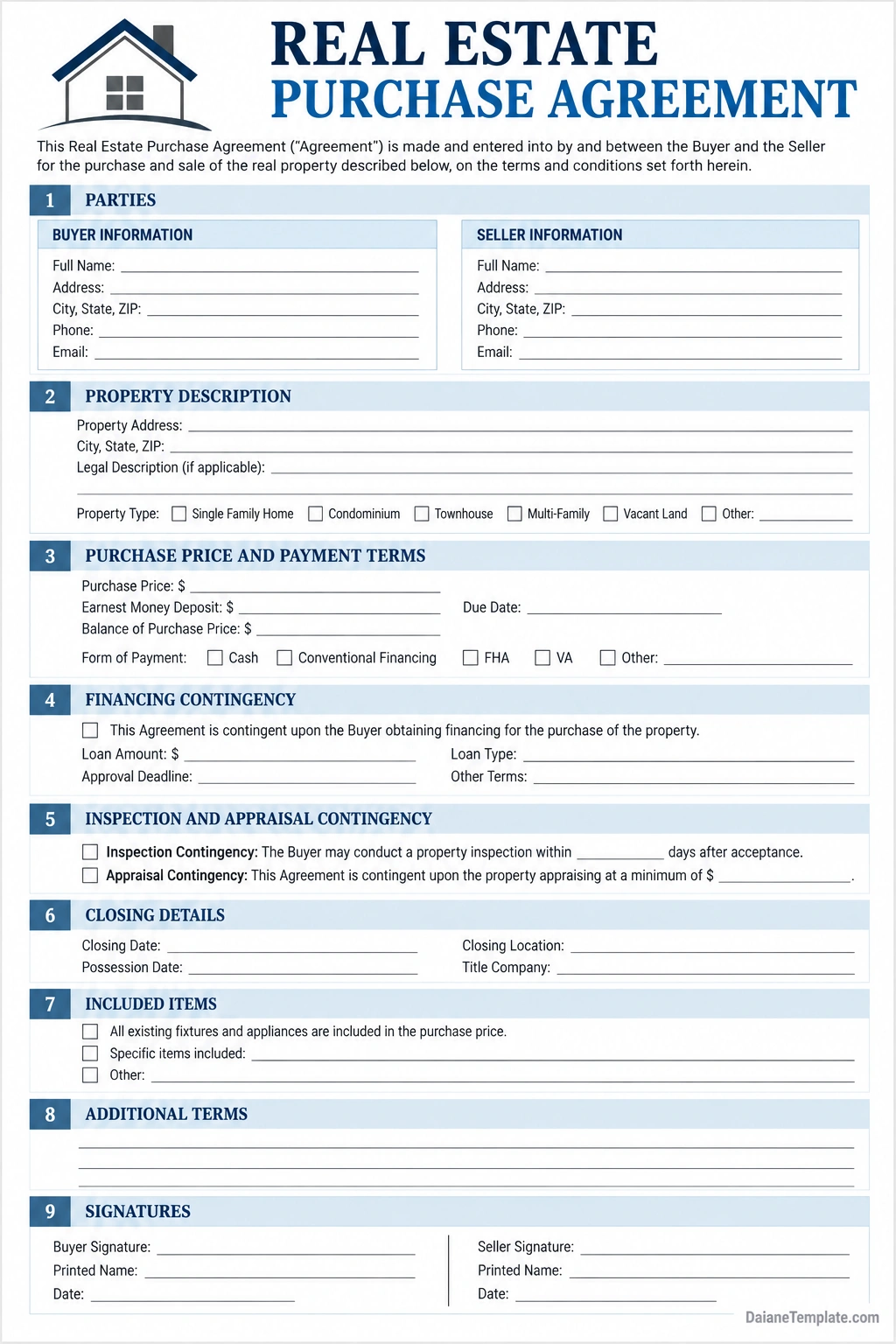
A real estate purchase agreement is a written contract that outlines the terms and conditions of a property sale between a buyer and a seller. It establishes the purchase price, financing arrangements, deadlines, contingencies, and responsibilities that guide the transaction from an accepted offer to closing. By putting these details in writing, both parties can better understand their obligations and reduce the risk of misunderstandings.
Buying a home involves more than agreeing on a price. Buyers may need time to secure financing, arrange inspections, and review property disclosures. Sellers must understand their responsibilities for providing information, meeting deadlines, and transferring ownership. A clear property purchase agreement helps organize these steps and explains how certain problems should be handled.
In this guide, you’ll learn what a real estate purchase agreement is, which clauses it should include, how the process works, and what to review before signing. You’ll also find practical tips and answers to frequently asked questions.
What Is a Real Estate Purchase Agreement?
A real estate purchase agreement is a contract between a buyer and seller that documents the agreed terms for purchasing and selling real property. Depending on the location, it may also be called a property purchase agreement, residential purchase contract, or real estate sales contract.
Once properly formed and executed, the agreement may create legally enforceable obligations. Its validity and enforceability depend on applicable law, the contract terms, and any required formalities.
A real estate purchase agreement commonly identifies:
- The buyer and seller
- The property being purchased
- The purchase price and deposit
- The financing arrangements
- Inspection and appraisal conditions
- Required disclosures and title-related matters
- The closing date and possession arrangements
- The allocation of closing costs and other expenses
- The consequences of default or cancellation
The agreement acts as a roadmap for the transaction. It gives both parties a written reference for what must happen before closing and what is expected when the sale is completed.
Why Is a Real Estate Purchase Agreement Important?
A property transaction often involves substantial financial commitments and several deadlines. A written purchase agreement helps the parties coordinate their responsibilities and understand the conditions that must be satisfied.
1. Establishes the Agreed Purchase Price
The agreement records the price accepted by both parties and explains how payment will be made. It may identify the initial deposit, the balance due at closing, and the financing method. These details help prevent disputes over the amount owed.
2. Protects the Interests of Both Parties
A clear contract documents the buyer’s and seller’s rights and obligations. It can explain what happens if financing is denied, an inspection reveals a problem, or one party fails to meet a contractual deadline.
3. Sets Important Deadlines
Purchase transactions may include deadlines for deposits, inspections, financing approval, title review, document delivery, and closing. Recording these dates helps everyone understand the schedule and avoid missing important requirements.
4. Clarifies Property Conditions
Inspection and appraisal provisions can explain how the parties will handle certain findings before closing. These terms may allow for further negotiations or other options, depending on the wording of the agreement and applicable law.
5. Supports an Organized Closing Process
The agreement helps coordinate the activities needed to complete the sale. Buyers, sellers, lenders, title professionals, and other authorized parties can use the documented terms to prepare for the transfer.
What Should a Real Estate Purchase Agreement Include?
The exact requirements vary by jurisdiction and property type. However, most residential purchase agreements cover several essential areas.
1. Buyer and Seller Information
Include the legal names of the buyer and seller and any other identifying information required for the transaction. If a company, trust, or other legal entity is involved, confirm the correct entity name and the authority of the person signing.
Accurate information helps ensure that the agreement identifies the correct parties and reduces the risk of documentation problems later.
2. Property Description
Identify the property using its street address and, where appropriate, its legal description or parcel identification number. The description should clearly identify the property being sold.
If the transaction includes parking spaces, storage areas, fixtures, or other associated rights, specify them in the agreement or an appropriate attachment.
3. Purchase Price and Deposit
State the total purchase price and explain the payment arrangements. If the buyer must provide an earnest money deposit, specify the amount, deadline, recipient, and applicable handling instructions.
The agreement should also explain how the deposit will be credited at closing and how it may be treated if the transaction ends before completion. Deposit rules depend on the contract and local law, so these provisions deserve careful review.
4. Financing Terms
If the buyer intends to obtain a mortgage, the agreement may include a financing contingency. This provision can establish a deadline for loan approval and describe the options available if financing cannot be secured.
Buyers should communicate with their lender early and understand their obligations under the contract. A financing contingency does not automatically guarantee cancellation without consequences; the wording and required notices matter.
5. Inspection Contingency
An inspection contingency may allow the buyer to arrange a professional inspection within a specified period. The agreement should explain how inspection findings will be addressed and whether the buyer may request repairs, negotiate changes, or exercise a permitted termination right.
Buyers should understand the inspection deadline and any notice requirements before signing. Sellers should also understand which responses or repairs they have agreed to provide.
6. Appraisal Contingency
An appraisal contingency may address what happens if the property’s appraised value is below the purchase price. Depending on the contract, the parties may negotiate a revised price, discuss additional funds, or consider another permitted option.
Review this clause alongside the financing terms because the appraised value can affect the amount a lender is willing to finance.
7. Disclosures and Title Review
The agreement may require the seller to provide applicable property disclosures and cooperate with title review. Buyers should understand the property’s known condition, relevant restrictions, and any title issues that could affect ownership.
Disclosure requirements vary by location and property type. Confirm which forms, inspections, and supporting documents are required for the specific transaction.
8. Closing Date and Possession
Specify the anticipated closing date and clarify when the buyer may take possession. Possession may occur at closing or at another agreed time, depending on the transaction.
If the seller will remain in the property after closing, the parties may need a separate written occupancy arrangement that addresses the permitted period and related responsibilities.
9. Closing Costs, Taxes, and Fees
Explain how applicable transaction costs will be allocated between the buyer and seller. Depending on the location, these may include title services, recording fees, transfer taxes, lender charges, and prorated property taxes.
Do not assume that every cost is automatically assigned to the same party. The agreement and local practices should be reviewed carefully.
10. Fixtures and Included Items
List any appliances, fixtures, or personal property included in the purchase. If the seller intends to remove particular items, identify those exclusions clearly.
Specific descriptions can help avoid disagreements about refrigerators, lighting fixtures, window treatments, security equipment, or outdoor structures.
11. Default and Termination Provisions
The agreement should explain the consequences of failing to meet a contractual obligation. Depending on the terms and applicable law, possible remedies may include permitted termination, deposit-related consequences, negotiated resolution, or other legal remedies.
Both parties should understand the notice requirements and avoid assuming they can cancel without consequences simply because their circumstances change.
How a Real Estate Purchase Agreement Works
The process typically moves through several stages. The exact sequence depends on the jurisdiction, the transaction, and the terms negotiated by the buyer and seller.
Step 1: Make and Negotiate the Offer
The buyer submits an offer that identifies the proposed price and other important terms. The seller may accept, reject, or propose changes. The final agreement should accurately reflect the terms both parties accept.
Step 2: Review and Sign the Contract
Before signing, both parties should review the purchase price, contingencies, deadlines, included items, and required disclosures. Confirm that all attachments and referenced documents are included or properly identified.
Step 3: Submit the Deposit
If the agreement requires an earnest money deposit, the buyer submits it according to the contract’s instructions and deadline. Keep proof of payment and confirm how the deposit will be held and credited.
Step 4: Complete Inspections and Financing
The buyer arranges inspections, appraisal, and financing within the required periods. If a problem arises, follow the agreement’s notice and response procedures rather than relying only on an informal conversation.
Step 5: Resolve Outstanding Conditions
The parties address inspection findings, title concerns, financing requirements, and other outstanding matters. Any negotiated change to the original terms should be documented in an appropriate written amendment.
Step 6: Prepare for Closing
The relevant parties prepare closing documents, verify the funds required, review settlement figures, and complete any required title or registration steps. Buyers should ask questions about unfamiliar provisions before signing final documents.
Step 7: Complete the Transaction
At closing, the parties complete the required signing and payment procedures. The legal transfer and registration of ownership depend on local law. The buyer should confirm when ownership becomes effective and when possession is permitted.
Tips for Reviewing a Real Estate Purchase Agreement
Read Every Clause Before Signing
Review the complete agreement, including attachments and disclosures. Pay particular attention to payment obligations, deadlines, contingencies, and the consequences of failing to meet a requirement.
Track Every Important Deadline
Record the dates for deposits, inspections, financing approval, document delivery, and closing. Missing a deadline may affect contractual rights, so clarify how notices must be delivered and whether extensions require written approval.
Document All Changes
If the parties agree to a price adjustment, repair, deadline extension, or change to included property, record it in a written amendment as required. Keep copies of signed documents and related communications.
Verify the Property Details
Check the property address, legal description where applicable, and ownership information. Resolve inconsistencies before proceeding to closing.
Seek Qualified Professional Advice
Real estate transactions can involve substantial financial and legal risks. A qualified real estate attorney, licensed agent, conveyancer, or other local professional can help explain the contract and identify requirements relevant to the property and jurisdiction.
Common Real Estate Purchase Agreement Mistakes to Avoid
- Using an incomplete property description: Confirm the address and legal description where applicable.
- Leaving contingencies unclear: Define the conditions, deadlines, and required notices.
- Ignoring deposit terms: Confirm how the deposit is paid, held, credited, and potentially returned.
- Overlooking closing costs: Clarify the allocation of applicable fees and taxes.
- Relying on verbal promises: Record important negotiated terms in the required written form.
- Missing contractual deadlines: Maintain a calendar of key dates and notice requirements.
- Signing without understanding the consequences: Ask a qualified professional to explain unfamiliar or high-risk clauses.
Frequently Asked Questions About Real Estate Purchase Agreements
What is the purpose of a real estate purchase agreement?
A real estate purchase agreement documents the terms of a property transaction, including the price, property description, financing, contingencies, deadlines, and responsibilities. It helps the buyer and seller understand their obligations before closing.
Is a real estate purchase agreement legally binding?
A properly formed and executed agreement may be legally binding. Enforceability depends on applicable law, the terms of the contract, and any required formalities. Requirements can differ by location, so local professional advice may be appropriate.
What is the difference between a purchase agreement and a deed?
A purchase agreement generally establishes the contractual obligations involved in the sale. A deed or another transfer instrument is used to convey ownership where required by local law. Signing a purchase agreement does not necessarily mean ownership has already transferred.
Can a buyer cancel a real estate purchase agreement?
Cancellation rights depend on the contract and applicable law. A buyer may have options under certain contingencies, but canceling without a valid contractual or legal basis may have consequences. Review the agreement and seek professional advice before taking action.
What is an earnest money deposit?
An earnest money deposit is a payment that may demonstrate the buyer’s commitment to the transaction. The agreement should state the amount, payment deadline, handling arrangements, and circumstances in which the deposit may be credited, retained, or returned.
Should I use a free real estate purchase agreement template?
A template can provide a useful starting point, but it may not cover every requirement for a specific property or jurisdiction. Customize the document carefully and consider professional review before signing a significant property transaction.
What happens if a seller fails to meet the agreement’s terms?
The consequences depend on the contract and applicable law. The buyer may have contractual or legal remedies, but the appropriate response depends on the circumstances. Review the relevant provisions and seek qualified advice before deciding how to proceed.
Conclusion
A real estate purchase agreement provides a written framework for a property transaction by defining the purchase price, property details, financing conditions, inspections, deadlines, closing costs, and responsibilities of both parties.
Before signing, verify the property description, review every contingency, track important dates, and ensure negotiated changes are properly documented. A carefully reviewed agreement can reduce misunderstandings and guide the transaction from an accepted offer toward closing and the transfer of ownership.
Because real estate laws and transaction requirements vary by location, use a template as a starting point rather than a substitute for jurisdiction-specific legal advice.
Download: Real Estate Purchase Agreement Template
