Are you in the process of organizing an event, whether it’s a wedding, corporate event, or birthday party? If so, having a solid event planning agreement in place is crucial to ensure that both parties are on the same page and that the event runs smoothly.
In this comprehensive guide, we will delve into the what, why, what to include, how to, and tips for creating an effective event planning agreement.
What is an Event Planning Agreement?
An event planning agreement is a legally binding contract between an event planner and a client that outlines the terms and conditions of their working relationship. This agreement serves as a roadmap for the event planning process, detailing the responsibilities of both parties, the scope of work, payment terms, cancellation policies, and more.
Creating a detailed event planning agreement is essential to avoid misunderstandings, disputes, or legal issues down the line. It is a crucial document that protects both the event planner and the client and ensures that the event planning process is organized and efficient.
Why is an Event Planning Agreement Important?
Having a well-defined event planning agreement is essential for several reasons. Firstly, it helps clarify the expectations of both parties and sets clear boundaries for the event planning process. This can help prevent misunderstandings and disputes that may arise during the planning stages or on the day of the event.
Additionally, an event planning agreement provides legal protection for both the event planner and the client. In the event of a disagreement or breach of contract, having a written agreement can help resolve issues more easily and protect both parties from potential liabilities.
What to Include in an Event Planning Agreement
When drafting an event planning agreement, there are several key elements that should be included to ensure that all aspects of the event planning process are covered. Some of the essential components to include in an event planning agreement are:
– Scope of work: Clearly outline the services that will be provided by the event planner, including event design, coordination, vendor management, etc.
– Payment terms: Detail the payment schedule, deposit requirements, and any additional fees or expenses that may apply.
– Cancellation policy: Specify the terms and conditions for canceling the event, including any penalties or refunds that may be applicable.
– Event details: Include information about the date, time, location, and specific requirements for the event.
– Responsibilities: Clearly define the roles and responsibilities of both the event planner and the client.
– Insurance and liability: Address insurance coverage and liability responsibilities in case of accidents or damage during the event.
– Confidentiality clause: Include a confidentiality agreement to protect sensitive information shared during the planning process.
– Force majeure clause: Include a clause that addresses unforeseen circumstances or events that may impact the event.
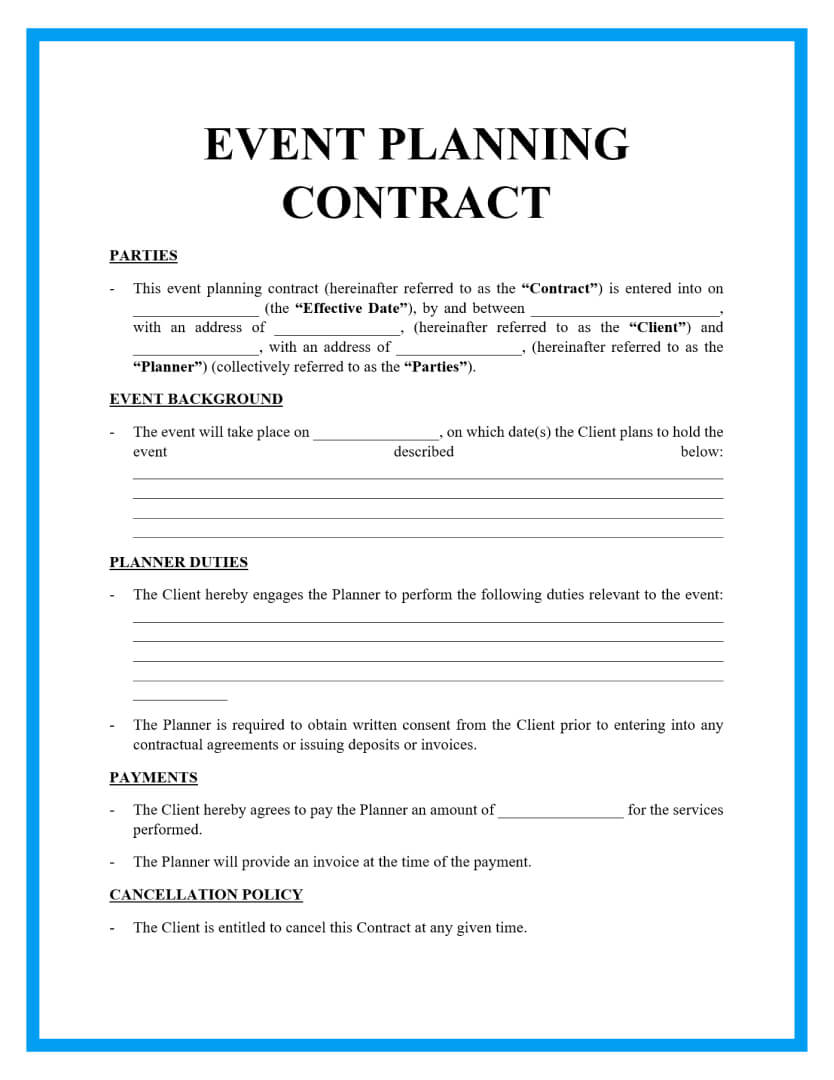
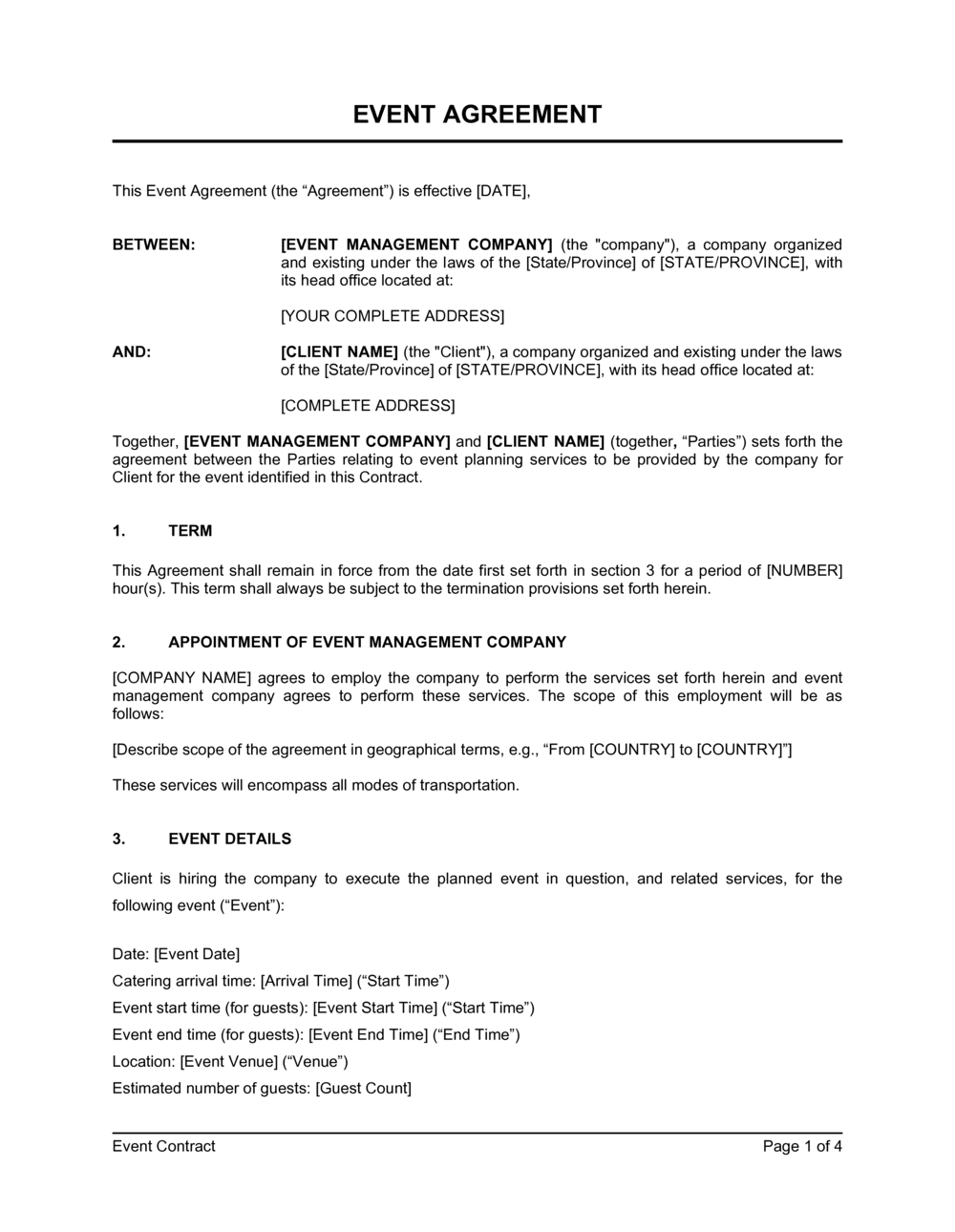
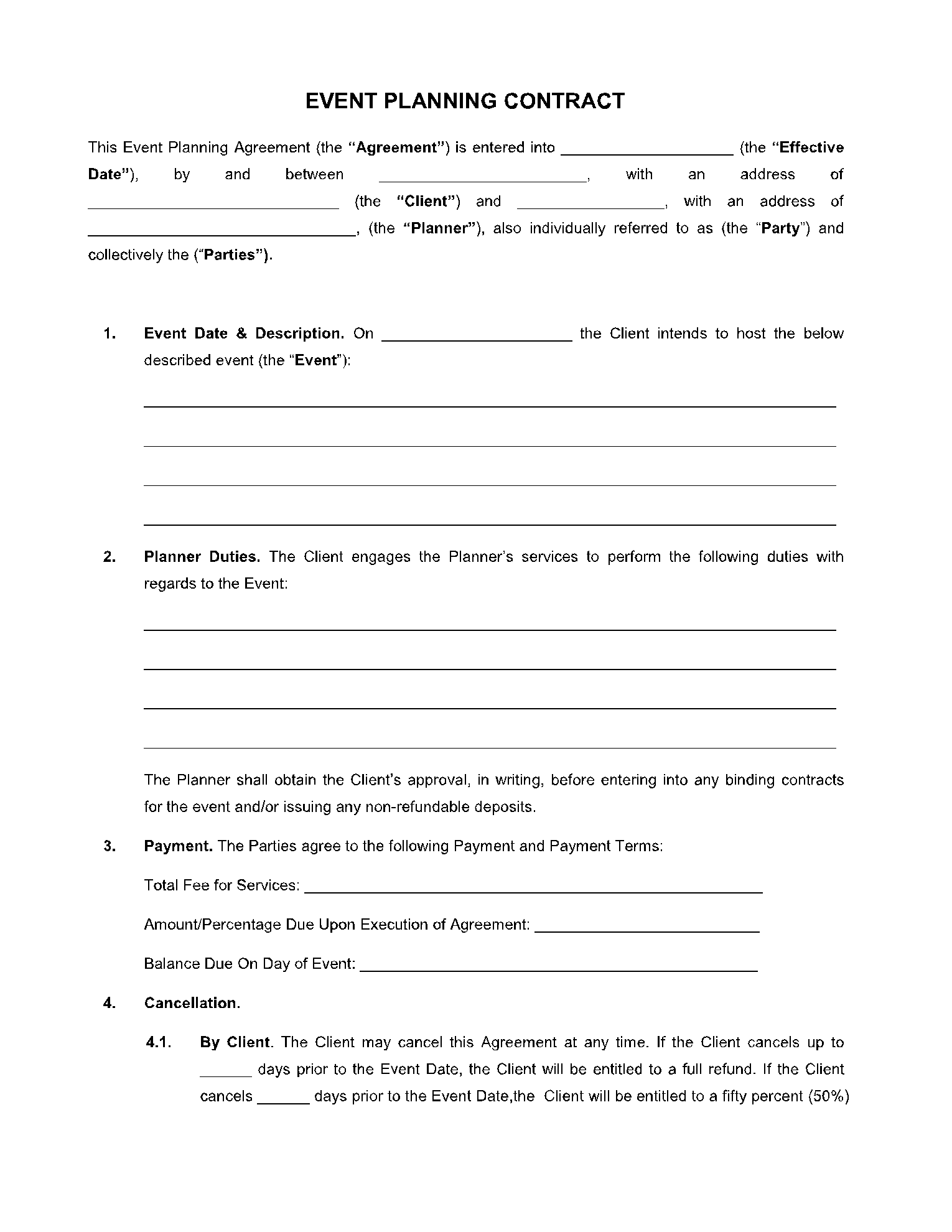
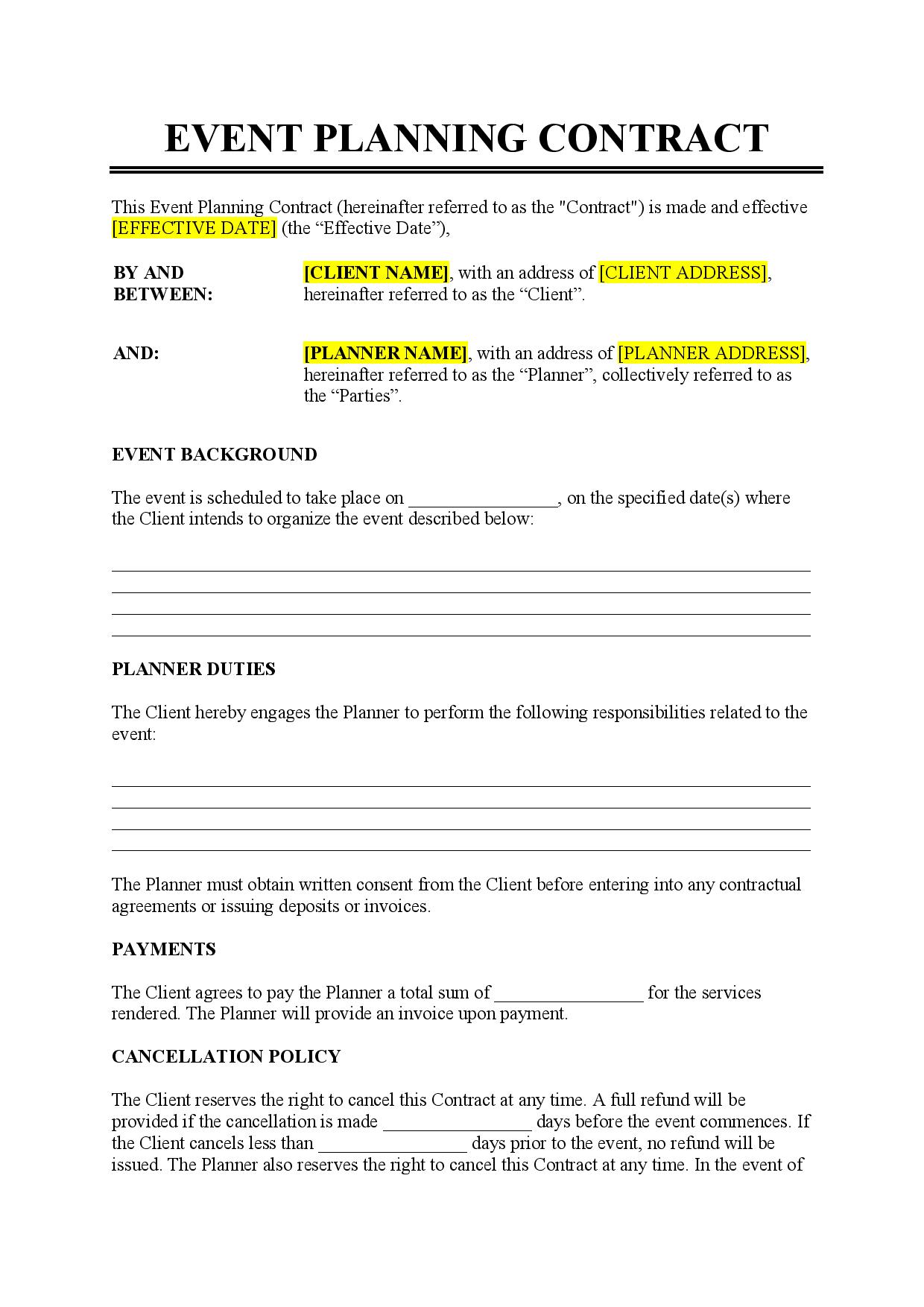
Examples

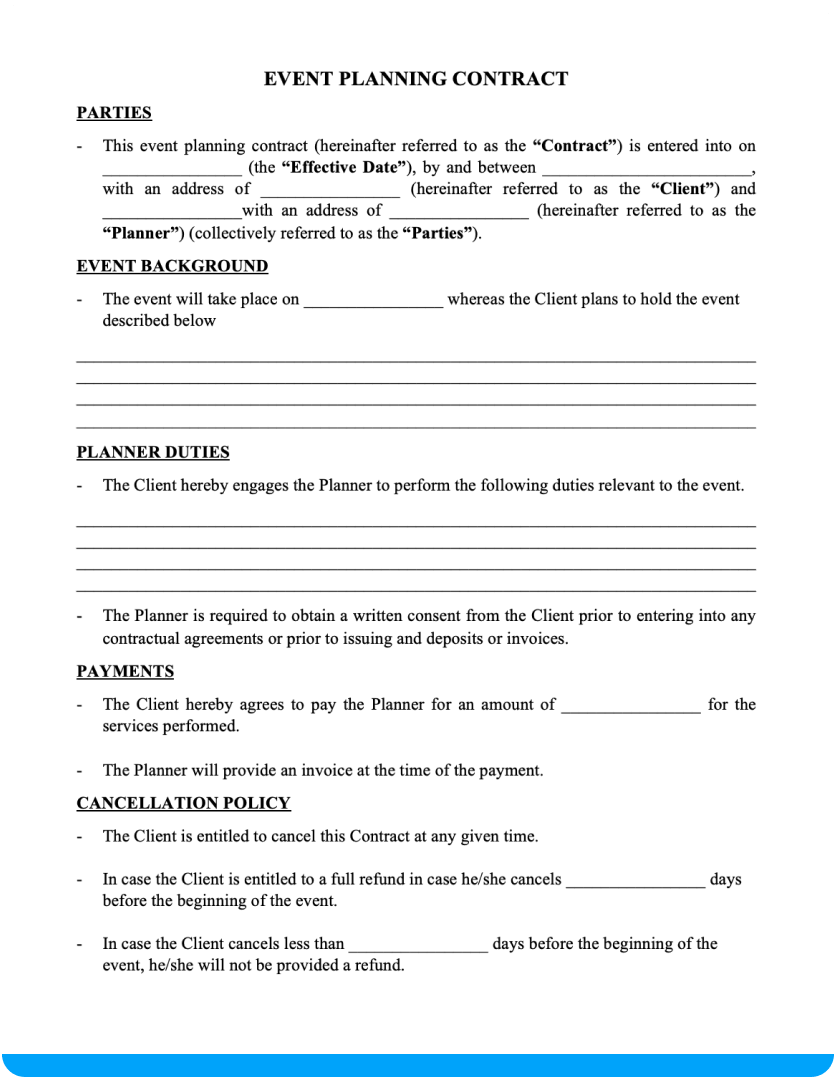
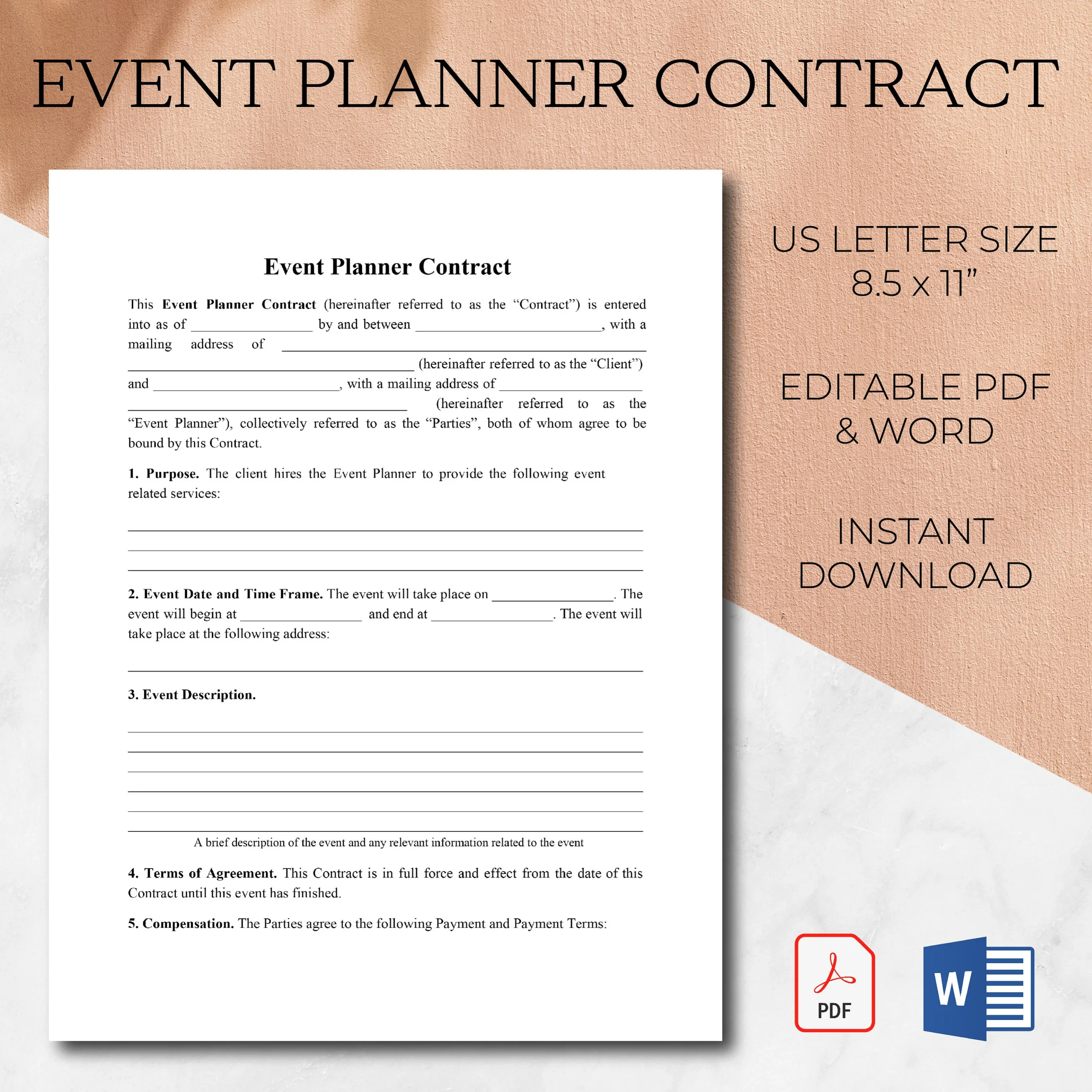
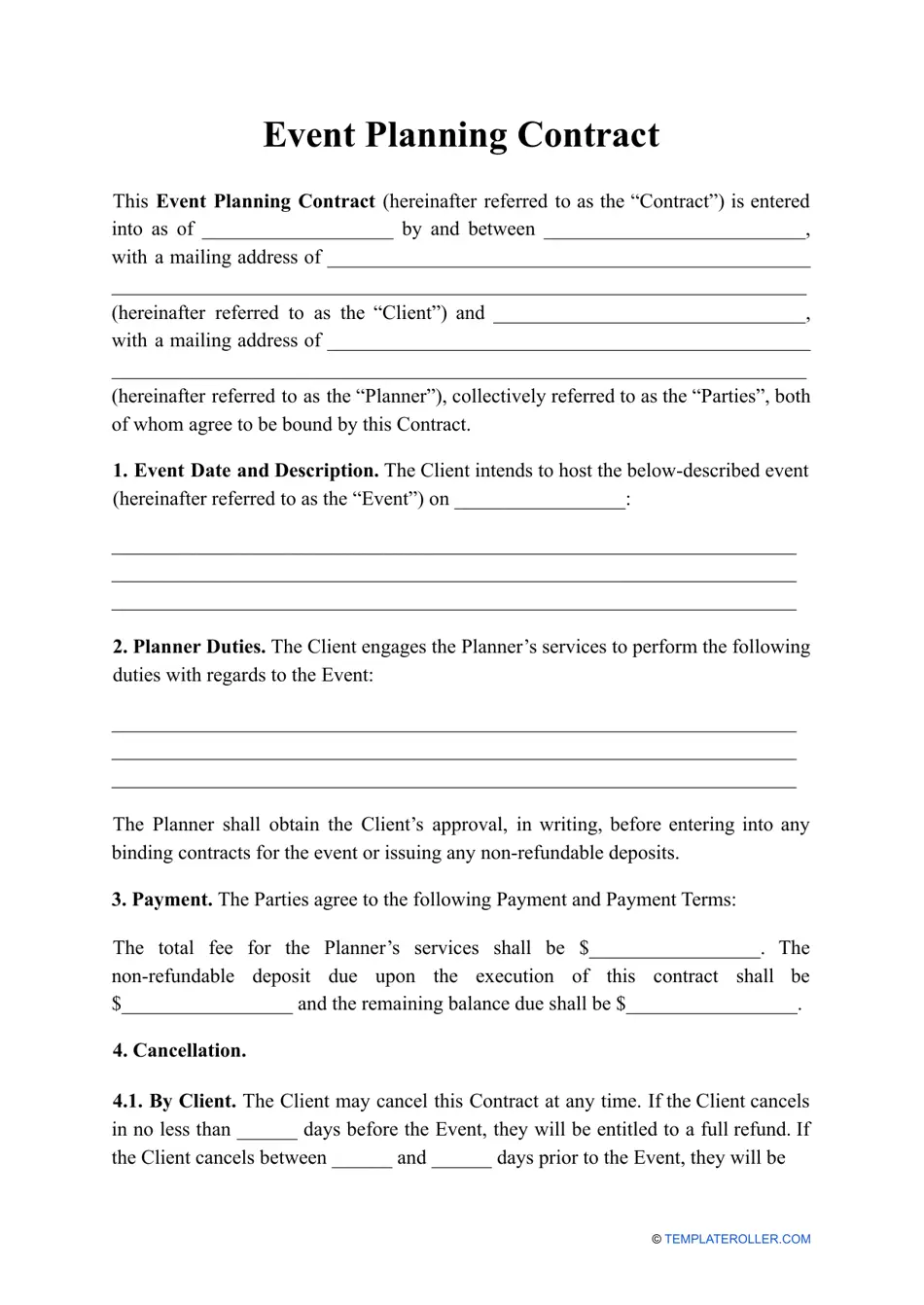
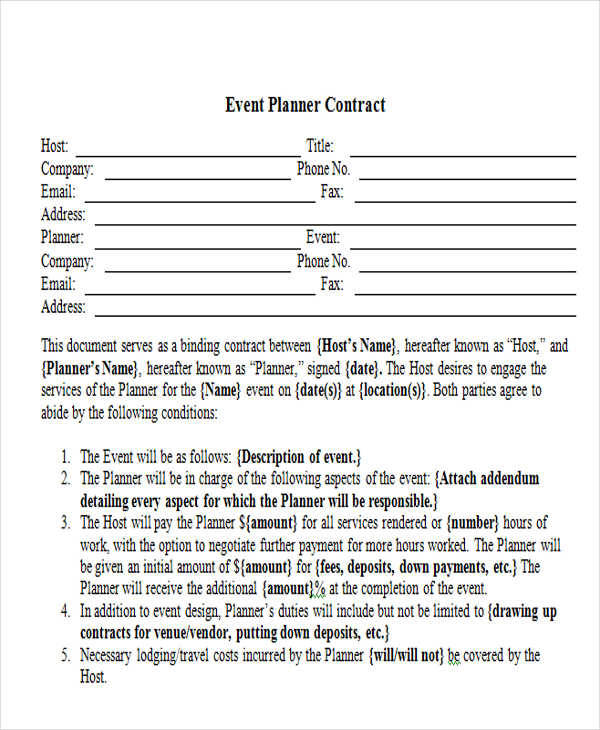
How to Draft an Event Planning Agreement
When drafting an event planning agreement, it is essential to be thorough and clear in your language to avoid any ambiguity or misinterpretation. Here are some steps to follow when creating an event planning agreement:
1. Begin by outlining the scope of work and services that the event planner will provide.
2. Clearly define the responsibilities of both parties, including timelines and deadlines for various tasks.
3. Detail the payment terms, including the total cost of services, deposit requirements, and payment schedule.
4. Include a cancellation policy that outlines the terms and conditions for canceling the event.
5. Address any additional fees, expenses, or terms that may apply to the event planning process.
6. Review the agreement with both parties to ensure that all terms are understood and agreed upon.
7. Consider consulting with a legal professional to ensure that the agreement complies with local laws and regulations.
Tips for Creating an Effective Event Planning Agreement
Creating an effective event planning agreement requires careful consideration and attention to detail. Here are some tips to help you draft a comprehensive and clear agreement:
– Be specific: Clearly outline the services, responsibilities, and expectations of both parties in detail.
– Use simple language: Avoid legal jargon and use plain language that is easy to understand for both parties.
– Include a timeline: Specify deadlines and timelines for key milestones in the event planning process.
– Consider potential risks: Address potential risks and liabilities in the agreement to protect both parties.
– Review and revise: Regularly review and update the event planning agreement to reflect any changes or new developments.
– Seek legal advice: Consider consulting with a legal professional to ensure that the agreement is legally sound and provides adequate protection for both parties.
Creating a well-crafted event planning agreement is essential for a successful event planning process. By following these guidelines and tips, you can create a comprehensive and effective agreement that protects both parties and ensures a smooth and successful event.
Event Planning Agreement Template – Download
