When it comes to making a film, one of the most crucial aspects of the process is budgeting. A film budget is a detailed breakdown of all expenses incurred during the production of a movie. From pre-production costs such as scriptwriting and casting, to post-production costs like editing and marketing, having a well-planned budget is essential for the success of any film project.
In this comprehensive guide, we will explore everything you need to know about film budgeting, including why it is important, what to include, how to create a budget, tips for staying on track, and much more.
What is a Film Budget?
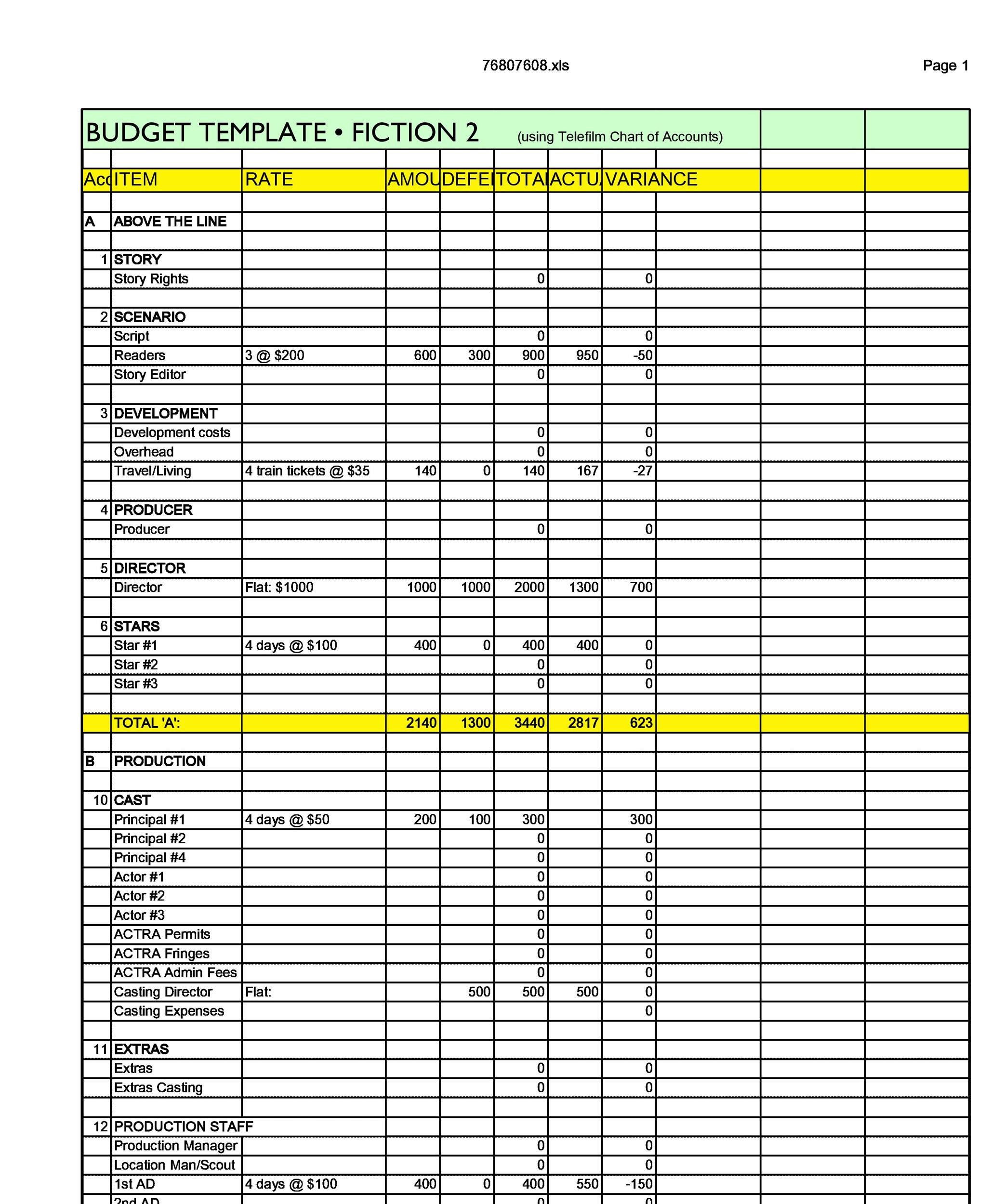
A film budget is a financial blueprint that outlines all the costs associated with making a movie. It includes both above-the-line costs, which are expenses related to the creative aspects of the film, such as scriptwriting, directing, and acting, as well as below-the-line costs, which cover production expenses like equipment rentals, location fees, and crew salaries. A well-prepared budget is essential for ensuring that a film is completed on time and within the allocated resources.
Why Film Budgeting is Important
Creating a film budget is crucial for several reasons. First and foremost, it helps filmmakers and producers determine the feasibility of their project by estimating the total cost of production. This allows them to secure financing from investors, studios, or other sources. Additionally, a budget serves as a roadmap for the entire production team, helping them allocate resources efficiently and make informed decisions throughout the filmmaking process. By having a clear understanding of the financial implications of their project, filmmakers can avoid running into financial difficulties or delays that could jeopardize the completion of their film.
What to Include in a Film Budget
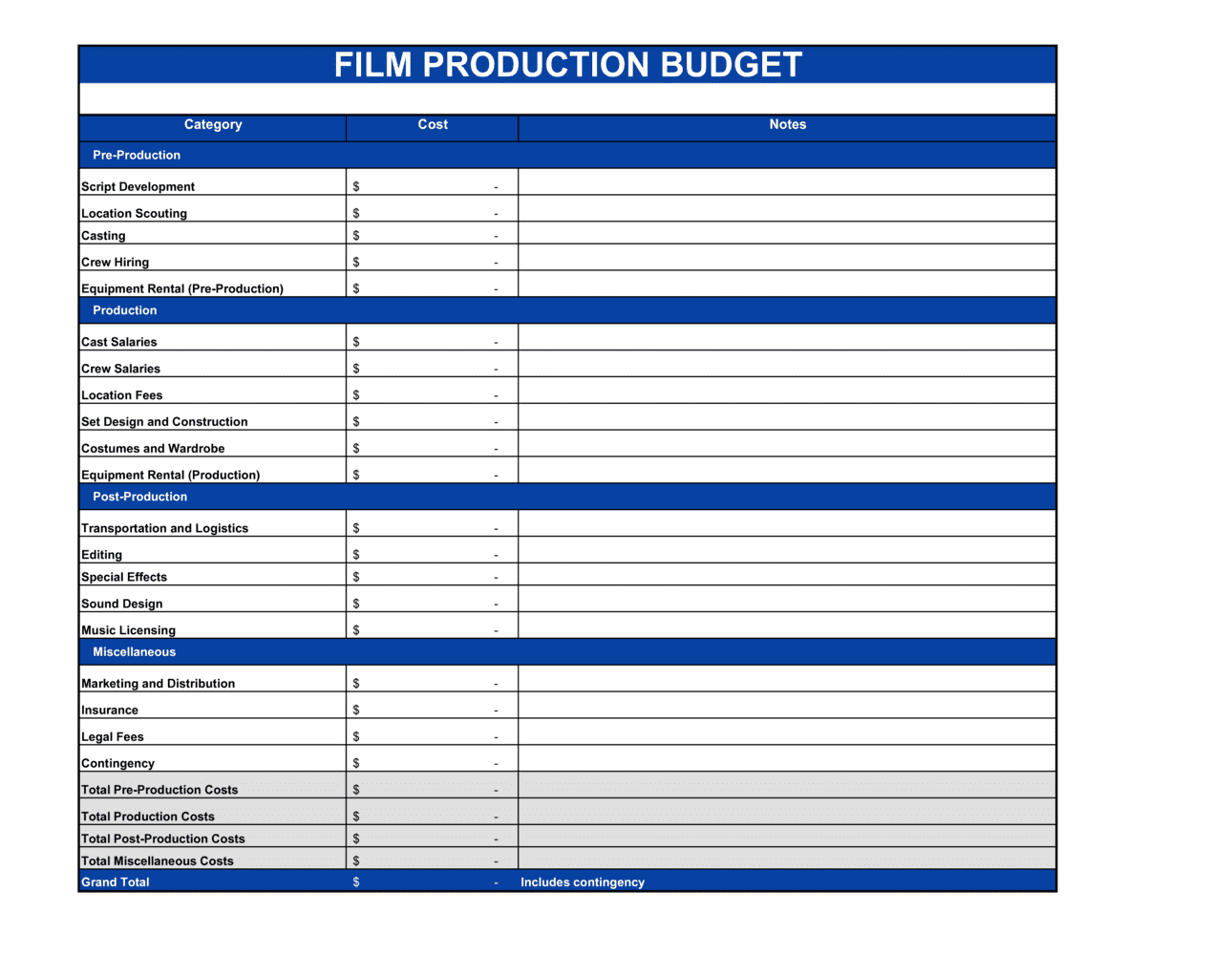
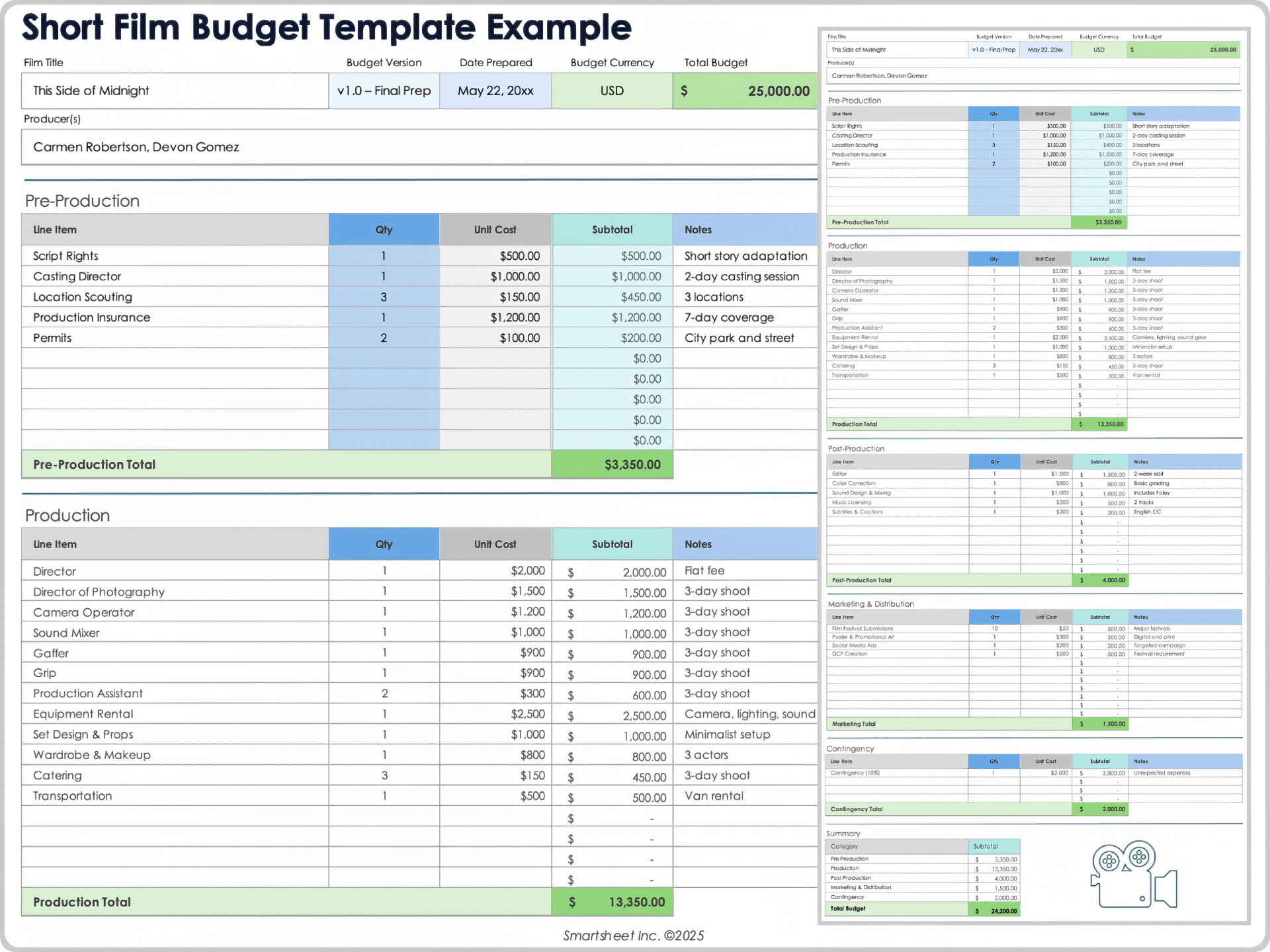
When creating a film budget, there are several key components that should be included to ensure that all expenses are accounted for. Some of the items that you may need to include in your budget are:
- Pre-production Costs: Expenses incurred before filming begins, such as script development, casting, location scouting, and production design.
- Production Costs: Costs related to the actual filming, including equipment rentals, crew salaries, insurance, catering, and transportation.
- Post-production Costs: Expenses incurred after filming is completed, such as editing, sound design, visual effects, music licensing, and marketing.
- Contingency Fund: A reserve set aside for unexpected costs that may arise during production.
- Distribution and Marketing Costs: Expenses associated with promoting and distributing the film to audiences.
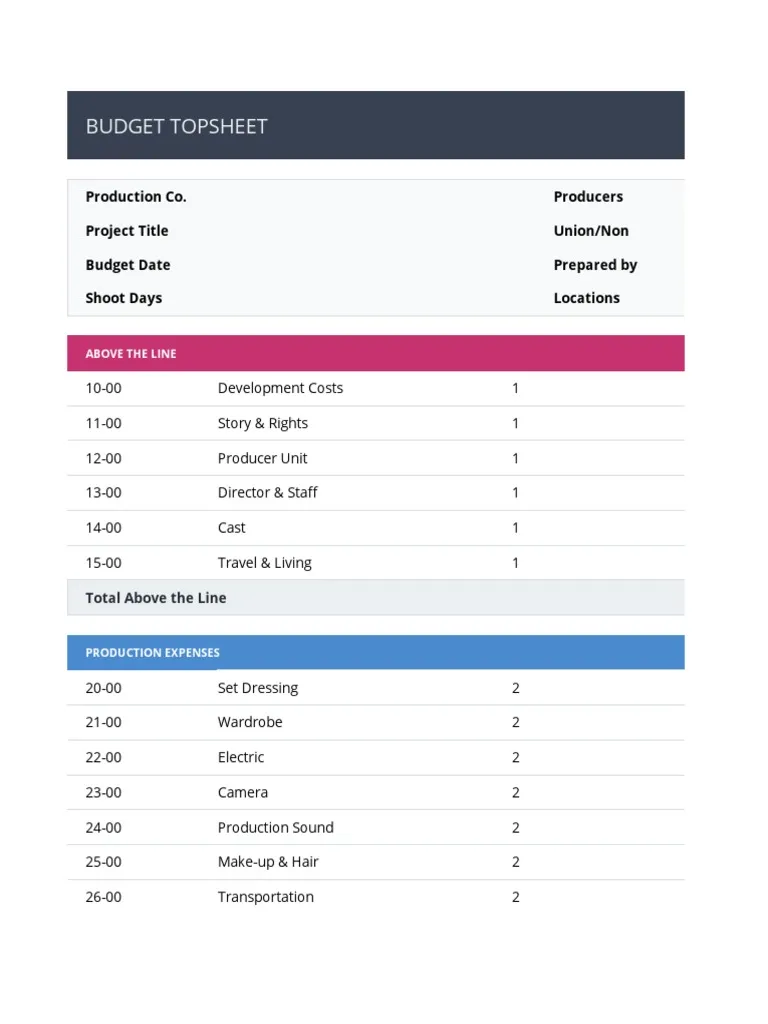
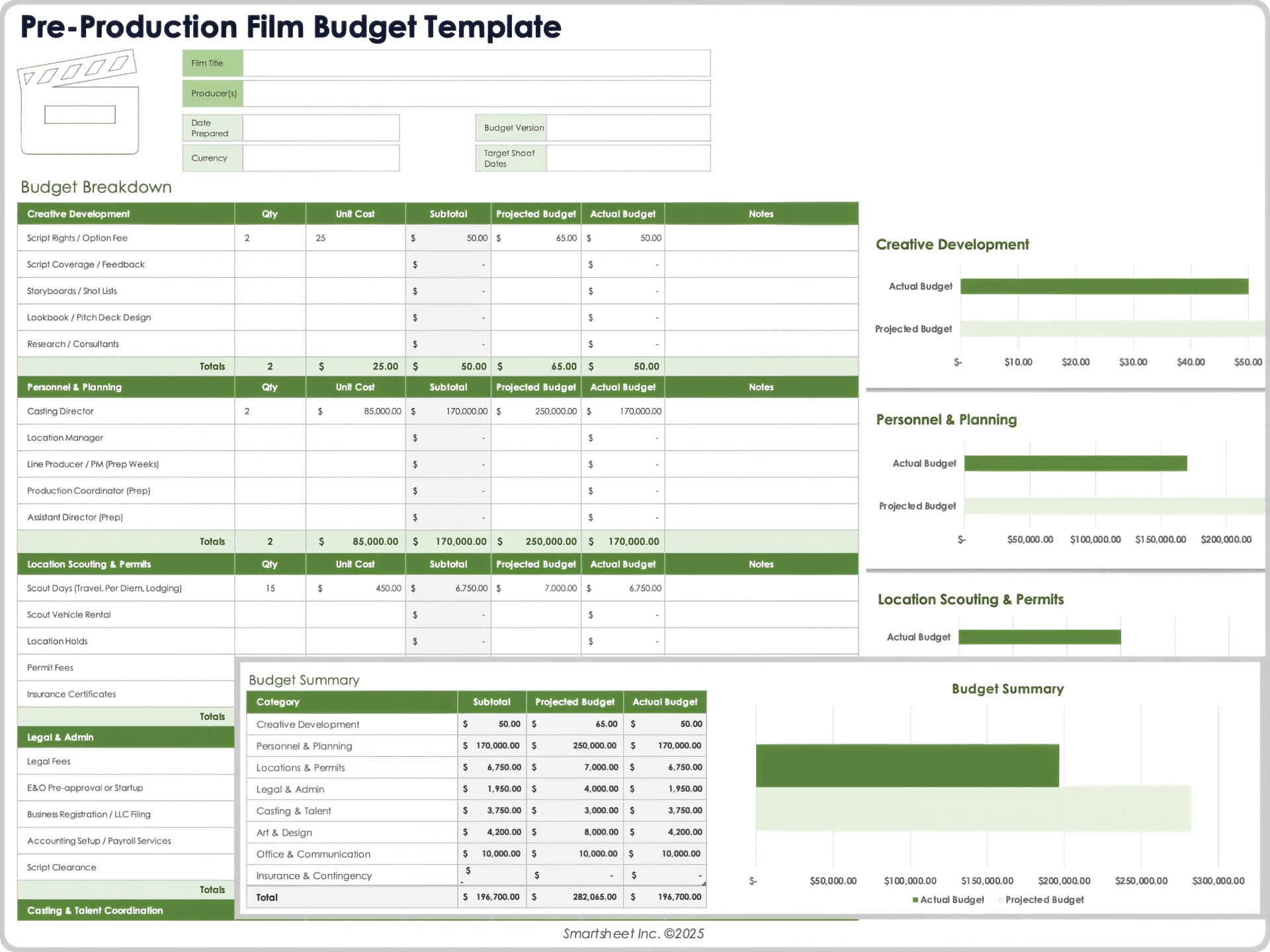
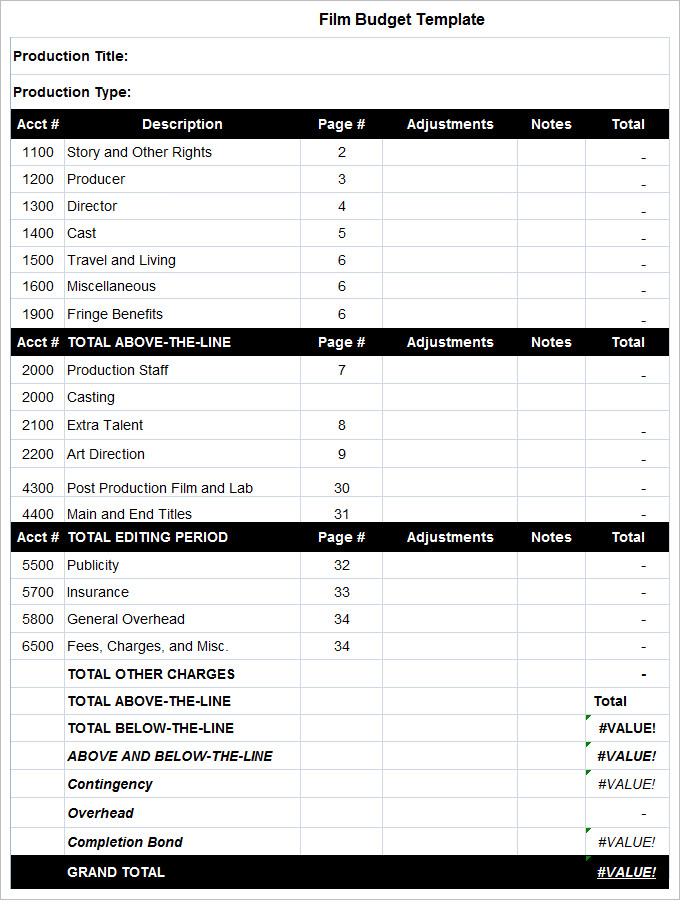
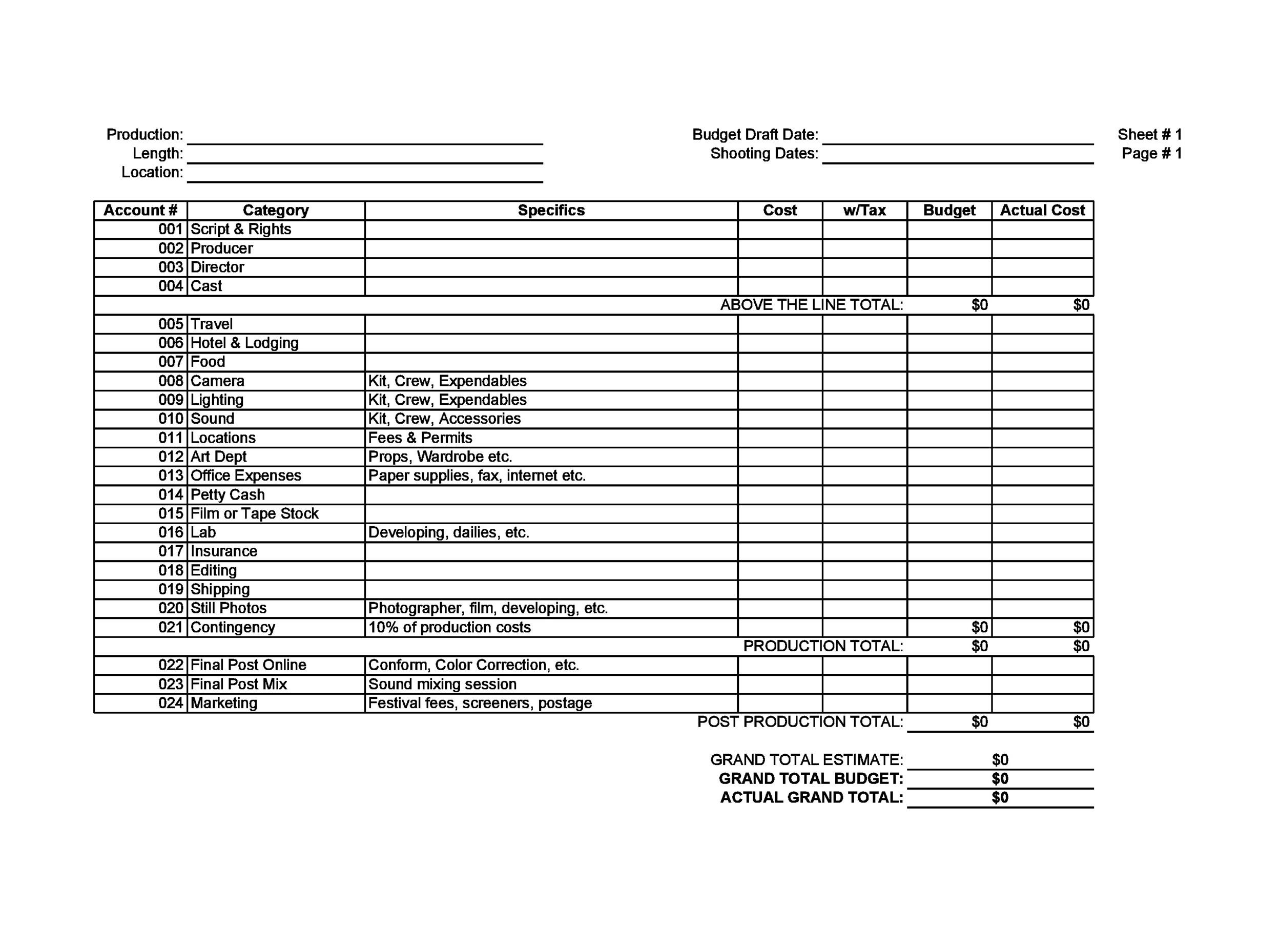
Examples
How to Create a Film Budget
Creating a film budget can be a daunting task, but with careful planning and attention to detail, it is entirely manageable. Here are some steps to help you create an effective film budget:
- Research: Gather information on industry standards and average costs for each aspect of production.
- Breakdown Costs: Create a detailed breakdown of all expenses, separating them into categories such as above-the-line and below-the-line costs.
- Allocate Funds: Allocate funds to each category based on priority and importance to the overall production.
- Update Regularly: Continuously update and revise your budget as production progresses to ensure accuracy.
- Monitor Expenses: Keep track of all expenses and compare them to your budget to identify any discrepancies.
Tips for Staying on Budget
Staying on budget is essential for the success of any film project. Here are some tips to help you stay on track:
- Plan Ahead: Start budgeting early in the pre-production phase to avoid last-minute surprises.
- Be Realistic: Set realistic expectations and avoid overestimating or underestimating costs.
- Trim Costs: Look for ways to cut expenses without compromising film quality.
- Communicate Effectively: Keep the production team informed about the budget and involve them in decision-making to ensure everyone is on the same page.
- Stay Flexible: Be prepared to make adjustments to your budget as needed to accommodate unexpected changes or challenges.
- Track Expenses: Keep detailed records of all expenses and review them regularly to identify any areas where costs are exceeding the budget.
- Seek Professional Help: Consider hiring a professional accountant or financial advisor to help you manage your budget effectively.
Conclusion
In conclusion, film budgeting is a critical aspect of the filmmaking process that requires careful planning, attention to detail, and effective management. By creating a comprehensive budget that includes all necessary expenses and following the tips outlined in this guide, filmmakers can ensure that their project is completed on time and within budget. Remember, a well-prepared budget is not only a financial tool but also a creative roadmap that can help filmmakers bring their vision to life on the big screen.
