A project estimate helps you determine the time, cost, and resources required to complete a project. Whether you are managing a construction job, providing professional services, planning a marketing campaign, or coordinating an internal business initiative, an accurate estimate gives you a practical foundation for making decisions and setting expectations.
A well-prepared project estimate outlines the expected expenses, major tasks, estimated completion dates, and resources needed to achieve the project goals. It also helps clients and project stakeholders understand the proposed scope before work begins. Although an estimate cannot guarantee the final cost or schedule, it provides a useful starting point for budgeting, planning, and monitoring progress.
Using a project estimate template can make this process faster and more consistent. Instead of building a document from scratch, you can organize project details, cost calculations, timelines, and resource requirements in one place. This guide explains what a project estimate is, what to include, how to prepare one, and how to improve its accuracy.
What Is a Project Estimate?
A project estimate is a forecast of the money, time, labor, materials, and other resources needed to complete a defined project. It is usually prepared during the planning or proposal stage, when a project manager, contractor, consultant, or service provider evaluates the expected work and its requirements.
The purpose of a project estimate is to provide a realistic picture of what completing the project may involve. It helps decision-makers assess feasibility, compare alternatives, allocate resources, and establish an initial budget and schedule.
For example, a web design agency may prepare a project estimate that includes research, website design, development, testing, and launch support. A construction contractor may estimate labor hours, building materials, equipment rental, permits, and site preparation. Although the details differ, both estimates help explain the expected effort and expense.
A project estimate may include:
- Estimated cost: The expected expenses associated with the project.
- Estimated duration: The anticipated time needed to complete tasks and milestones.
- Resource requirements: The people, equipment, materials, and tools needed.
- Project scope: The work included in the estimate and any important exclusions.
- Assumptions and risks: Conditions that could affect the forecast.
Because an estimate is based on available information and assumptions, it should be reviewed and updated as the project becomes better defined.
Why Is a Project Estimate Important?
Estimating a project before committing to the work can reduce uncertainty and help prevent avoidable surprises. It gives the project team and stakeholders a shared understanding of the expected requirements.
Supports Better Budget Planning
A project cost estimate helps organizations determine whether a project fits within the available budget. By identifying major expenses early, teams can prioritize essential work, compare suppliers, and evaluate possible cost-saving measures before spending begins.
Improves Scheduling and Time Management
Estimating the duration of individual tasks makes it easier to create a realistic project schedule. Managers can identify dependencies, establish milestones, and determine whether a proposed deadline is achievable with the available resources.
Helps Allocate Resources
Projects often depend on a combination of employees, contractors, equipment, materials, and software. A resource estimate helps identify what is required, when it will be needed, and whether any resource shortages could delay the work.
Sets Clear Expectations
A documented estimate gives clients, managers, and project teams a reference point for discussing scope, costs, and deadlines. It can also help clarify which services are included and which requests may require additional approval or a revised estimate.
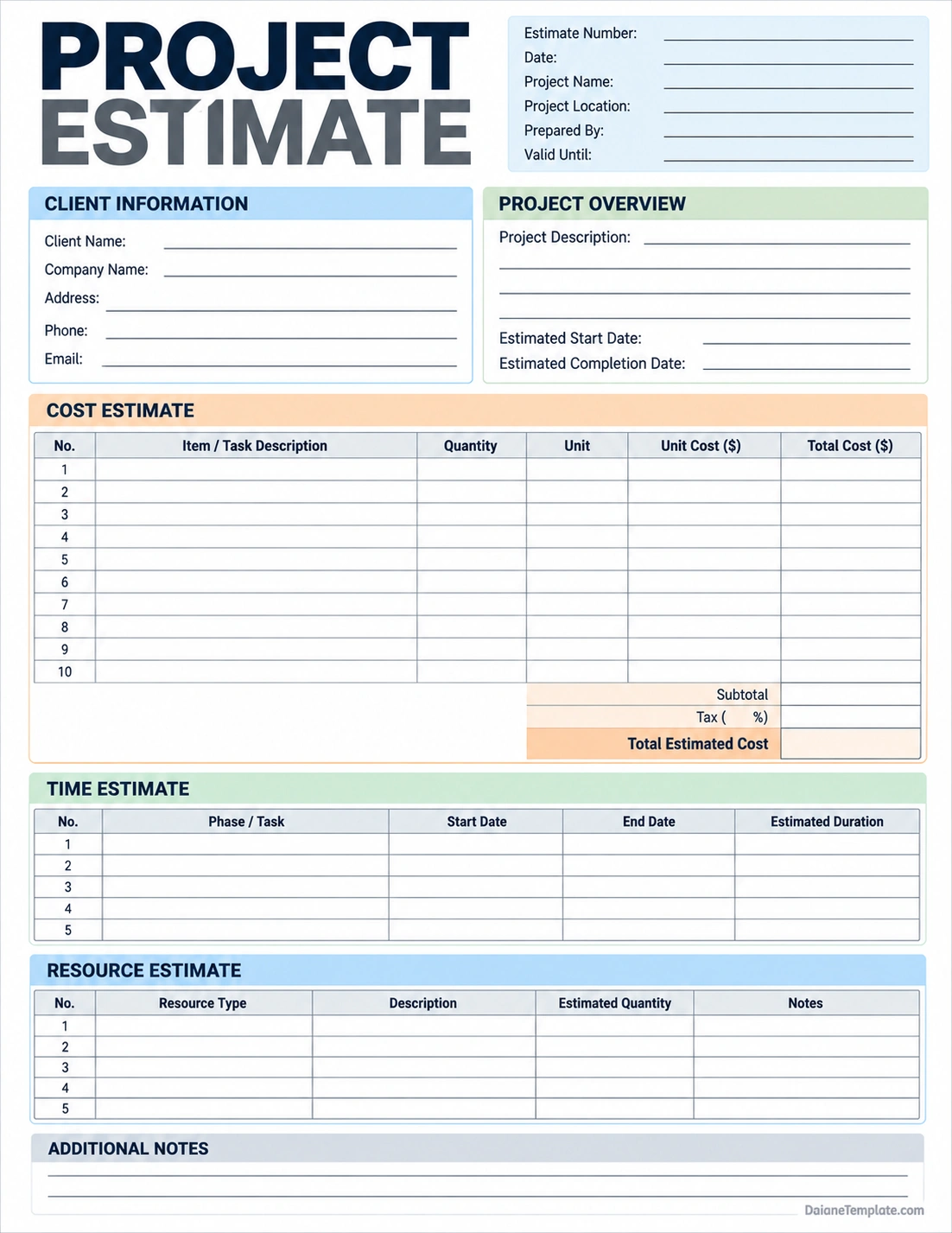
What to Include in a Project Estimate Template
A useful project estimate template should be detailed enough to support decision-making without becoming unnecessarily complicated. The appropriate sections depend on the project’s size, complexity, and industry.
Project and Client Information
Begin with basic identifying details so the estimate can be tracked and referenced easily. Include the project name, estimate number, preparation date, client or department name, project location when relevant, and the person responsible for preparing the estimate. You may also include a validity period if prices or availability could change.
Project Overview and Scope
Describe the proposed work in clear, specific language. Identify the main deliverables, expected outcomes, major activities, and relevant deadlines. State important exclusions so readers understand what the estimate does not cover.
A clear scope helps reduce misunderstandings. If the client later requests additional work, the project team can evaluate whether the request requires a change to the estimated cost or schedule.
Cost Estimate
The cost section lists the expected expenses associated with the project. Depending on the work involved, include categories such as:
- Labor, professional services, or contractor fees.
- Materials, supplies, and equipment.
- Software, licenses, and other project tools.
- Transportation, delivery, or travel expenses.
- Permits, subcontractors, or specialist services.
- Applicable taxes and approved contingency allowances.
For each item, record the description, quantity, unit, unit cost, and estimated total. Add the relevant subtotals and clearly identify any taxes or other charges. Make sure the final estimated amount reflects the assumptions stated in the document.
Time Estimate
The time estimate outlines the expected duration of the project and its major tasks. Include task names, planned start and end dates, estimated working days or hours, and dependencies where necessary.
Remember that working time and calendar time are not always the same. A task requiring five working days may take longer to complete if weekends, holidays, approval periods, or other dependencies affect the schedule.
Resource Estimate
Identify the resources required to complete the work. These may include team members, specialist skills, equipment, materials, workspace, and digital tools. Record estimated quantities and explain any constraints that could affect availability.
Notes, Assumptions, and Approval
Use the notes section to document important assumptions, risks, exclusions, and information that still needs confirmation. For formal business use, you may also include prepared-by details, client approval, authorized signatures, or a reference to the applicable proposal or contract.
How to Prepare an Accurate Project Estimate
Creating a reliable project estimate requires more than adding up expenses. Follow a structured process to make your forecast more useful and easier to review.
Define the Project Scope
Start by identifying the required deliverables, objectives, deadlines, and acceptance criteria. Break the work into manageable activities so each part can be estimated separately. If important requirements remain unclear, document them as assumptions rather than treating them as confirmed facts.
Break the Work Into Tasks
Create a work breakdown structure or a simple task list. For example, a website project might include discovery, planning, design, development, content entry, testing, and launch. Breaking down the work makes it easier to identify hidden tasks and estimate each component more consistently.
Estimate Time and Resources
Determine how many hours or days each task may require and identify the people or materials needed. Use historical project data when available. For unfamiliar tasks, consult experienced team members, suppliers, or specialists to establish reasonable assumptions.
Calculate the Expected Cost
Estimate the cost of each item using the relevant quantity and unit rate. For items priced by the hour, multiply estimated hours by the applicable hourly rate. For materials, calculate the required quantity and expected unit price. Include indirect costs when they are relevant to the project.
Then add the item totals to calculate the estimated project cost. Apply taxes and other charges as appropriate, and state whether the figures are preliminary or based on confirmed supplier quotations.
Account for Uncertainty
Projects rarely proceed under perfectly predictable conditions. Changes in requirements, supplier prices, availability, or technical complexity can affect the final result. Consider a contingency allowance when appropriate, based on the project’s risks and the organization’s policies.
Keep contingency separate from the base estimate when possible. This makes it easier for stakeholders to see the expected cost of planned work and the additional allowance reserved for uncertainty.
Review and Communicate the Estimate
Check calculations, assumptions, dates, resource requirements, and scope exclusions before sharing the document. Ask the relevant team members to review estimates that involve specialist work or substantial uncertainty.
Explain the main cost drivers and any conditions that could change the forecast. If the project scope changes or new information becomes available, revise the estimate and identify what changed.
Project Estimate vs. Project Budget
A project estimate and a project budget are related, but they serve different purposes. An estimate forecasts the likely cost of completing the work. A budget establishes the amount of money authorized or allocated for the project.
For example, a project team might estimate that a website redesign will cost $18,000. The organization may approve a budget of $20,000 to provide room for specified uncertainties. The estimate supports the budget decision, while the budget becomes a financial reference for managing spending.
Actual costs should be tracked against the approved budget throughout the project. If the forecast changes significantly, stakeholders can decide whether to adjust the scope, schedule, resources, or funding.
Tips for Using a Project Estimate Template
A template is most effective when it encourages consistent documentation and realistic planning. Use the following practices to improve the quality of your estimates:
- Use clear descriptions: Describe each task and expense so another person can understand what it covers.
- Separate cost categories: Keep labor, materials, equipment, and other expenses distinct where practical.
- Document assumptions: State important dependencies, rates, quantities, and conditions.
- Use realistic timelines: Account for reviews, approvals, testing, and other non-production activities.
- Check calculations: Verify quantities, unit rates, subtotals, taxes, and the final total.
- Identify exclusions: Clarify what is not included to avoid misunderstandings about the scope.
- Set a review date: Revisit estimates when supplier prices, project requirements, or resource availability change.
- Keep version records: Label revised estimates so stakeholders can identify the current version.
For small projects, a printable project estimate worksheet may be sufficient. For complex projects with many tasks, dependencies, and changing costs, consider using project management or spreadsheet software alongside the estimate document.
Frequently Asked Questions About Project Estimates
What is the purpose of a project estimate?
A project estimate forecasts the cost, duration, and resources required to complete a project. It supports planning, budgeting, scheduling, resource allocation, and decisions about whether the project is feasible.
What should a project estimate include?
A project estimate should generally include project details, scope, itemized costs, estimated task durations, resource requirements, assumptions, exclusions, and relevant notes. Depending on the situation, it may also include taxes, contingency allowances, a validity period, and approval fields.
How do you calculate a project estimate?
Break the project into tasks, estimate the quantities and resources required for each task, apply appropriate rates or unit prices, and add the resulting costs. Account for relevant indirect expenses, taxes, and uncertainty. Review the assumptions and calculations before finalizing the estimate.
What is the difference between a project estimate and a quote?
A project estimate is generally a forecast of expected cost and effort. A quote or quotation typically presents a proposed price for specified goods or services and may be subject to defined terms and validity conditions. The precise meaning and legal effect depend on the industry, agreement, and applicable rules.
How accurate should a project estimate be?
Accuracy depends on how clearly the project is defined, the quality of available information, the estimator’s experience, and the level of uncertainty. Early estimates may be broad, while estimates prepared after detailed planning can be more precise. Avoid presenting uncertain figures as guaranteed costs.
Can I use a project estimate template for any industry?
Yes. A general project estimate template can be adapted for construction, consulting, marketing, software development, event planning, and many other fields. Customize the cost categories, timeline, resource fields, and approval requirements to fit the project.
When should a project estimate be updated?
Update the estimate when the scope changes, new requirements are confirmed, supplier prices change materially, resource availability shifts, or the project schedule is revised. Record the changes so stakeholders understand why the forecast differs from earlier versions.
Conclusion
A project estimate provides a practical foundation for planning costs, timelines, and resources before work begins. By defining the scope, breaking the project into tasks, calculating expected expenses, and documenting assumptions, you can create a forecast that supports clearer communication and better decisions.
A printable project estimate template makes it easier to organize this information in one document. Adapt the sections to your project’s needs, verify the calculations, and review the estimate as circumstances change. With consistent estimating practices, you can improve project planning, set realistic expectations, and manage uncertainty more effectively.
Download: Project Estimate Template
