A roofing contract is a written agreement between a property owner and a roofing contractor that explains the work to be completed, the materials to be used, the project cost, and the expected timeline. It helps both parties understand their responsibilities before a roofing project begins and provides a written reference if questions or disagreements arise.
Whether you are replacing an aging roof, repairing storm damage, or installing a roof on a new property, reviewing a roofing contract carefully can help you avoid unexpected costs and unclear expectations. A complete agreement should describe the scope of work, payment schedule, warranties, cleanup responsibilities, and procedures for approving additional work.
This guide explains what a roofing contract should include, how to review one before signing, and how to use a printable roofing contract template to organize project details. You will also learn which warning signs to watch for and find answers to common questions homeowners ask before hiring a roofing contractor.
What Is a Roofing Contract?
A roofing contract is a written agreement that sets out the terms of a roofing project between a contractor and a property owner. It typically describes the services the contractor will provide, the products and materials included, the agreed price, and the conditions that apply during the project.
For example, a roof replacement contract may specify the removal of existing shingles, inspection of the roof deck, installation of underlayment and new shingles, replacement of flashing, disposal of old materials, and final cleanup. It may also identify the expected start date, payment milestones, and warranty coverage.
A detailed contract helps both parties understand what is included and what may cost extra. It can also explain how delays, hidden damage, changes in materials, and other unexpected situations will be handled.
The legal effect of a roofing contract depends on its terms and the applicable law. Before signing, make sure the agreement reflects the actual project and complies with relevant local requirements, including any rules for contractor licensing, permits, cancellation rights, and consumer protection.
Why Is a Roofing Contract Important?
A roofing project can involve significant costs, specialized materials, and work that affects the safety and condition of a property. A written agreement helps establish clear expectations before the contractor begins.
- Defines the scope of work: The contract explains which repairs, replacements, and installation tasks are included.
- Clarifies project costs: It identifies the agreed price, payment schedule, and potential additional charges.
- Identifies materials: The agreement records the roofing products, specifications, and accessories included in the project.
- Sets a project timeline: Start dates, estimated completion dates, and delay procedures help both parties plan.
- Explains warranty coverage: Written terms clarify which material and workmanship warranties apply.
- Reduces misunderstandings: Both parties can refer to the same document when questions arise.
- Provides a record of responsibilities: The agreement can explain who handles permits, cleanup, property protection, and approvals for additional work.
A contract cannot eliminate every risk, but it can make important obligations easier to understand and help prevent disagreements caused by vague promises or incomplete project descriptions.
What Should a Roofing Contract Include?
Every roofing project is different, but a well-prepared roofing agreement should address several essential areas. Review each section carefully before approving the contractor’s proposal.
1. Contractor and Property Owner Information
The agreement should identify the roofing contractor and property owner using their appropriate legal names. Include business contact details, the property address, and relevant contractor license information where applicable.
Check that the contractor’s business details match the company you researched and that the person signing the agreement has authority to do so. If the project involves a property manager or another representative, clarify their role.
2. Detailed Scope of Work
The scope of work describes exactly what the contractor agrees to do. It should be specific enough to distinguish the agreed project from optional services or repairs that may be discovered later.
Depending on the project, the scope may include:
- Removing existing shingles, tiles, or other roofing materials.
- Inspecting the roof deck and identifying visible damage.
- Installing underlayment, flashing, drip edges, and new roofing materials.
- Replacing or repairing vents and other specified roof components.
- Protecting landscaping and nearby property during construction.
- Removing debris and cleaning the work area after completion.
- Conducting a final inspection and addressing agreed punch-list items.
Ask the contractor to clarify vague phrases such as “complete roof work” or “repair as needed.” A specific description makes it easier to determine whether the finished work meets the agreement.
3. Roofing Materials and Specifications
The contract should identify the roofing materials included in the project. Depending on the roof type, this may include asphalt shingles, metal panels, tiles, underlayment, flashing, ventilation components, fasteners, and related accessories.
Where appropriate, record the manufacturer, product line, color, grade, or other specifications. Different products can have different prices, installation requirements, and warranty conditions, so comparing materials is important when reviewing contractor bids.
If a product becomes unavailable, the agreement should explain how an alternative will be selected and approved. Do not assume the contractor can substitute a different material without affecting the price, appearance, or warranty.
4. Total Contract Price and Payment Schedule
The payment section should state the agreed contract price and explain when payments are due. It may include a deposit, progress payments, and a final payment after the agreed work is completed.
Check whether the price includes labor, materials, removal, disposal, permit fees, and other expected costs. The agreement should also explain how additional charges will be calculated and approved.
Before making a payment, verify that the requested amount matches the contract and the work or milestone completed. Payment requirements, deposit limits, and consumer protections vary by location, so check applicable local rules before agreeing to the schedule.
5. Project Start Date and Completion Timeline
The contract should provide an anticipated start date and an estimated completion date or project duration. Roofing schedules can be affected by weather, material availability, inspections, permit approvals, and unexpected roof conditions.
Look for language explaining how delays will be communicated and how schedule changes will be documented. If a deadline is especially important, discuss it before signing rather than relying on a verbal assurance.
6. Permits, Licensing, and Insurance
Determine who is responsible for obtaining required permits and arranging inspections. The contract should make these responsibilities clear so that neither party assumes the other is handling them.
Depending on local requirements, verify the contractor’s license or registration and ask for evidence of relevant insurance. Confirm that the coverage is appropriate for the work being performed and that the information is current.
7. Material and Workmanship Warranties
Roofing projects may include a manufacturer’s warranty for roofing products and a separate contractor warranty for workmanship. These warranties can cover different problems and may have different conditions, exclusions, and claim procedures.
Ask for the warranty documents and review the coverage period, maintenance requirements, transferability, and any exclusions. Do not rely only on a verbal statement that the roof is “fully guaranteed.”
8. Changes, Hidden Damage, and Additional Work
Roofing work can reveal concealed problems, such as damaged decking, moisture issues, or deteriorated flashing. The contract should explain how the contractor will notify you, provide a price for extra work, and obtain approval before proceeding.
A written change order should identify the additional work, price adjustment, and any effect on the timeline. This process helps prevent surprise charges and keeps both parties informed.
9. Cleanup, Property Protection, and Final Inspection
Clarify how the contractor will protect landscaping, driveways, windows, and other nearby property during the project. The agreement should also address debris removal, disposal of old roofing materials, and cleanup of the work area.
Before making the final payment, review the completed work against the contract. Confirm that agreed tasks have been completed, any outstanding items have been documented, and relevant warranty or completion documents have been provided.
Printable Roofing Contract Template
A printable roofing contract template helps organize the major terms of a roofing project in one place. It can be useful for residential roof repairs, roof replacements, and other roofing work when adapted to the specific job and local requirements.
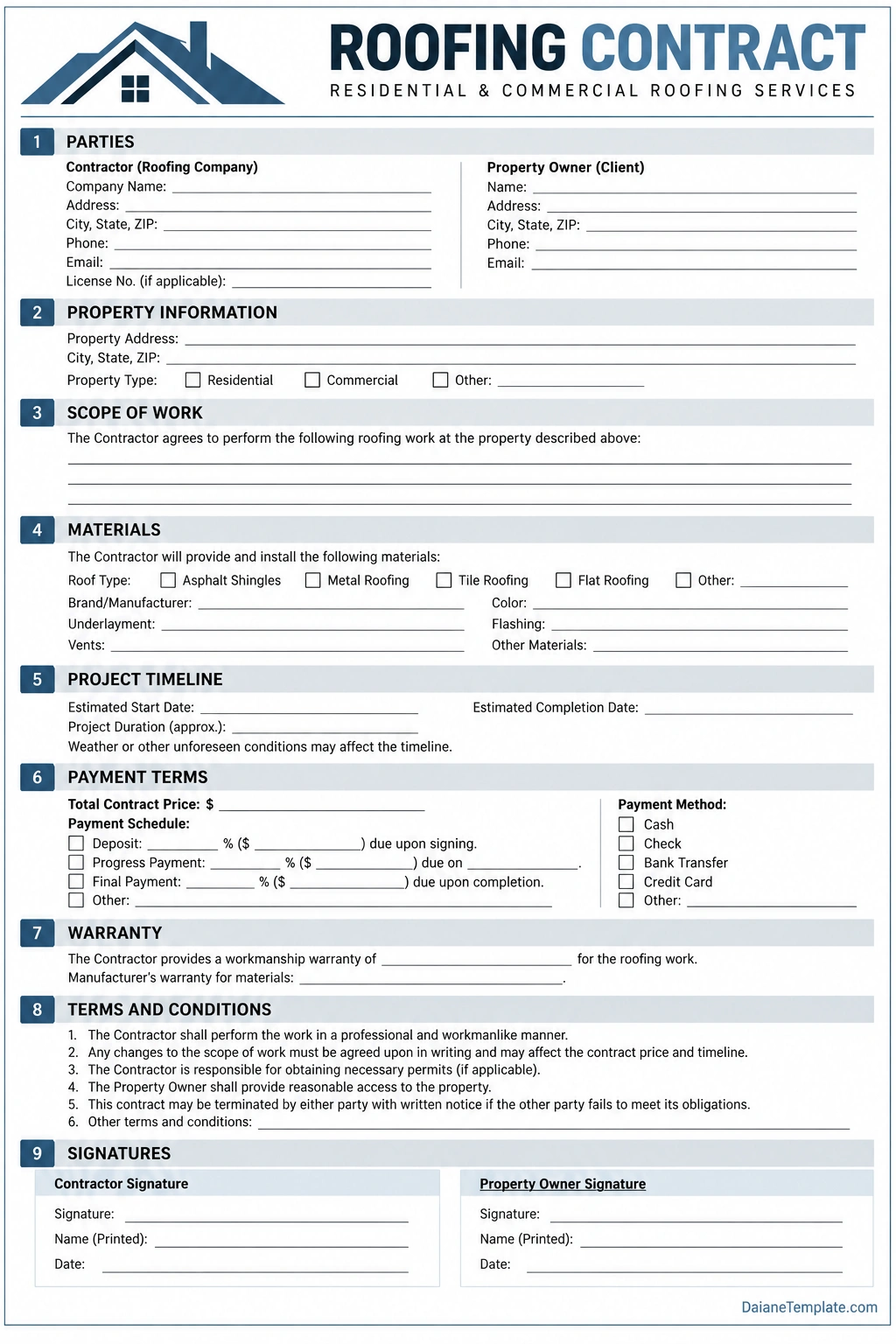
When using the template, complete the relevant sections and attach additional pages if the project requires more detail. A useful roofing agreement should record:
- Parties and property: Contractor details, homeowner information, and job address.
- Scope of work: Specific repairs, removal, installation, and cleanup tasks.
- Materials: Product types, specifications, quantities, and approved alternatives.
- Project schedule: Anticipated start date, completion date, and delay procedures.
- Pricing: Total contract amount, included expenses, and payment milestones.
- Permits and responsibilities: Who obtains approvals and arranges required inspections.
- Warranties: Material coverage, workmanship coverage, and relevant conditions.
- Change orders: Written approval procedures for extra work or price changes.
- Signatures: Authorized signatures and the date the agreement is accepted.
A general template is a starting point, not a guarantee that every legal requirement has been addressed. Adapt it to the project, check local requirements, and obtain professional advice when needed.
How to Review a Roofing Contract Before Signing
Step 1: Compare the Contract With the Estimate
Check that the final contract matches the estimate you accepted. Confirm the scope, materials, total price, payment schedule, and timeline. Resolve differences before signing rather than assuming that an earlier estimate automatically controls every detail.
Step 2: Verify the Contractor
Research the contractor’s business, check relevant licensing or registration, and ask for proof of insurance where appropriate. References, reviews, and examples of previous work can also help you assess whether the contractor is suitable for the project.
Step 3: Review Exclusions and Additional Costs
Look for items that are not included in the contract, such as structural repairs, replacement of damaged decking, permit fees, or upgraded materials. Ask how those items will be priced if they become necessary.
Step 4: Understand Payment and Cancellation Terms
Read the deposit requirements, payment milestones, late-payment provisions, and any cancellation or termination terms. Confirm that they comply with applicable law and that you understand the consequences before agreeing.
Step 5: Get Important Promises in Writing
If the contractor makes a commitment about materials, completion dates, cleanup, or warranties, make sure it appears in the contract or an authorized written attachment. Keep copies of the signed agreement, estimate, change orders, payment records, and warranty documents.
Roofing Contract Red Flags to Watch For
Be cautious if a proposed agreement leaves important details unresolved or puts pressure on you to sign before you have time to review it.
- Vague scope of work: The contract does not explain which tasks and materials are included.
- Missing company details: The contractor’s identity or contact information is incomplete or difficult to verify.
- Unclear payment terms: The amount, timing, or purpose of payments is not specified.
- Large upfront payment without clear protections: Check local rules and understand what the payment covers before agreeing.
- No written change-order process: The contractor can add work or charges without a clear approval procedure.
- Unclear warranties: The contract promises coverage without explaining its terms or exclusions.
- Pressure to sign immediately: You are discouraged from comparing bids or reviewing the agreement.
- Blank or incomplete sections: Important fields are left open or filled in only after signing.
If something is unclear, ask for an explanation and a revised written agreement. Consider consulting a qualified professional if the contract involves substantial costs or legal uncertainty.
Frequently Asked Questions About Roofing Contracts
Is a roofing contract legally binding?
A roofing contract can be legally binding when the requirements for an enforceable agreement are met. Its effect depends on the contract language, the circumstances, and applicable law. Local rules may also impose specific requirements for home improvement or roofing contracts.
Should I get a roofing contract in writing?
Yes. A written contract is strongly recommended because it records the scope of work, price, materials, payment schedule, timeline, and other important terms. It provides a shared reference if a disagreement arises.
What is the difference between a roofing estimate and a roofing contract?
A roofing estimate describes anticipated costs for proposed work. A roofing contract records the agreed terms and obligations once the parties accept the project. Depending on its wording and applicable law, a signed estimate or proposal may also create contractual obligations, so review the document carefully.
Should the roofing contract include a warranty?
It should clearly identify any applicable material and workmanship warranties, or reference the documents that contain their terms. Review the coverage period, exclusions, maintenance requirements, and process for making a claim.
Can a roofing contractor charge extra after signing?
Additional charges may be appropriate if the contract allows for extra work or unexpected conditions, but the agreement should explain how those costs are handled. Ask for a written change order that describes the work, revised price, and schedule before approving additional work.
How much deposit should I pay for a roofing project?
The appropriate deposit depends on the project, contractor, payment structure, and local rules. Check whether your location limits deposits for home improvement work. Make sure the contract explains what the deposit covers and how subsequent payments are scheduled.
Who is responsible for roofing permits?
Responsibility depends on the contract and local requirements. The agreement should clearly identify who will apply for permits, pay applicable fees, and arrange inspections. Confirm that required approvals are in place before work begins.
What should I do if the contractor does not complete the agreed work?
Review the signed contract, document the unfinished or defective work, and communicate your concerns in writing. Follow the contract’s notice and dispute-resolution procedures. Depending on the circumstances, you may wish to seek advice from a qualified attorney or the relevant local consumer protection agency.
Conclusion
A roofing contract helps protect both the property owner and the contractor by documenting the scope of work, materials, project cost, payment terms, timeline, warranties, and responsibilities. Reviewing these details before signing can reduce misunderstandings and make it easier to manage changes during the project.
Use a roofing contract template to organize the essential information, but tailor the agreement to the actual property and work required. Verify the contractor’s credentials, clarify exclusions and additional charges, and keep important commitments in writing.
With a clear agreement and careful preparation, both parties can begin a roofing project with a better understanding of their obligations and a reliable reference for the work ahead.
Download: Roofing Contract Template
